

Published Mar 10, 2026 | 8:00 AM ⚊ Updated Mar 12, 2026 | 9:41 AM

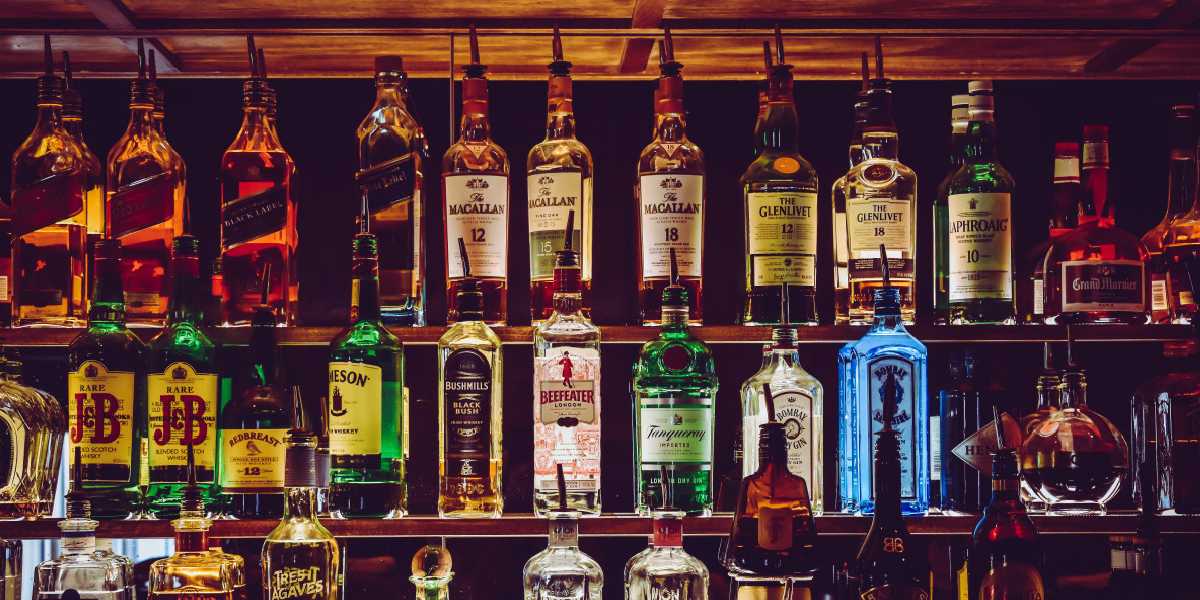
Indian states currently tax liquor based on its volume rather than its strength.
Synopsis: Karnataka has announced a phased shift to a new liquor excise policy under which duty will be charged based on the actual alcohol content of a beverage rather than its total volume. To be introduced gradually from April 2026, the system will replace a decades-old pricing mechanism and deregulate government-set retail prices in what is expected to be a first-of-its-kind move in the country. Industry bodies have welcomed the change, saying it could benefit brewers and encourage consumption of lower-strength drinks.
In a first-of-its-kind move in Karnataka, the government on Friday announced the Alcohol-in-Beverage (AIB) excise duty structure – wherein taxes will be levied based on actual alcohol content rather than total volume.
The policy, which will be introduced in a phased manner in the next three-four years to prevent disruptive changes, will effectively replace a decades-old pricing mechanism. Once implemented, Karnataka would become the first state in the country to link liquor taxation directly to alcohol content.
“An Alcohol-in-Beverage (AIB) based excise duty structure is globally recognised as the gold standard for alcohol taxation, as it directly targets the alcohol content which is the primary source of negative externalities. This will be introduced from April 2026,” Siddaramaiah said while presenting the 2026-27 Budget.
He said that there will be a uniform level of excise duty whereas additional excise duty will be levied within a defined range based on an ex-factory price slab basis. “We will ensure that the price changes are gradual and not disruptive,” he said.
Under the new system, excise duty will be calculated based on the amount of alcohol present per litre of beverage. The transition will be implemented gradually over the next three to four years.
The earlier system, followed by several states across India, largely taxed liquor based on its volume rather than its strength. As a result, a 750 ml bottle of low-strength beer and a 750 ml bottle of high-strength whiskey could attract broadly similar tax calculations despite significant differences in alcohol content.
However, this is set to change with the new policy. In India, typical beer alcohol by volume (ABV) ranges from four percent to seven percent (strong variants at eight percent), while whiskey usually has 40 percent to 50 percent ABV. According to industry insiders, the policy will benefit consumers as it will make beer relatively cheaper compared to stronger spirits.
Another change is that the government-administered price fixation will be completely deregulated. Product placement within slabs will be left to the producers based on market considerations. Additionally, pricing slabs will be rationalised and reduced to eight slabs from the existing 16 slabs.
Under the earlier system, manufacturers declared ex-factory prices based on which the state fixed the maximum retail price (MRP). Under the new framework, producers will have greater flexibility in setting prices, which comes as a huge benefit for them.
“Earlier the state would set the same MRP for three years, which would cause losses to us. But now we can set prices based on market forces,” a brewing company official told South First.
Brewers Association of India, in a statement, reiterated that the step will improve ease of doing business.
“The budget accepts alcobev sector as the integral part of industrial eco system and has several steps to improve ease of doing Business such as full deregulation of government-administered price fixation and simplification of taxation framework,” it said.
Manufacturers and brewers’ associations have welcomed the government’s move, saying it has been taken in the interest of public health.
“Linking of taxation with the quantity of alcohol in the product is based on the premise that product to be taxed is alcohol and not water. It is widely followed all over the world now and is encouraged by health bodies such as the World Health Organisation,” said Vinod Giri, Director General, Brewers Association of India.
By adopting the need to optimise revenue and public health goals of moderation, the “government has reinforced the state’s image as a progressive reformist leader in country,” Giri said.
Industry insiders say the move could also work in their favour, as it may push consumers towards smaller, lower-priced liquor options. They note that many lower-income consumers currently purchase alcohol in small tetra packs, a segment that has seen limited regulation.
Making smaller quantities of liquor available at lower prices through formal channels could draw these consumers into the regulated market while also benefiting manufacturers.
Breweries also believe the policy could boost beer consumption in the state.
“We believe these are progressive steps in the right direction. Beer has significant growth potential in Karnataka, and we appreciate the government’s intent to strengthen the regulatory and policy framework for the sector,” United Breweries Limited, India’s largest beer maker, said in a statement to South First.
In December 2025, Excise Minister RB Thimmapur said that the state had recorded a significant decline in beer sales in the current financial year.
While addressing the Legislative Council, he said that 195.27 lakh cases of beer were sold till the end of September 2025 – 47.46 lakh cases fewer compared to the corresponding period from the previous year. He had cited weather conditions as the prime reason for declining beer consumption
Meanwhile, breweries and manufacturers maintained that the overall impact of the policy will depend on the final contours and detailed provisions, which they plan to review once it is notified.
Apart from these measures, the government is also focussing on tourism in the alcohol sector. They plan to allow distilleries and breweries to conduct tasting sessions and sell products manufactured on their premises to visiting tourists.
The state has a target of ₹45,000 crore for revenue collection from state excise for the financial year 2026–27.
(Edited by Dese Gowda)


