

Published Jul 30, 2026 | 5:58 PM ⚊ Updated Jul 30, 2026 | 5:58 PM

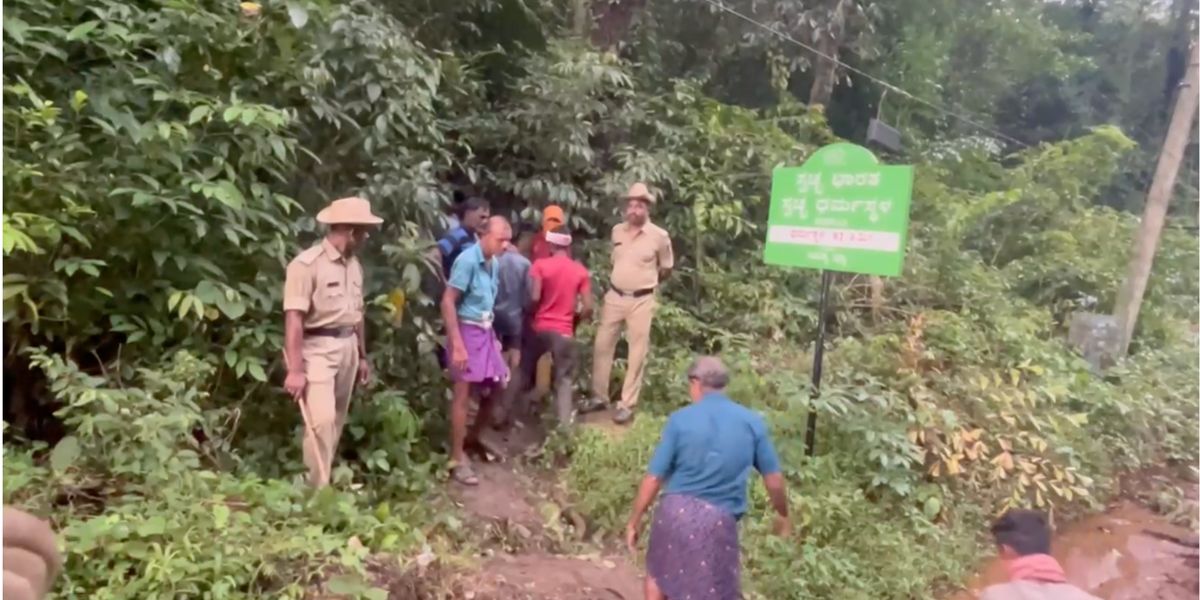
The police team during the exhumation process in Dharmasthala.

Synopsis: The Special Investigation Team probing the alleged Dharmasthala mass burial case has identified three skeletal remains recovered during excavations through DNA analysis, matching them to three men who went missing between 2013 and 2024. The breakthrough follows an investigation launched after a former sanitation worker alleged that he had been forced to bury multiple bodies over a 20-year period.
The Special Investigation Team (SIT) of Karnataka police probing the alleged Dharmasthala mass burial case has identified three skeletal remains recovered during excavations at Bangle Gudda in Dakshina Kannada district through DNA analysis, more than a year after the allegations first surfaced.
The skeletal remains have been identified as those of three men: UB Ayyappa (70) of Kodagu, who had been missing since June 2017; Adishesha (27) of Tumakuru, missing since October 2013; and Krishnappa (85) of Kolar, who disappeared in October 2024. DNA samples collected from their relatives matched the skeletal remains.
The excavations were carried out at multiple locations identified by the complainant after the State government handed over the investigation to the SIT on July 19, 2025. The probe is headed by Director General of Police Pronab Mohanty.
On July 15, the SIT submitted a 7,005-page final report before the Additional Civil Judge, supplementing an earlier 3,923-page report that had been filed in November the previous year.
The case originated from allegations made by a former sanitation worker at the Dharmasthala Manjunatha temple in Dakshina Kannada district, who alleged that he had been forced to bury multiple bodies over several years.
He lodged a complaint at the Dharmasthala Police Station on July 3, 2025. An FIR was registered the following day, and his statement was recorded before the Judicial Magistrate First Class court in Belthangady on July 11, 2025.
In a detailed complaint addressed to the Dakshina Kannada Police Commissioner on July 3, 2025, the complainant, who sought anonymity, alleged that between 1995 and 2014 he had been forced, under death threats, to dispose of hundreds of bodies, many of which bore signs of sexual violence and brutal murders.
He said he had decided to come forward because he could no longer remain silent and described three specific incidents, including one in 2010 in which he alleged he was forced to bury the body of a teenage sexual assault victim.
Dakshina Kannada police registered FIR No. 39/2025 under Section 211(a) of the Bharatiya Nyaya Sanhita (BNS) after obtaining court permission, stating that the complaint would be investigated in accordance with the law.
The complainant was subsequently granted protection under the Witness Protection Scheme, 2018.
During the course of the investigation, the complainant himself came under scrutiny. The SIT obtained court permission to question him for two days, citing his position as both the sole complainant and the primary witness in the case.
The investigation covered 17 locations identified by him. After the excavations yielded no substantial material evidence apart from a small quantity of bones, the SIT decided to subject the recovered remains to DNA analysis and await the results.
According to sources, investigators questioned the complainant at the Belthangady police station on issues including the origin of the skull initially produced before the court, who was present when it was allegedly unearthed, whether any videos of the excavation existed, and the forest location where the skulls were allegedly found.
Sources said the complainant gave vague responses during the questioning. The SIT subsequently arrested him on Saturday, August 23. He was taken to a local hospital for medical examination before being produced before the court.
In a subsequent report filed under Section 215 of the BNS, the SIT named six accused: the complainant, Mahesh Shetty, Girish Mattannavar, Jayanth, Vittal Gowda and Sujatha. The report was described as provisional pending findings from the Forensic Science Laboratory.
(Edited by Dese Gowda)



