

Published Dec 19, 2025 | 8:00 AM ⚊ Updated Dec 19, 2025 | 2:34 PM

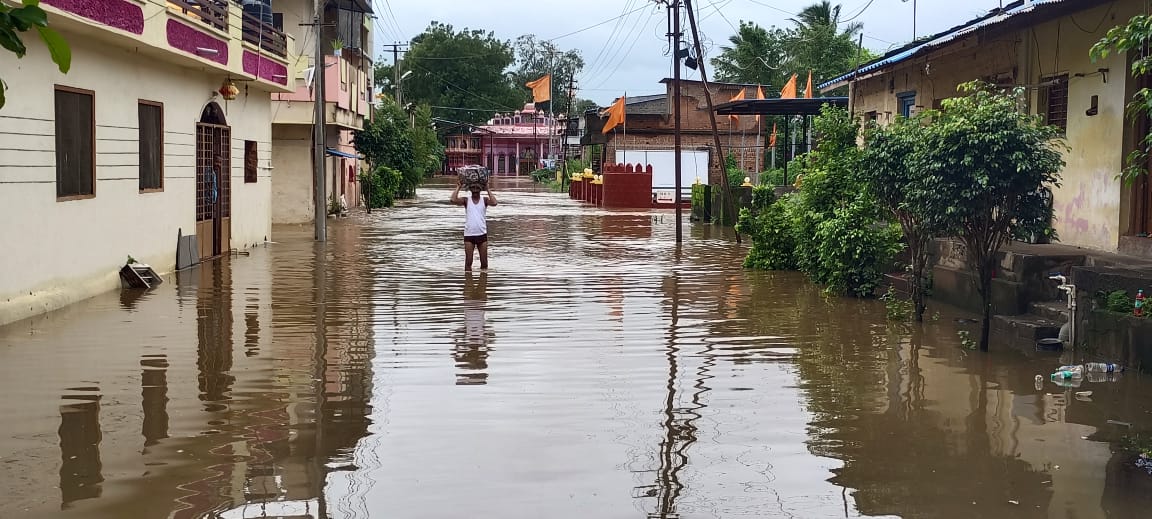
The CAG also found that the KSDMA did not hold regular meetings during the audit period, even though the State was witnessing natural disasters regularly.
Synopsis: Karnataka’s disaster management system has been woefully ill-equipped to handle the growing frequency of natural disasters over the last decade, a CAG report has found. The audit points to delayed policy-making, irregular meetings by State and district disaster authorities, and slow post-disaster rebuilding, with 20 percent of approved house reconstruction cases yet to begin even after funds were released.
Karnataka’s disaster management system has been ill-equipped to deal with the rise in natural disasters in the State over the last decade, a damning Comptroller and Auditor General of India (CAG) report has found.
Tabled by the Minister for Law, Parliamentary Affairs and Legislation HK Patil in the Assembly on Wednesday, 17 December, the report examined the State’s disaster management efforts between 2017 and 2023.
From non-functioning water level sensors installed as part of the flood early warning system to a large number of vacancies in disaster response forces, the report flags several lapses in projects implemented by the Karnataka State Natural Disaster Monitoring Centre (KSNDMC) and in the State’s overall approach to formulating disaster management plans.
One of the key findings of the report was that although the Karnataka State Disaster Management Authority (KSDMA) was established in 2008, the State Disaster Management Policy was published only 12 years later, in 2020.
“Disaster management in the State has been more response and relief-centric rather than making the State disaster resilient,” it noted.
The KSDMA was constituted in the State after a delay of more than two years following the implementation of the Disaster Management Act in 2006.
More concerningly, even as of March 2023, the authority had not been provided with the required infrastructure such as office space, human resources, furniture and stationery for its activities, the report stated.
The CAG also found that the KSDMA did not hold regular meetings during the audit period, even though the State was witnessing natural disasters regularly.
“KSDMA met only thrice, in November 2019, September 2020 and September 2021, and no meetings were held during the years 2017-18, 2018-19, 2021-22 and 2022-23,” the report said.
An analysis of the frequency of meetings of the District Disaster Management Authorities (DDMAs) found that only two districts—Dakshina Kannada and Ramanagara—conducted meetings consistently across all the years.
The DDMA in Belagavi did not meet even once during 2018-19 and met only once during 2017-18, 2020-21 and 2021-22, despite the district being affected by various disasters year after year, the report noted.
Further, the DDMA in Kodagu district, an area vulnerable to floods and landslides, did not meet even once during 2018-19.
During the same year, relentless rains and landslides killed 20 people and damaged more than 4,000 homes in Kodagu.
Additionally, in the aftermath of disasters, the audit noted that although 1,10,407 cases of damaged houses were approved for reconstruction during 2019-23, construction had not commenced in 22,496 cases, or 20 percent, even though a total of ₹213.94 crore had already been paid.
The report also flagged major lapses in one of the KSNDMC projects aimed at strengthening the flood early warning system of the erstwhile Bruhat Bengaluru Mahanagara Palike (BBMP).
The project involved the installation of 105 water level sensors, 100 on stormwater drains and five in flood-vulnerable streets.
However, an audit carried out in December 2023 revealed that 49 of the 100 water level sensors installed on stormwater drains were non-functional, while no information was available on the five sensors reportedly installed in flood-vulnerable streets.
When questioned, the Director of the KSNDMC replied that some of the installed sensors were removed by the BBMP and a few were stolen “in the absence of watch and ward,” the report noted.
Meanwhile, audits of other technical equipment, including telemetric rain gauges, telemetric weather stations, telemetric water level sensors and IP cameras under Smart Cities projects in Mangaluru, Belagavi and Hubballi-Dharwad, found that 69 of the 184 pieces of equipment were non-functional.
The State government constituted four Disaster Response Force (DRF) units in Bengaluru, Mangaluru, Belagavi and Kalaburagi in June 2013, and a fifth unit in Davanagere in June 2022.
While each unit had a sanctioned strength of 127 personnel, comprising mainly police and fire service personnel, the units had large vacancies ranging from 67 to 96 percent of the sanctioned strength.
The audit noted that these vacancies caused difficulties in managing shift-wise duties and rescue operations.
Additionally, all the DRF units were functioning from buildings belonging to other offices and did not have their own infrastructure.
The audit further observed that although adequate land had been sanctioned by the government, the DRF had not made use of it.
None of the posts of fire personnel had been filled in the Mangaluru unit, and only one fireman was available against the sanctioned strength of 30 fire personnel in the Davanagere unit.
One post of Medical Officer sanctioned for each unit remained vacant across all units.
(Edited by Dese Gowda)


