

Published Jun 25, 2026 | 4:10 PM ⚊ Updated Jun 25, 2026 | 4:10 PM

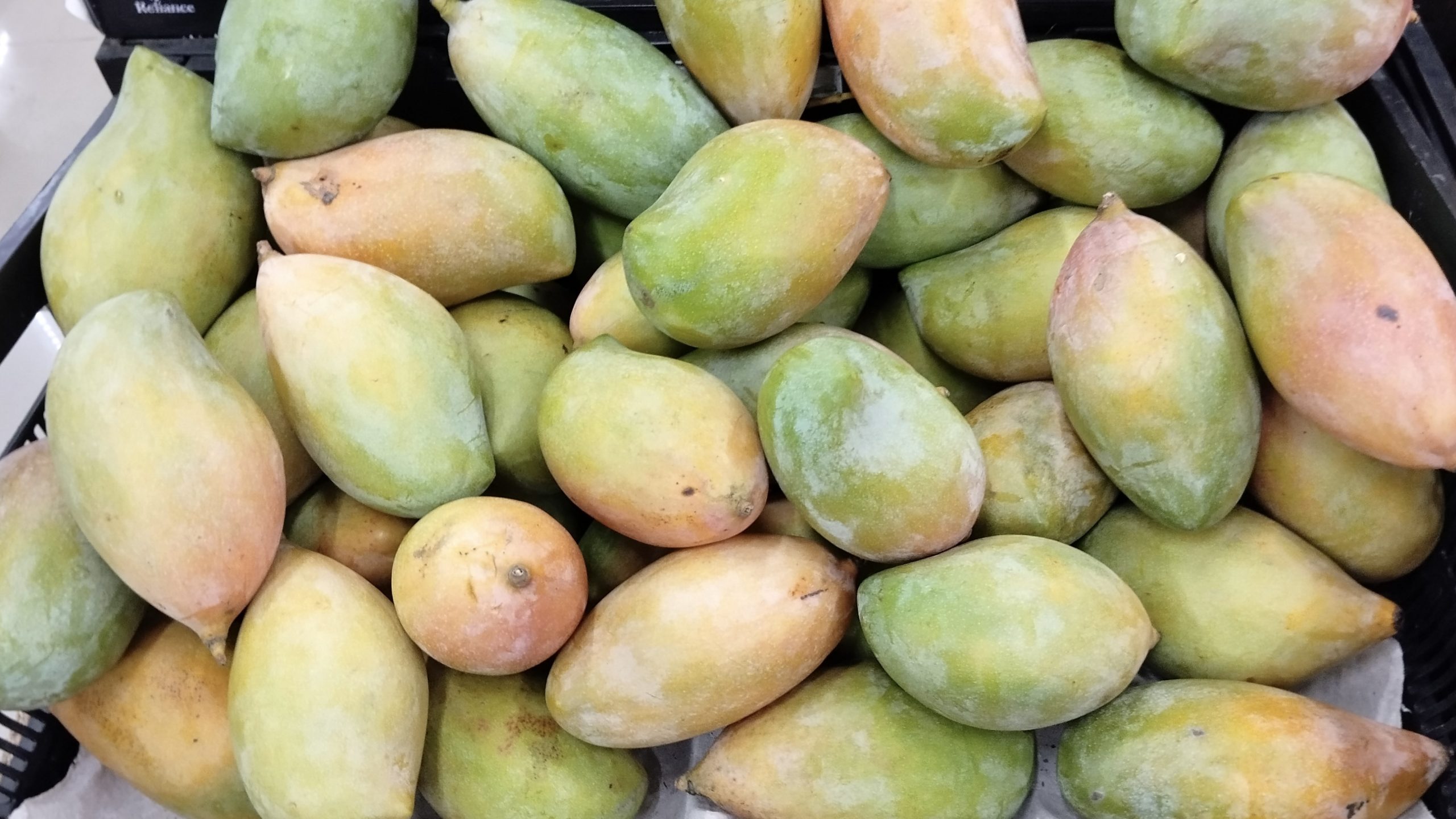
Prices of Totapuri mangoes had crashed to ₹5 a kg, well below the cost of cultivation.

Synopsis: The Union Government has approved the procurement of 1.3 lakh metric tonnes (MT) of Totapuri mangoes in Karnataka at ₹1,750 per quintal under the Market Intervention Scheme (MIS) after Totapuri and Benisha mango prices dropped to about ₹5 a kg, below the estimated cost of cultivation of ₹8.6 a kg. The decision follows Union Minister HD Kumaraswamy’s request for urgent Central intervention.
The Union Government on Thursday, 25 June, approved the procurement of 1.3 lakh metric tonnes (MT) of Totapuri mangoes in Karnataka at a Market Intervention Price (MIP) of ₹1,750 per quintal under the Market Intervention Scheme (MIS), responding to mounting distress among mango growers in the Kolar-Chikkaballapur belt, the state’s largest mango-producing region, where the price crash had triggered protests.
Prices of Totapuri mangoes had crashed to ₹5 a kg, well below the cost of cultivation of about ₹8.6 a kg.
The approval, communicated by Union Agriculture and Farmers’ Welfare Minister Shivraj Singh Chouhan in a letter to Union Minister for Heavy Industries HD Kumaraswamy, comes days after the latter urged the Centre to urgently intervene on behalf of farmers and a separate proposal from the Karnataka government.
“…based on the proposal received from Government of Karnataka, Department of Agriculture and Farmers Welfare approved for the procurement of 1,30,000 MT of Mango Totapuri variety at Market Intervention Price of Rs. 1,750 per quintal for Marketing 2026-27 season under Market Intervention scheme in the State,” Minister Chouhan wrote in the letter.
According to a statement issued by Kumaraswamy’s office, the decision followed detailed discussions with Chouhan at the latter’s residence in New Delhi on Wednesday evening.
Kumaraswamy had first taken up the issue with Chouhan in a letter dated 17 June, seeking Central intervention and requesting support under the Price Deficiency Payment Scheme (PDPS).
Met Union Agriculture & Farmers’ Welfare Minister Shri @ChouhanShivraj avaru to discuss the severe challenges faced by Karnataka’s mango growers due to adverse weather conditions and the sharp decline in market prices.
I requested Hon’ble Minister to extend immediate support… pic.twitter.com/v23TMHLIXI
— ಹೆಚ್.ಡಿ.ಕುಮಾರಸ್ವಾಮಿ | HD Kumaraswamy (@hd_kumaraswamy) June 24, 2026
The assistance is expected to benefit growers in Kolar, Chikkaballapur, Ramanagara, Tumakuru and Mandya districts.
Kumaraswamy thanked Chouhan for the decision and said the “Central Government is working tirelessly and remains firmly committed to protecting farmers in a timely manner from crises such as price crashes and adverse climatic conditions.”
In a letter addressed to the Principal Secretary, Department of Cooperation, Government of Karnataka, the Union Ministry of Agriculture & Farmers Welfare laid down the specific conditions and operational guidelines governing the support. These include:



