


Published Mar 05, 2026 | 11:37 AM ⚊ Updated Mar 05, 2026 | 11:37 AM

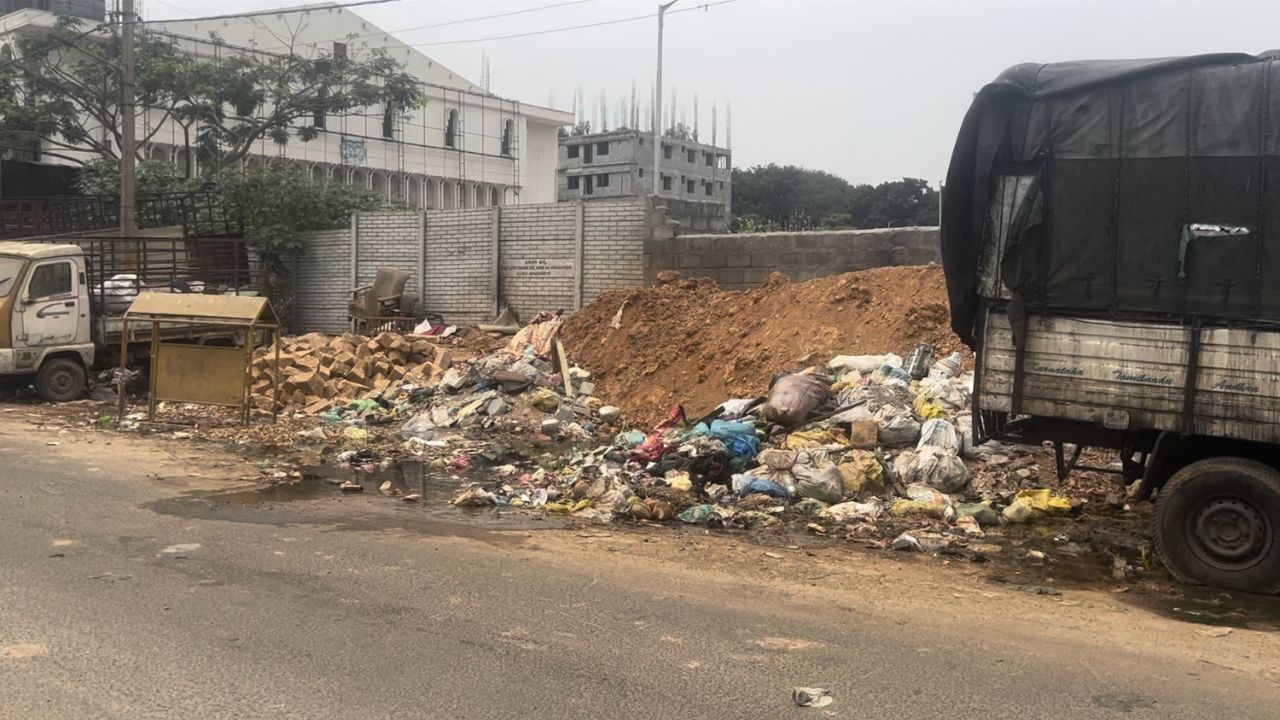
Garbage dumped in the open in Bengaluru. (Anisha Reddy/South First)
Synopsis: Following protests by Bellahalli residents, blocking trucks going to the landfill there, over the poor condition of roads, waste collection in Bengaluru has been severely affected. Waste collection centres are filled with garbage, making further collection impossible and thereby making several streets in the city overflowing with garbage. Adding to that, garbage collection workers complained of poor working conditions and improper wages.
At the waste collection centre in Bengaluru’s Jayanagar, trucks piled high with garbage stand bumper to bumper, emitting foul stench, making it difficult for the workers to segregate the waste.
Following road blockage by residents living near the Bellahalli landfill for the past few days, trucks carrying segregated waste have been returning to the centre and are now stranded.
“Most of the trucks that went from here to the landfill have come back over the last few days. We have to sit and eat next to these huge piles of garbage,” Nazima, a worker at the centre, told South First.
The crisis unfolded after villagers near the Bellahalli landfill blocked more than 150 garbage trucks from entering the facility on 16 February, in protest over worsening road conditions in their area over the last few years. They alleged that the government had barely released any funds to improve the condition of these villages.
The protests came to a halt only after the government promised to release ₹350 crore for five constituencies, including Yeshwanthpur, Anekal and Doddaballapur. However, normalcy has yet to fully return.
Meanwhile, due to the protest, Bengaluru’s garbage collection system took a toll.
Vehicles carrying waste from multiple areas remained stranded, severely affecting collection and disposal operations. While the city’s waste is processed across six landfill sites: Mittaganahalli, Kannur, Chikkanagamangala, Kannahalli, Doddabidarakallu, and Bellahalli, most of the garbage from East and North Bengaluru goes into landfills in Bellahalli.
Piles of garbage still lie on roads in the city, attracting flies, mosquitoes and the risk of a host of diseases. Meanwhile, the Bengaluru Solid Waste Management Limited (BSWML) has decided to look for private lands in different parts of the city for the disposal of waste.
Near Jal Bhavan on Bannerghatta Road, piles of garbage accumulate every day. Residents in the vicinity said that municipal workers set the waste on fire on some days, worsening the existing unhygienic conditions and filling the area with smoke. In fact, a hospital stands just a short walk away from the dumping site.
“Over the last few days, garbage hasn’t been cleared from the spot opposite our shop. Our work already involves strong odours. The piling waste only makes the stench worse, and it becomes difficult to work — or even sit down to eat — here every day,” a shopkeeper who runs a mutton shop near Jal Bhavan told South First.
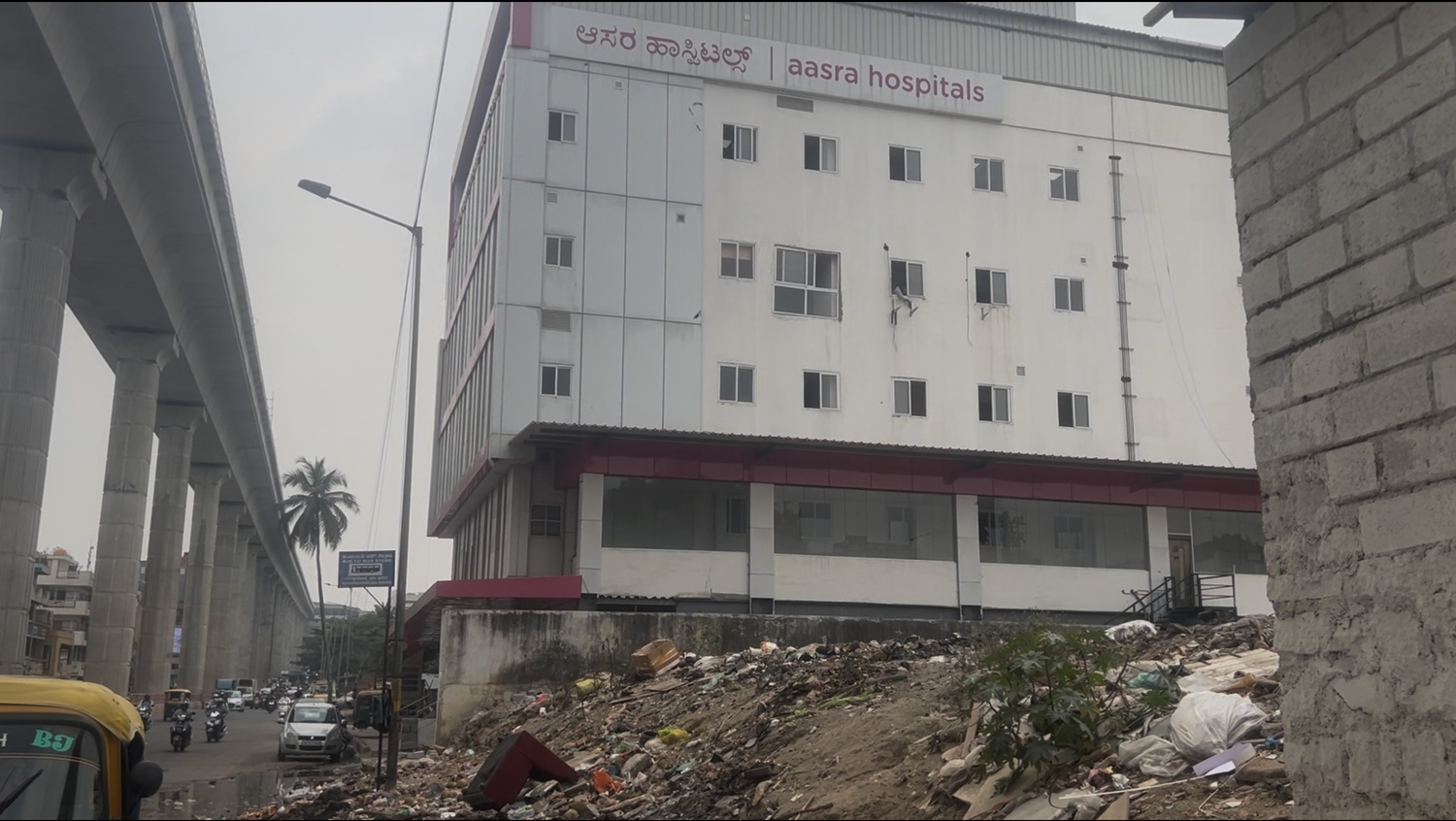
Garbage dump next to a hospital on Bannerghatta Road. (Anisha Reddy/South First)
A passerby, Vivek, said he lives in an apartment directly opposite the garbage dumping ground. He noted that although a hospital is located just across from his home, which is convenient in case of emergencies, he avoids going there because of the persistent stench and unhygienic surroundings.
“The smell is unbearable, especially in the afternoons. It doesn’t feel safe or healthy to step out, let alone visit a hospital located right next to all this waste,” he told South First.
Similar complaints are surfacing throughout the city. In Banashankari, residents said that when door-to-door collection was disrupted, many began dumping their waste at a makeshift spot along the street, turning it into an informal garbage point.
However, residents stressed that the problem was not limited to the recent protest period. They said, even otherwise, collection is irregular and unpredictable, forcing households to either store waste inside their homes for days or dispose of it in nearby open spaces.
“They come regularly in some weeks, but sometimes they don’t. In the last week, they have not even come once. We never know when they will not come, so it becomes uncertain for us. We have to continue living with garbage inside our house. Some of our neighbours throw it on the nearby road, and we have to pass through there every morning, breathing that stench,” Geetha, a resident of Banashankari, told South First.
The pile she was referring to on the road had already started attracting animals.
Waste collection in the city is largely carried out by sanitation workers who allege that they are underpaid, overburdened, and frequently forced to work in conditions that compromise their safety and well-being.
“We ask people to keep sanitary napkins separate, but they don’t. They mix it with other waste. Our workers get infections because of that,” Nazima told South First, while pointing to heaps of garbage spread all across the centre.
She pointed out that some mounds even attract maggots, putting them at risk of health problems. “We still do the work, but we are not able to retain workers anymore. Especially women workers, because they struggle finding a washroom and water,” she said.
When trucks were turned back during the protests, fully loaded vehicles remained parked inside the centre. Workers had to begin their shifts amid the stench of decomposing waste.
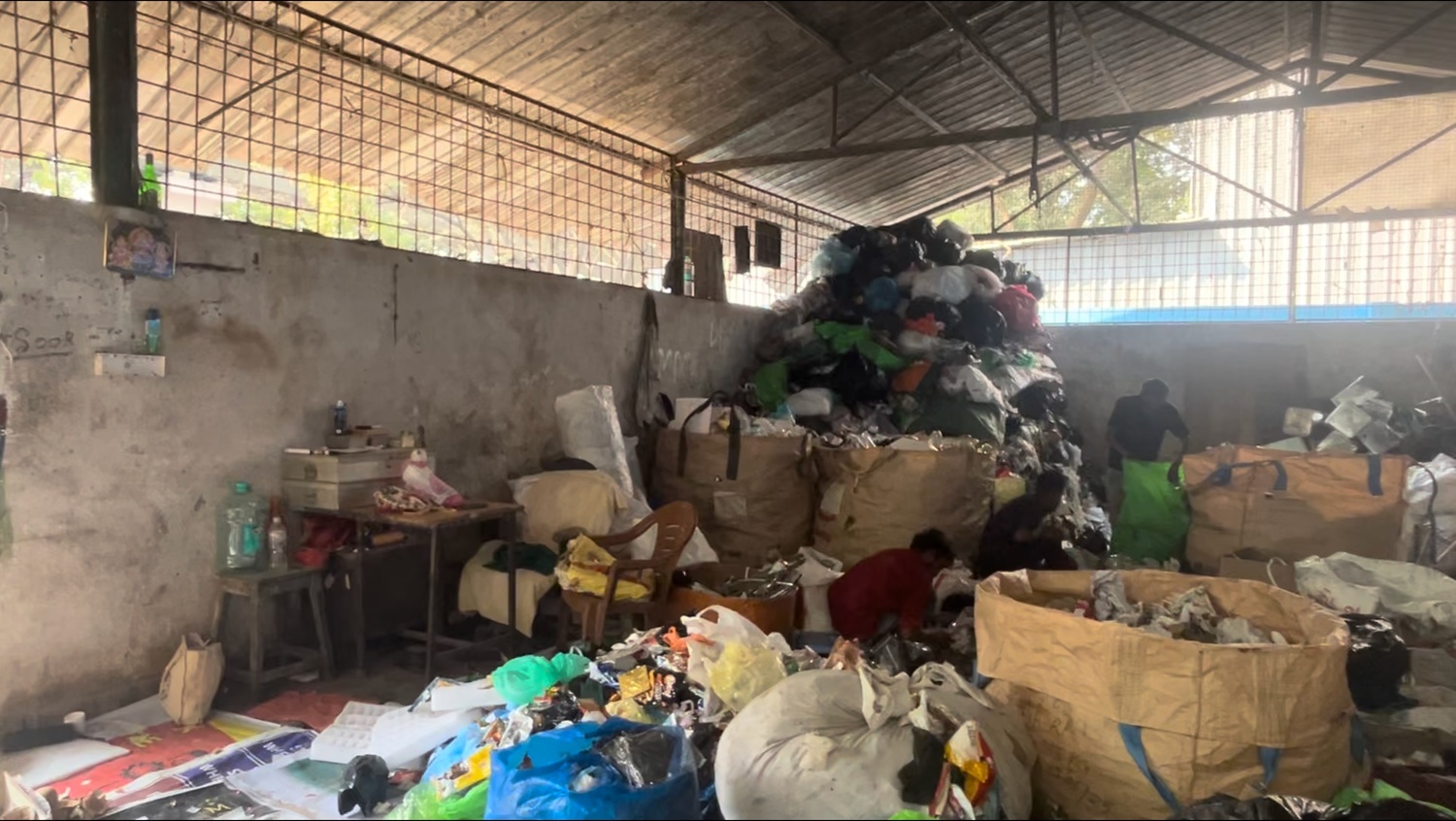
Waste piled up at garbage collection centre. (Anisha Reddy/South First)
Nazima said that the NGO Hasiru Dala provides gloves and masks once a month and conducts periodic health check-ups. “But we have been facing issues with payment,” she added. While workers request small payments from households, many refuse. Some pick recyclable plastic from the waste, sell it, and use that income to survive.
In Bengaluru, the civic body outsources parts of garbage collection and waste management to private contractors for many wards. These contractors hire and pay workers. The civic body pays the contractors.
However, there have been multiple protests over the years over non-payment of dues.
In October 2025, Deputy Chief Minister DK Shivakumar himself admitted that “mafias” are derailing the city’s progress in dealing with the garbage crisis. “We are making a lot of efforts to fix the garbage issue, but the garbage mafia is doing everything to derail this. They have filed a PIL to stop us from taking steps to clear the garbage issue,” he had said.
Another garbage picker alleged that the contractors do not pay them regularly despite sufficient disbursal of funds from the civic body. “They take away a big part of what we earn. If we ask why, they blame the civic body, so that we can’t question more,” the worker told South First on the condition of anonymity.
This is not the first time that protests have blocked garbage trucks from entering landfills, thereby impacting collection across the city.
In 2024, residents of Mittiganahalli and Kannuru blocked the entry of garbage trucks to the Mittiganahalli waste processing plant for three days, after years of unaddressed complaints over leachate contamination. The protest affected door-to-door garbage collection as well as the transportation of waste from the city to the landfill.
In fact, in 2012, the city made global headlines after local villagers blocked the roads leading to the Mandur landfill. The New York Times carried a story with the headline “India’s Plague, Trash, Drowns Its Garden City During Strike.” Even at the time, workers had alleged that they had not been paid for months.
Over the last few years, the civic body has initiated drives to clean up garbage — some were termed controversial. In November 2025, the Greater Bengaluru Authority launched a drive to crack down on habitual offenders who dumped waste on roadsides instead of handing it over to authorised collection agencies.
In a controversial move, officials returned the garbage to the doorsteps of those identified as violators. It was a tactic meant to shame repeat offenders.
Residents and activists at the time argued that such measures missed the larger issue. “There is no updated micro plan for efficient garbage collection, and this is turning neighbourhoods into black spots, especially in the dry season, when trash is being burnt openly, polluting our air,” Valli Srinivasan, from Bellandur Development Forum (BDF), a community-driven group, told South First.
Activists said the focus should be on strengthening door-to-door collection systems, ensuring reliable waste management infrastructure, and imposing consistent fines on repeat violators, rather than resorting to symbolic actions.
However, amid the pile-up of garbage on roads, the BSWML is once again reportedly planning to relaunch this contentious initiative.
(Edited by Muhammed Fazil.)


