

Published Feb 05, 2026 | 11:43 AM ⚊ Updated Feb 05, 2026 | 11:43 AM

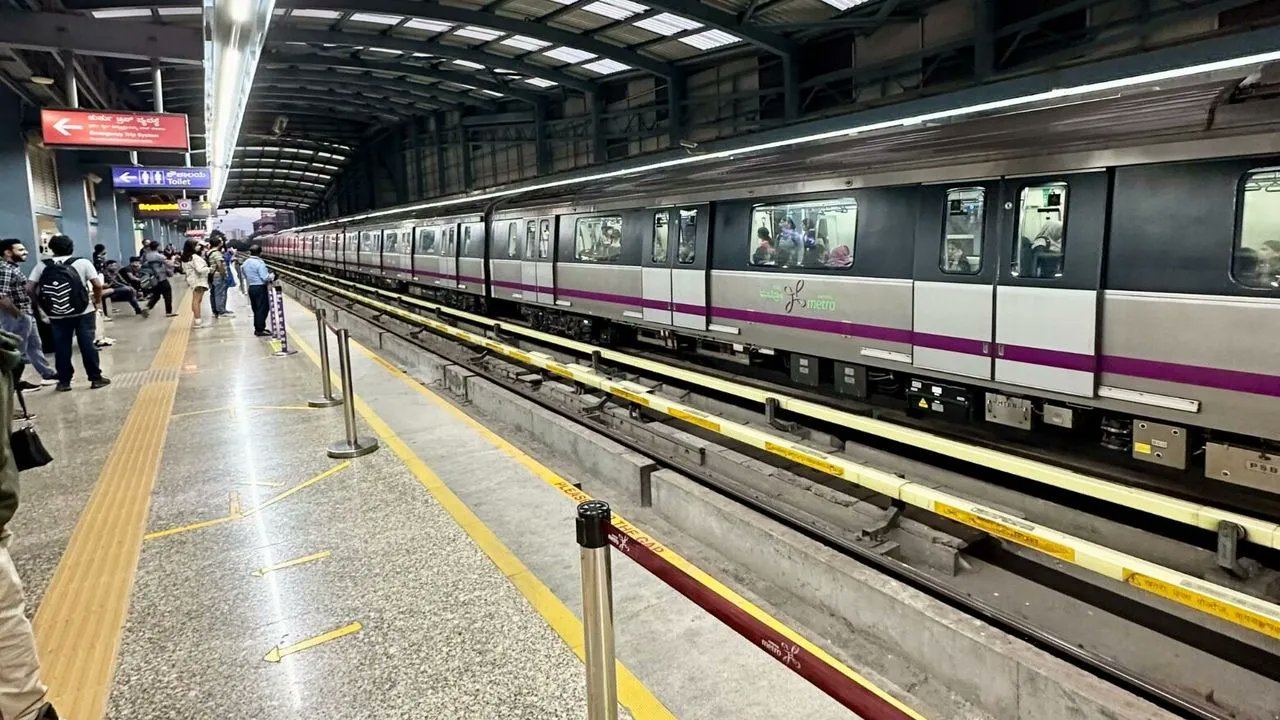
Bengaluru Metro.
Synopsis: The Bangalore Metro Rail Corporation Limited announced an annual fare revision according to a recommendation by the First Fare Fixation Committee. The committee noted that the earlier revision, after 7.5 years, resulted in an average increase of 51.55 percent and to avoid such a steep increase, it has decided to proceed with an annual revision.
The Bangalore Metro Rail Corporation Limited (BMRCL) announced an annual fare revision according to a recommendation by the First Fare Fixation Committee (FFC) constituted under the Metro Railways (Operation & Maintenance) Act, 2002.
According to a press release by the BMRCL, the revised fare will come into effect from 9 February. The committee noted that the earlier revision, after 7.5 years, resulted in an average increase of 51.55 percent and to avoid such a steep increase, it has decided to proceed with an annual revision.
“The FFC, while recommending the revised fare structure for BMRCL, observed that revision of fare after 7.5 years and optimisation of fare zones from 29 to 10 resulted in an average increase of 51.55 percent. With a view to avoid such infrequent and steep fare increases in the future, the committee has recommended annual fare revision through a transparent Automatic Fare Revision Formula linked with O&M cost or 5% per annum, whichever is lower, rounded off to the nearest rupee,” it said in the release.
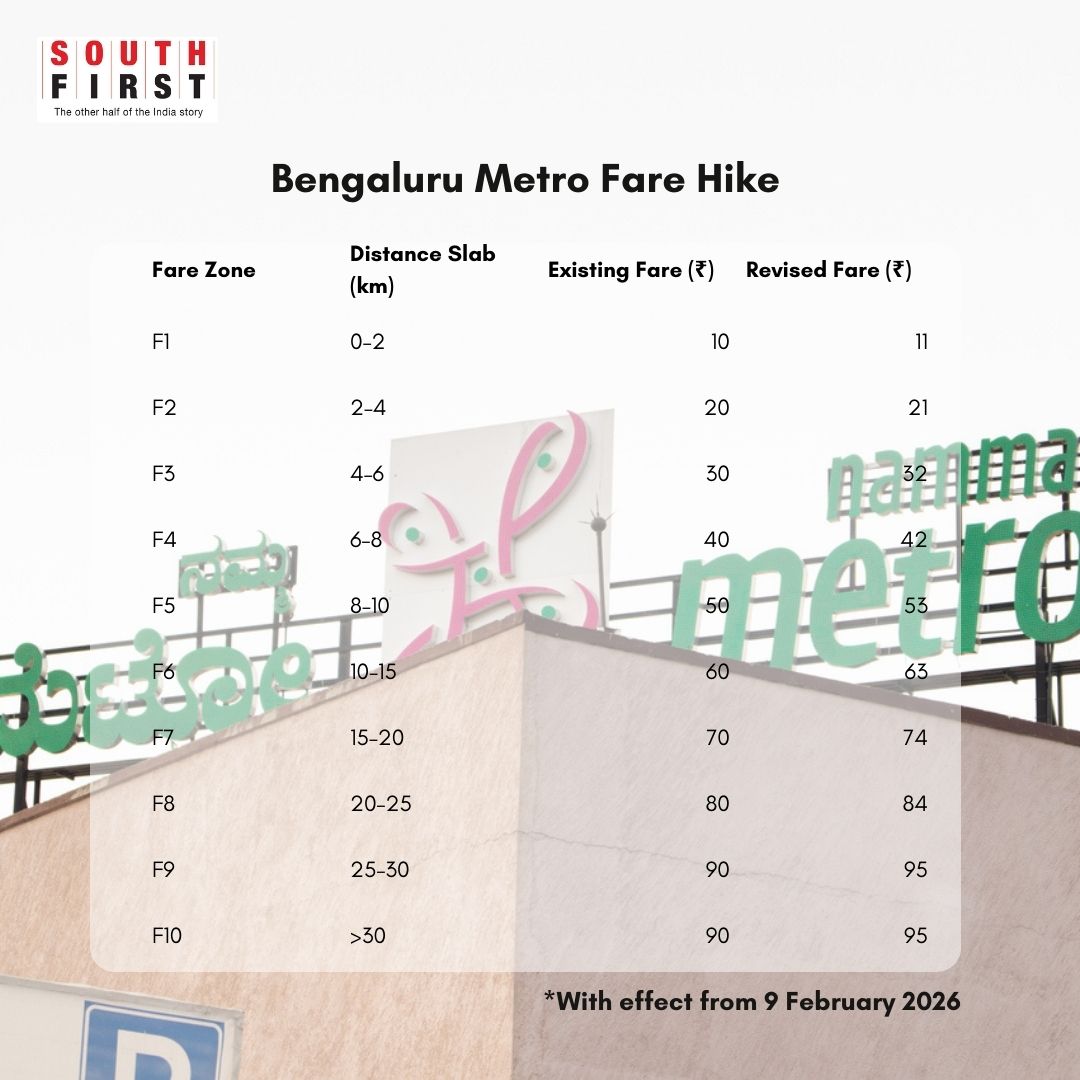
Bengaluru Metro Fare Hike
BMRCL said the fare has been increased within a range of ₹1 and ₹5 across 10 fare zones.
“In keeping with the recommendations of the FFC, which are binding on BMRCL, it is hereby notified that an Annual Automatic Fare Revision will be implemented with effect from 9 February 2026, on expiry of one year from the date of implementation of FFC-recommended fares (9 February 2025). The marginal increase ranges from a minimum of ₹1 to a maximum of ₹5 across 10 fare zones on the entire operational network of 96.10 km,” BMRCL said.
“Based on the audited financial data for FY 2024-25 (as on 31 March 2025) compared with base data of FY 2023-24 (as on 31 March 2024), the formula-based index indicates a cost increase of 10.20%. However, the fare revision has been restricted to 5%, in line with FFC stipulations,” it added.
It further said that the existing discounts of five percent during peak hours, 10 percent during non-peak hours and 10 percent discount on Sundays and three designated national holidays will continue.
According to the press release, the annual increase of five percent will apply to tourist cards and group tickets as well.


