


Published Mar 13, 2026 | 10:00 AM ⚊ Updated Mar 13, 2026 | 10:00 AM

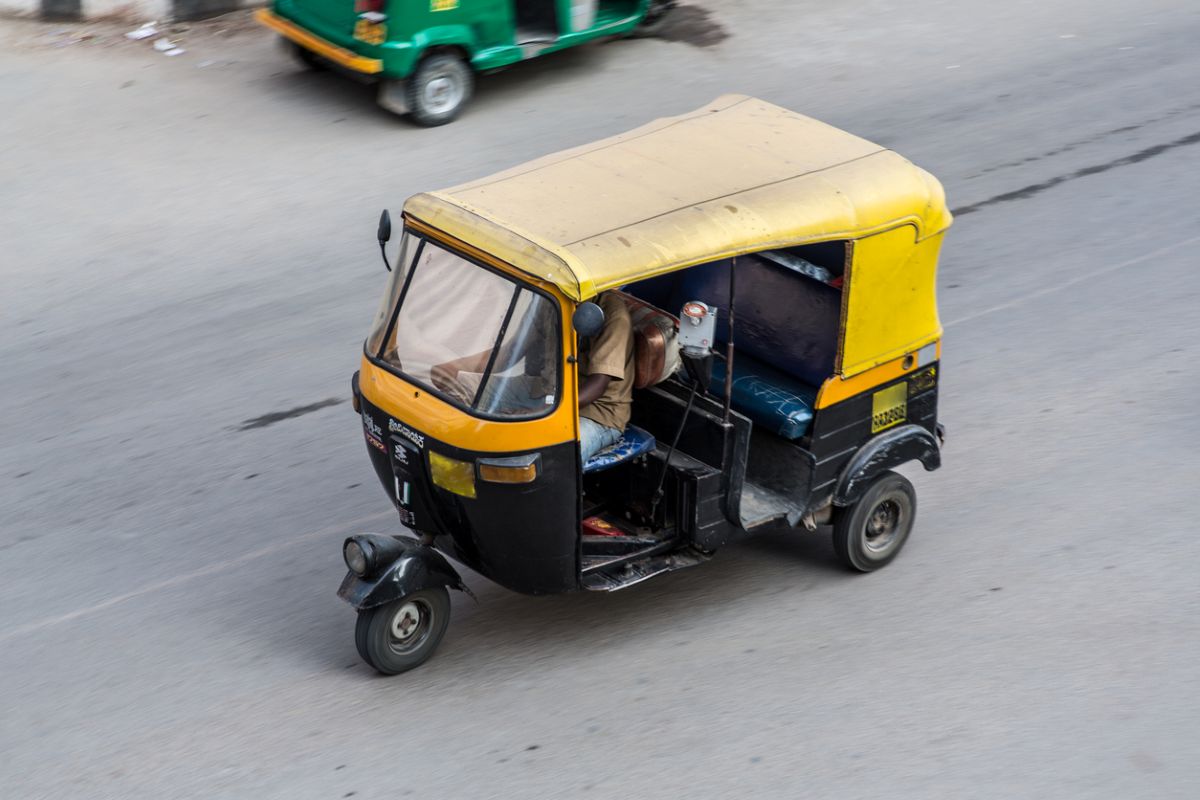
Auto drivers, gig workers hit by LPG shortage. (iStock/ representational)
Synopsis: Several LPG filling stations in the city reported no supply on Thursday, with auto drivers saying they have been facing the shortage since Monday, 9 March. In Bengaluru, majority of the autos use LPG as their primary fuel source, while a small number operate on CNG and a few have shifted to electric vehicles.
Even as the ongoing crisis in supply of LPG continues to disrupt services in the food and hospitality sector, informal workers, including auto drivers, gig workers, roadside food vendors and employees in micro, small, and medium industries are expected to be hit the hardest.
More than four days into the disruption of supply of commercial gas cylinders due to the ongoing US–Israel war with Iran, anxiety is mounting among informal workers about how they will sustain their livelihoods. Many of them rely on LPG for their vehicles and daily earnings.
“Several pumps have stopped filling LPG. Yesterday I had to travel nearly two hours to find a pump that was still filling LPG. If this continues, I may have to stop driving in the next two or three days,” Asif, an auto driver with the ride-hailing platform Namma Yatri in Bengaluru told South First.
Visuals circulating on social media showed long queues at petrol pumps, with auto drivers and gig workers waiting for hours, cutting down the number of trips they can make in a day.
Viluppuram, Tamil Nadu: Long queues of vehicles were seen at a petrol pump amid concerns over possible fuel shortages following reports of LPG supply disruptions linked to the ongoing US-Israel-Iran conflict.
(11/03) pic.twitter.com/MudX5INin6
— IANS (@ians_india) March 12, 2026
Waiting near the Cubbon Park Metro station, Nazeem, an auto driver, said he had not been able to fill LPG in his vehicle on Thursday, 12 March.
“Yesterday, I had to travel from here to the Devegowda Petrol Pump, nearly 10 km away, to get LPG. I had to wait for almost two hours. How will we sustain like this? Because of this, I couldn’t take the usual number of rides I do in a day,” he said.
Several LPG filling stations in the city reported no supply on Thursday, with auto drivers saying they have been facing the shortage since Monday, 9 March. In Bengaluru, majority of the autos use LPG as their primary fuel source, while a small number operate on CNG and a few have shifted to electric vehicles.
Meanwhile, despite the Union government denying any shortage in the supply of domestic LPG, auto drivers said they were facing difficulties in making new bookings for cylinders for households too.
“It has been more than 25 days since my last booking, but they are still not allowing me to place a new one. For now, they have asked me to try again after 15 March,” Nazeem said. “I am neither able to earn enough because of the limited number of rides nor able to get cylinders for household use.”
Additionally, drivers also pointed out that prices of gas used in vehicles have surged from ₹62 per litre to ₹75 per litre, a steep increase of ₹13 in a single revision. A driver alleged that different pumps were charging their varied rates for LPG.
Meanwhile, gig workers too have been facing the heat of disruption in LPG. In a press release, the Telangana Gig and Platform Workers’ Union (TGPWU) and the Indian Federation of App-Based Transport Workers (IFAT) said that any disruption in LPG supply could lead to long queues at fuel stations, fewer trips, and immediate income loss for drivers who are already struggling with rising operational costs.
“The unions also call on aggregator companies to support workers during this period by ensuring transparent communication, considering temporary incentives, and avoiding any penalties or account restrictions caused by unavoidable service disruptions,” their statement read.
🚨 LPG and CNG supply shortages may impact thousands of gig workers across India.
App-based drivers using #Ola, #Uber, #Rapido and delivery workers with #Swiggy and #Zomato depend on uninterrupted fuel supply for their livelihood. pic.twitter.com/UEmqfEUmFX
— Telangana Gig and Platform Workers Union (@TGPWU) March 12, 2026
Apart from ride-hailing apps, gig workers associated with food delivery platforms like Swiggy and Zomato, are reporting fewer orders as restaurants cut down on their menus and operations.
“While restaurants have not shut down completely, the number of orders being assigned have decreased. I used to get more than 30 orders a day, but it has now dropped to 15. I am paid per order so my earnings will take a hit,” a gig worker with a food delivery app said.
The shortage has also begun affecting larger industrial clusters such as the Ambattur Industrial Estate, in Chennai, where manufacturing activities involving machinery are carried out on a bigger scale.
The Ambattur Industrial Estate alone houses more than 1,500 units ranging from small and medium enterprises to large industries. These include companies manufacturing automobile spare parts, engineering components, and several other industrial products.
A majority of these industries rely on gas-based processes for their operations.
S. Paulsamy from the Ambattur Industrial Estate said that several companies depend on processes such as welding, burnishing, and heat treatment, and without these processes, production cannot move to the next stage.
“Because of the current gas restrictions, these companies are facing a situation where operations could come to a halt. At present, at least 10,000 workers are unable to carry out their work due to the gas shortage. The full extent of the impact is still unclear. If this situation continues, most of the industries here may not be able to sustain production, leading to stagnation and losses worth several crores of rupees,” he said.
Not just in Chennai, several industrial hubs across Tamil Nadu operate with gas-dependent processes. With the gas shortage continuing, industries in these regions are also likely to face similar disruptions.
However, compared to larger industrial clusters, small shops, are not yet facing the shortage. At a welding shop in Alandur, Chennai, Dinakaran, who runs the establishment said, “We usually buy a 140-pound cylinder once a week or once in ten days depending on our requirement, paying around ₹1,500. So far, we have not faced any shortage. Whenever we need it, we are able to get it. Therefore, we have not had any problem and our work has not been affected.”
In Karnataka as well, industry representatives fear that LPG disruption could lead to potential slowdown in exports from MSME sectors and risk the employment of lakhs of workers dependent on this ecosystem.
“For many micro and small units, energy costs account for nearly 15–30 percent of production expenses. Any increase in LPG prices or supply disruptions directly impacts production and business sustainability,” Shivakumar R, immediate past President of Peenya Industries Association said.
More than 13,000 MSME industries operate in the Peenya Industrial Area, in Bengaluru, with approximately 7,000 small-scale units and about 250 medium industries, that employ nearly 13 lakh workers, including a large number of women workers, Shivakumar pointed out.
“A large number of micro and small enterprises in Peenya rely on LPG and industrial gases for manufacturing processes such as foundry and casting operations, heat treatment processes, powder coating industries, engineering fabrication and welding, food processing units and chemical and pharmaceutical manufacturing,” he explained.
He said that priority allocation of LPG to domestic consumers is reducing availability for these processes. Additionally, increase in LPG and industrial gas prices is leading to higher production costs.
(Edited by Sumavarsha)


