


Published Dec 16, 2025 | 9:00 AM ⚊ Updated Dec 16, 2025 | 9:00 AM

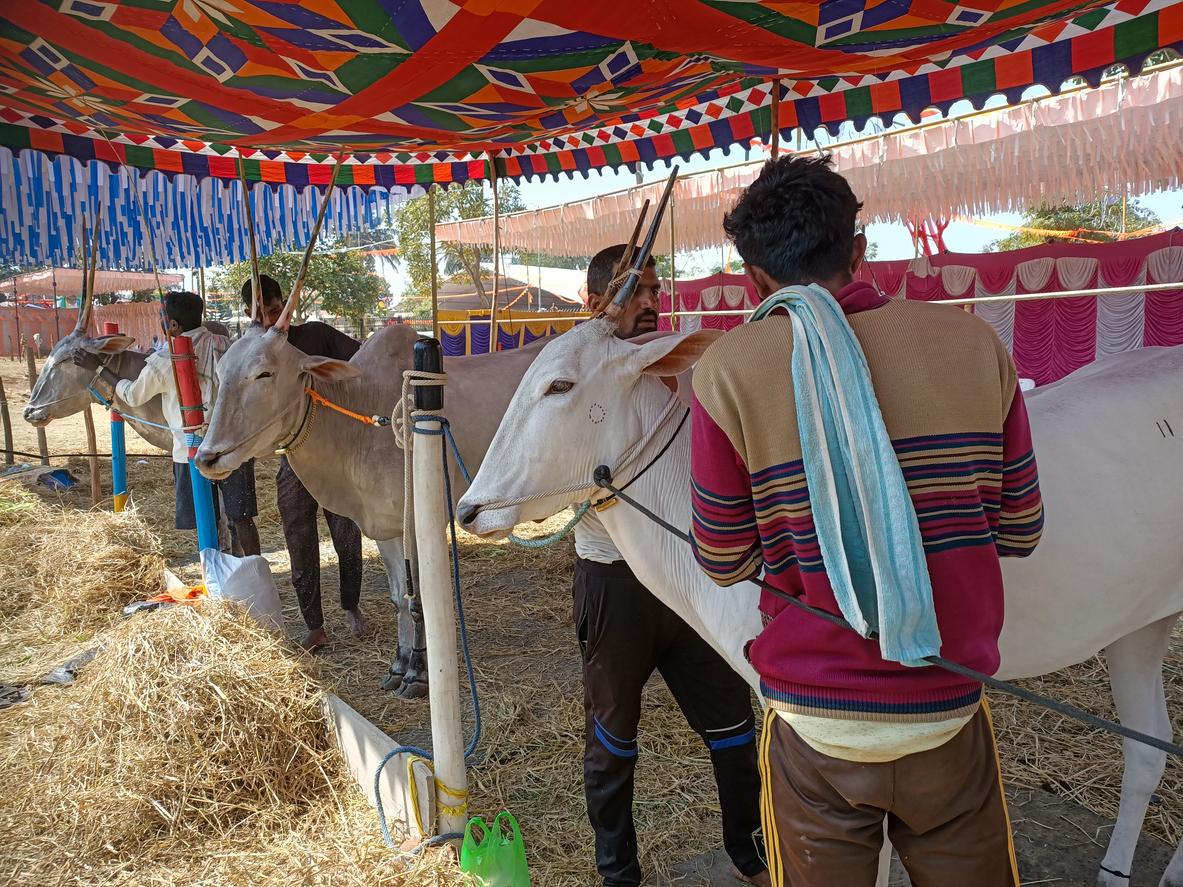
A Cattle fair where bulls, oxen, buffalo, livestock animals are bought and sold during Maha Shivaratri festival by the native farmers near Mysore. (iStock)
Synopsis: The erstwhile BJP government in Karnataka introduced a law prohibiting the sale, purchase, intra-state and inter-state transport, slaughter, and trade of all cattle. However, farmers are demanding the withdrawal of the legislation, as selling old or sick cattle to traders had helped them manage high maintenance costs and earn a decent income.
Gangappa, a farmer from Raichur district in Karnataka, used to sell his cattle if they were older than 12, sick, injured, or became unmanageable due to any other reason. The money he earned — often close to what he had paid for the animals — helped him get through difficult times, whether it was repaying loans or paying rent for his land.
The money from the sale is then reinvested in new cows. It was a cycle that brought some form of stability for farmers like him amidst drought, distress and rising input costs. However, for the past few years, his cattle have brought him no income at all.
More than four years after the Karnataka Prevention of Slaughter and Preservation of Cattle Act, 2020 was enacted by the erstwhile BJP government in the state, its ripples have been felt among farmers, cattle traders, leather workers and those involved in meat export — a profession largely occupied by Dalits and Muslims.
The Act, which was enacted in 2021, prohibits the sale, purchase, intra-state and inter-state transport, slaughter, and trade of all cattle (cows, bulls, buffaloes, oxen). Buffaloes above the age of 13 and terminally ill cattle are exempted from the law, only if certification is provided from a veterinarian.
The punishment is imprisonment for up to seven years, with a fine ranging between ₹50,000 and ₹5 lakh for the first offence, penalties ranging between ₹1 lakh and ₹10 lakh for second and subsequent offences.
The Congress, ahead of the 2023 Assembly elections, had hinted that it would repeal the law. In February 2023, Siddaramaiah had stated that the law should be removed as it has a communal agenda. “There are no buyers for sick and aged cattle. It is a loss for the farmers,” he had said. In its manifesto, the party promised that it would repeal “anti-farmer” laws introduced by the BJP and withdraw cases against farmers.
However, it hasn’t yet walked the talk. Instead, the state Cabinet, on 4 December, approved a proposed amendment to the Act which will allow vehicles seized for alleged illegal cattle transport to be released on an indemnity bond instead of a bank guarantee. It cited a Karnataka High Court order from 2022 that ordered the release of seized vehicles on an indemnity bond.
While farmer organisations say the proposed amendment would help those who can’t afford a bank guarantee for the release of their vehicles, which are usually priced ₹3 lakh and above, they continue to advocate for a complete withdrawal of the law.
“Farmers organisations have been demanding withdrawal of the BJP’s law as it is anti-farmer. The amendment is a little too less, too late. The poor have already incurred a lot of losses, and it is time for the Congress government to keep up its word,” said Yashavantha T, general secretary of the Karnataka Prantha Raitha Sangha.
He claimed that around 25 percent of the agricultural income comes from selling cattle. “It is like a bank deposit for farmers. Now, all of this is prohibited; farmers have lost their rights,” Yashavantha said.
While farmers were urged to leave their cattle, if they were old or sick, at gaushalas or cattle shelters, many of them did so without any financial returns.
“I left three of my cows at a gaushala after they became sick. But I did not get anything in return. I couldn’t keep them with me either because the cost of maintaining sick animals is extremely high. Either way, it was a situation that would cause me loss,” Gangappa said.
For the effective implementation of the Act, the Basavaraj Bommai-led BJP government had proposed that the number of gaushalas be increased from 31 to 100, and that ₹50 crore would be provided for the same.
However, the party lost the Assembly Elections in 2023. In January 2025, the Congress government decided to modify this proposal by deciding to improve the condition of existing gaushalas in the state instead of creating 100 new ones.
“As many as 16 gaushalas under the proposal were completed, and works of 35 others have started, but there are no cattle in many of these new gaushalas. So, instead of creating new gaushalas, the existing ones will be improved,” Law Minister HK Patil had said.
However, farmers maintained that giving away cattle to these gaushalas didn’t bring them any relief, as the government had then promised them, and that they would prefer to sell them. Another option that farmers used to have was to sell cattle at regularly held cattle fairs across the state, where farmers usually sell to cattle traders. However, many of these markets have either come to a standstill or have been witnessing a reduced footfall.
Even if farmers do choose to sell their cattle in these markets, the prices they are offered are usually considerably lower than the purchasing price. “Last year, I sold a pair of cattle for just ₹5,000, after visiting multiple market fairs. The transport cost to and from these markets was higher than the price for the cattle,” a farmer from Mandya said.
The ban on cattle slaughter has not just affected farmers, but cattle traders, butchers, vendors, and consumers, apart from dealing a debilitating blow to the livestock, leather and meat economy of Karnataka, according to a November 2021 report authored by Dr Sylvia Karpagam, a public health doctor and researcher, and Siddharth K Joshi, a public policy scholar.
“If you purchased animals from farmers, the vigilantes would wait till you travel 1–2 km away from the cattle market. After that, they would come and stop us and seize the vehicles with the animals. They would assault and abuse the transporters,” Khasim Qureshi from All India Jamiatul Quresh-Karnataka (AIJQ), told the researchers.
Although the proposed amendment is meant to provide relief to such transporters, many remain unaware of it. “We didn’t know that the state had approved an amendment. Farmers and traders have no information about it,” said Yashavantha, adding that their demand remains unchanged: A complete repeal of the Act.
The Act has also created an environment of fear among traders who are transporting cattle for legitimate reasons, including dairy farming, amid attacks by right-wing groups.
In March 2025, in the Dakshina Kannada district, Bajrang Dal activists attacked and assaulted Koosappa Poojary, a farmer from Karinje village, and Abdul Rahman, whom Poojary had hired to transport his cow for breeding.
In June 2025, Sri Rama Sene activists intercepted a vehicle transporting cows in Ingali village in Belagavi. They took the driver to the police station and alleged the cows were being illegally transported for slaughter and that they were on their way to a slaughterhouse.
However, the driver insisted the cattle were being transported for dairy or taming purposes and produced valid documents to show the same. He further alleged that the Sene activists attempted to extort money from him by making false accusations.
While the police registered a case against the Sene activists, the complainant was also booked along with others for assaulting the activists after they chased the owners again, despite authorities handing over the cattle back to them after checking documents.
Another case that sent shockwaves across the state was the murder of Idress Pasha, a cattle transporter. Pasha was assaulted and allegedly killed by a group of Hindutva extremists led by Puneeth Kerehalli in 2023.
“So much fear has been created due to such incidents wherein farmers carrying out their usual dairy and agricultural activities are targeted. The amendment is not sufficient to placate the discrimination they have been facing,” Yashavantha said.
He demanded that the government withdraw the rule that demands a compulsory permit for transporting cattle from the Animal Husbandry department, from the farmers’ house to the cattle market.
Although the proposed amendment is yet to be tabled at the ongoing legislature session in Belagavi, right-wing groups, including Vishwa Hindu Parishad (VHP) and Bajrang Dal, have been organising protests across the state, alleging that the amendment would favour those involved in cattle trade for slaughter and undermine efforts to curb cow slaughter.
They claimed that the government’s move amounted to “sympathy for cattle lifters” and that it was part of broader actions that “target Hindus”.
(Edited by Muhammed Fazil.)


