

Published Jun 09, 2026 | 8:00 AM ⚊ Updated Jun 09, 2026 | 8:00 AM

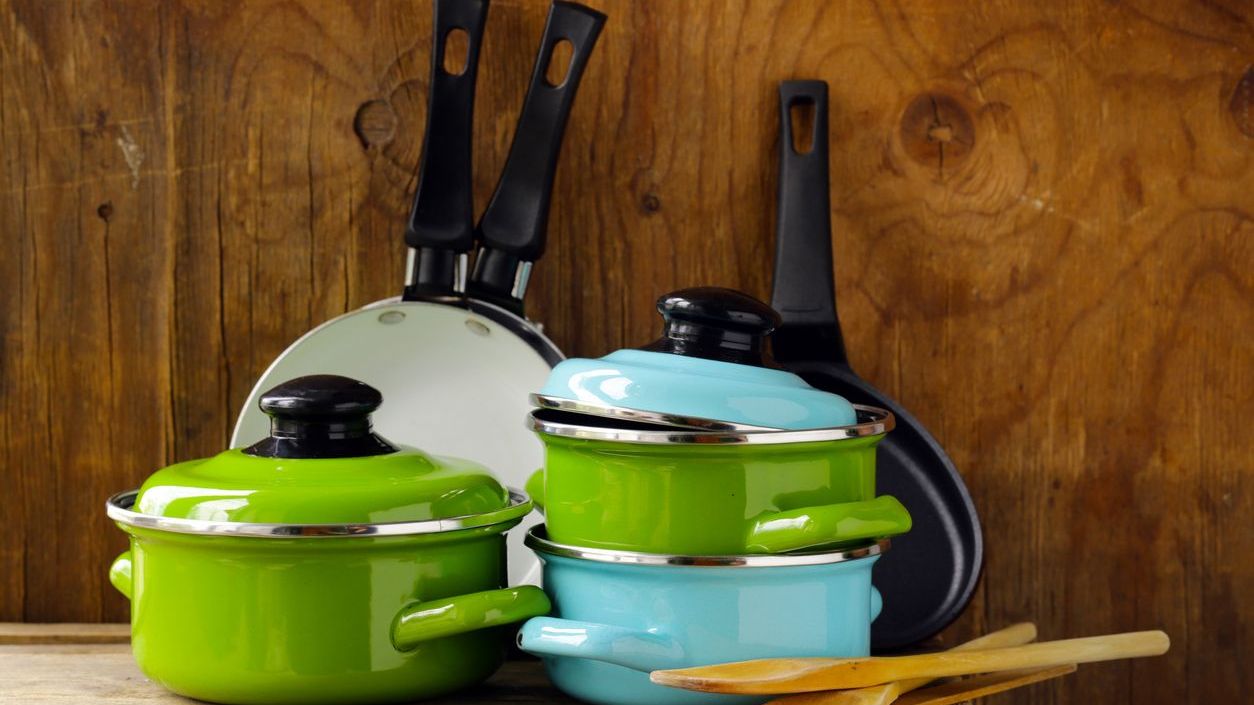
Cookware. (iStock)

Synopsis: A recent report said commonly used cookware, made of plastic, non-stick, and ceramics, could be releasing microplastics and other toxins into the food. The report advances stainless steel as the evidence-backed alternative and sets out the material science behind that claim with some precision.
Every day, people cook meals without giving a second thought to the material their pots, pans, and utensils are made from. A new report argues that this assumption of safety is not always warranted.
The report, titled Invisible Health Risks in the Kitchen: Why Has Stainless Steel Become the New Safety Standard, by World Stainless, the global industry association for the stainless steel sector examines three categories of kitchenware in widespread use which is plastics, Polytetrafluoroethylene; Teflon (PTFE)-coated non-stick cookware, and ceramics and assesses how each behaves under the temperatures, acidity levels, and patterns of repeated use that characterise an ordinary kitchen.
Its central finding is structural: “Consumers are often unaware of the potential risks associated with different kitchenware materials,” the report states, framing this not as a consumer failing but as a gap in how the industry discloses information.
Also Read: South Indian kitchens may be unknowingly cooking with dangerous adulterants, doctors warn
Plastic kitchenware carries widely trusted labels. “Food-grade” and “BPA-free” have become standard marketing terms. The report examines how far those assurances hold under actual cooking conditions.
According to the report, plastic kitchenware may release plasticisers, bisphenol A, and micro and nanoplastics when exposed to temperatures above 70 degrees Celsius. That threshold is lower than most consumers would expect. It is reached when a plastic bowl holds hot soup, when a ladle rests in a simmering pot, or when a container is microwaved.
The concern compounds with product quality. The report notes that “low-quality products may contain recycled materials with potentially harmful contaminants” that can leach dangerous chemicals into food and shed microplastics during use, neither of which is visible or detectable at the point of purchase.
PTFE coatings, marketed commercially as Teflon, have been a fixture of domestic kitchens since the 1950s. Their practical advantages are real: Food releases cleanly, pans are easy to clean, and the products are affordable.
The white paper identifies a decomposition threshold that sits within the range of ordinary cooking. PTFE coatings can begin to break down at around 260 degrees Celsius, a temperature routinely reached during stir-frying, searing, or high-heat cooking.
At that point, the coating may release fumes and PFAS chemicals, per- and polyfluoroalkyl substances, a class of synthetic compounds that have drawn sustained regulatory concern for their persistence in the environment and potential accumulation in the human body.
Physical deterioration introduces a second risk. When non-stick surfaces chip or peel with age and regular use, fragments enter food directly. The paper notes that a damaged coating also accelerates the release of micro and nanoplastics during subsequent cooking, compounding exposure over time.
Ceramic cookware is widely perceived as a safer, more natural alternative to plastic and Teflon. The white paper’s concern with this category is specific: It is about the glazes, not the ceramic material itself.
“Heavy metal migration has always been a key concern when people use ceramic kitchenware,” the report states. Some lower-cost products use glazes containing lead and cadmium, metals added to achieve bright, stable colours.
Both are toxic with chronic exposure. Lead has no established safe threshold for long-term intake. Cadmium accumulates in the kidneys over time.
The report notes that these metals can migrate into food, particularly in contact with acidic ingredients, and that consumers currently have no reliable means of identifying whether a product’s glaze contains them before purchase.
Also Read: 27 of every 1,000 children die due to exposure to dirty cooking fuel
What connects the three categories, the report argues, is not only a set of material risks but a structural gap in how that risk is communicated.
Kitchenware reaches consumers with limited disclosure about its composition and behaviour under heat. Labels such as “food-grade” or “non-toxic” are not uniformly defined or enforced across markets. Purchasing decisions are consequently made on the basis of price, appearance, and brand familiarity rather than verified safety data.
The report frames this as a market-wide problem: The information required to make an informed choice is largely unavailable at the point of sale.
The report advances stainless steel as the evidence-backed alternative and sets out the material science behind that claim with some precision.
“Stainless steel is an iron-based multicomponent alloy containing Chromium, Nickel, Molybdenum and other alloying elements, with a Chromium content of at least 10.5 percent, the critical ratio defining its safety characteristics. Chromium forms a dense, stable Chromium oxide passivation film firmly bonded to the surface, which prevents leaching of internal metal ions,” the report states.
In practical terms, food-grade stainless steel is chemically inert under cooking conditions. It does not decompose at high temperatures. It does not shed coatings or particles. It has no glazes containing heavy metals.
The report notes that it remains stable when in contact with acidic and alkaline foods, including tomatoes, citrus, and vinegar, without significant corrosion or metal migration under normal cooking conditions.
On durability, the report cites industry figures suggesting food-grade stainless steel products can remain serviceable for up to 120 years, against one to two years for plastic kitchenware and three to five for ceramic. The material is also fully recyclable and can be reprocessed without meaningful loss of properties, which the report positions as consistent with circular economy objectives.
The paper attributes food sticking to the cooking technique rather than the material itself. It points to the Leidenfrost effect — preheating the pan to the correct temperature before adding food — as a standard method that substantially reduces sticking.
The paper’s overall conclusion is direct: “Practice has proven that stainless steel kitchenware can perfectly replace other kitchenware in all core usage scenarios, boasting overwhelming advantages in terms of health and safety, service life and overall cost.”
(Edited by Muhammed Fazil.)



