
Published Feb 04, 2026 | 9:07 AM ⚊ Updated Feb 04, 2026 | 9:07 AM

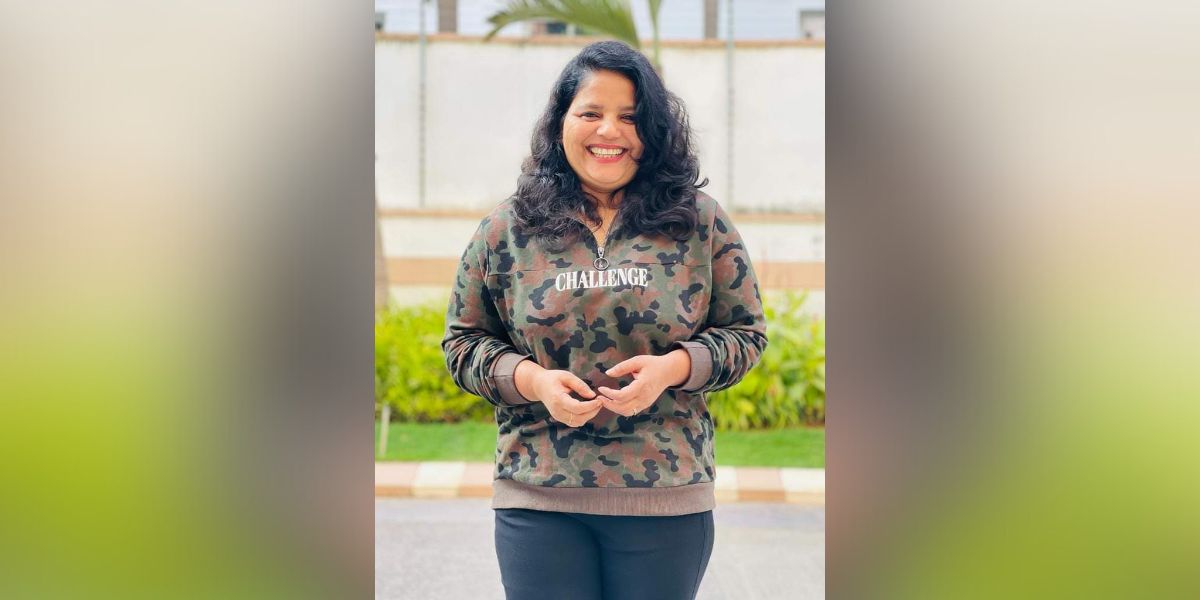
Jaya Naushad. (Supplied)
Synopsis: The story of Jaya Naushad, a Chennai-based film artist, is an inspiration to people fighting cancer. From the time of her diagnosis, she fought the disease with resilience, alongside her family and friends, and is now helping others find the strength to fight it.
Jaya Naushad, a Chennai-based associate director of films, had packed her bags with the comfort of certainty. She took a short 10-day break to visit her hometown, Kozhikode in Kerala.
The visit was meant to be a pause — a return to family, laughter, and familiar rhythms before she flew back to work. Her return ticket to Chennai was already booked. Life was moving exactly as planned.
Between family conversations and peaceful nights at home, a disturbing nightmare shook her. She dreamt that her eldest daughter was seriously ill, and the fear lingered long after she woke up. “The dream was so disturbing. Even after I woke up, I couldn’t shake off that feeling,” she recalled.
Later, while speaking to her daughter about the dream over the phone, something unexpected happened.
Almost unconsciously, her hand moved across her left breast. That was when she felt it — something unfamiliar beneath her skin. It did not feel like a tumour to her, only like a bruise or slight swelling she assumed would fade. “I never thought it could be cancer. I felt it might be just a bruise or swelling,” she said. Still, the sensation left her unsettled.
“I thought if something was there, I could just remove it and go back to normal life,” she added. Later, she spoke about this to her family doctor working in England.
After listening to her concerns, the doctor advised her not to ignore the symptom and suggested she undergo a mammogram immediately. “He told me, ‘If you have even a small doubt, don’t wait,” Jaya said.
She followed the advice, expecting reassurance. Instead, the mammogram led to further tests. One referral followed another, and with every step, an unfamiliar anxiety grew within her. “When the tests kept increasing, I started feeling that this was not something small,” she said quietly.
Slowly, she began to realise that what she had dismissed as a minor swelling could be something far more serious than she had imagined.
“But when I finally accepted that it is cancer, the fear disappeared. I only thought about one thing — I needed to come back to my life,” she said.
The diagnosis confirmed breast cancer. For many, that word arrives like a full stop. But for Jaya, it became a turning point.
She described the early days of diagnosis as an emotional storm where anger, sadness, frustration and helplessness took turns overwhelming the mind. Yet, she insisted that the biggest battle was never against the disease itself.
“The biggest enemy is the subconscious mind. It keeps trying to destroy confidence,” she said, adding that learning to control fear became her first step toward recovery.
Cancer treatment introduced her to pain she had never imagined. Chemotherapy drained her body in ways she struggled to describe.
Sleep disappeared entirely. For nearly a week after each cycle, she could not close her eyes even for a few minutes. The exhaustion was not just physical — it slowly chipped away at emotional stability.
She explained that lack of sleep during treatment created severe mental and physical irritation. The body reacts violently, and emotions spiral without warning.
Eating, another essential part of treatment, became equally torturous. Nausea, mouth sores, vomiting and loss of appetite made every meal feel like a punishment rather than nourishment.
“There were moments when swallowing food felt impossible. But I knew if I stopped eating, I would not be strong enough for the next chemotherapy,” she said.
She described how patients often react with anger when family members insist they eat, not because of resistance but because they cannot explain the physical discomfort.
Jaya also spoke about family support with deep emotion, often pausing as she recalled those days. She said cancer strips away a person’s sense of normalcy.
“While battling cancer, a person is not themselves. They become someone else entirely. That is when family becomes the biggest strength,” she said.
Her family stood beside her through sleepless nights and emotional collapses. They stayed patient when treatment changed her mood and comforted her when physical pain became unbearable.
She believes that family support does more than offer emotional comfort — it directly influences survival.
“I was strong, and when I became strong, my family became stronger,” she added.
Friends and acquaintances also reached out to her during treatment. Many cancer patients undergoing biopsies and therapy started calling her, seeking reassurance and emotional support. They comforted each other.
The growing number of conversations eventually led her to start a YouTube channel, Glance with Jaya, where she shares her journey and speaks to patients facing similar struggles.
Talking to others, she said, became a form of healing. She describes it as a space where pain transformed into purpose.
Breast cancer carries an emotional burden that extends beyond physical illness. Jaya openly spoke about how the disease challenges a woman’s sense of identity, femininity and confidence.
The possibility of losing a breast or physical changes caused by treatment can be devastating.
“For any human, losing a part of the body can feel like losing the whole world. So imagine what it means for a woman to lose her breast, a part tied to her sense of femininity and completeness,” she said.
Hair loss, however, became her defining moment of transformation. When chemotherapy forced her to shave her head, she chose not to hide it. Instead of covering her head with scarves or wigs, she walked confidently in public, embracing her changed appearance.
“When my hair was removed, I felt I looked the most beautiful,” she said with a smile.
When she posted her photographs online, many assumed it was for a film role. The reality, however, inspired several women to accept their own appearance during treatment. She believes beauty is not defined by hair or physical features but by resilience and self-acceptance.
Her cancer had reached the fourth stage and had begun spreading within her body, making the diagnosis even more frightening.
However, she recalled how her doctors approached her treatment with sensitivity and care. “They did not immediately say they would remove my breast. They first looked for every possible option to control the cancer,” she said, adding that she did not lose as much as she had feared when she first heard the diagnosis.
“If something has to go, let it go. Life is still here. That is what matters,” she said.
Through her journey, Jaya has interacted with cancer patients across Kerala and Tamil Nadu. She has seen how financial struggles, fear and misinformation delay treatment for many people, especially those from economically weaker backgrounds.
She emphasised that early detection is critical and strongly advocates medical treatment. She praises government hospitals for providing quality cancer care and stresses that timely diagnosis can dramatically improve survival chances.
“There is treatment for every type of cancer. Delaying proper medical care can put lives in danger,” she said firmly.
She also warned against abandoning scientific treatment for unverified alternative remedies. While supportive therapies can help recovery, she insisted they should never replace medical treatment.
Her message to patients is rooted in hope, faith and emotional strength. She believes recovery begins with the belief that survival is possible.
“When someone, especially the doctors who are treating us, says ‘We are with you’, that itself becomes medicine,” she said.
On World Cancer Day, Jaya has another reason to celebrate her journey.
The survivor, once a patient at Baby Memorial Hospital in Kozhikode, returns as the main speaker at the hospital’s awareness programme. “Standing there as a survivor and sharing my story gives me so much happiness. If my journey can give even one person hope, that itself is a victory,” she said.
(Edited by Muhammed Fazil.)


