

Published Dec 03, 2025 | 9:03 AM ⚊ Updated Dec 03, 2025 | 12:00 PM

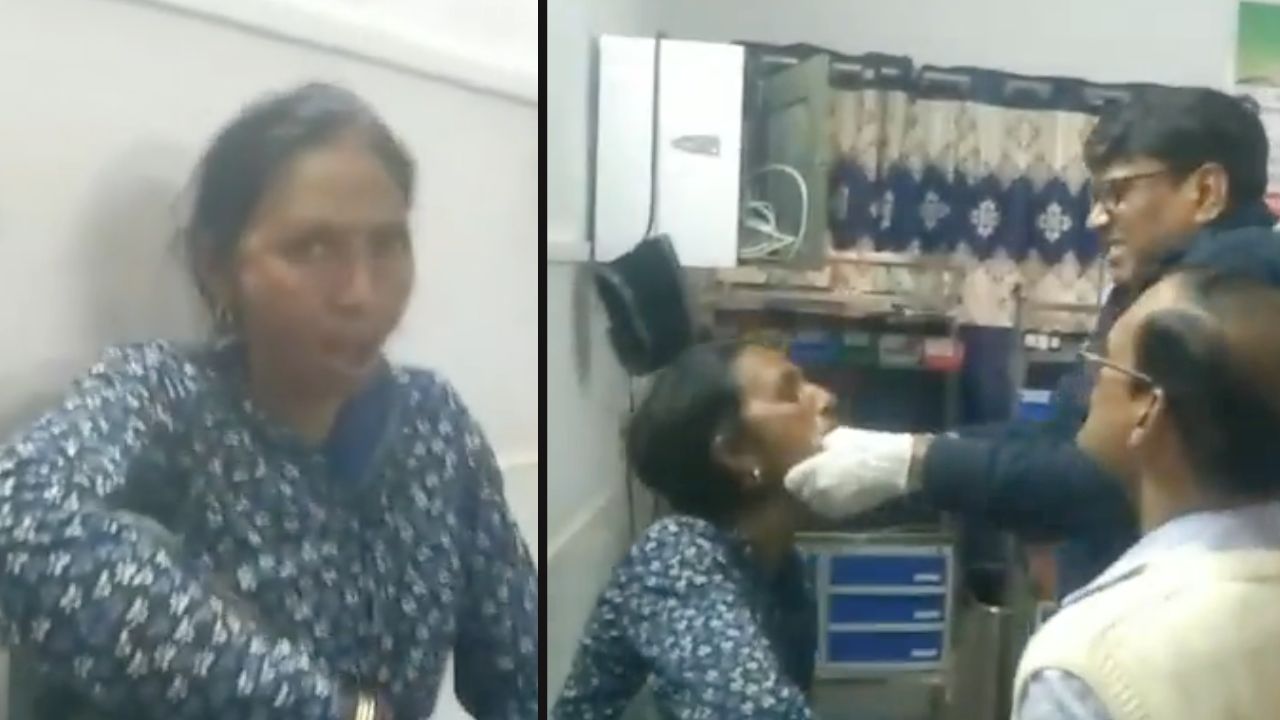
A woman from Uttar Pradesh recently experienced a locked jaw while having pani puri.
Synopsis: A woman from Uttar Pradesh recently experienced a locked jaw while having pani puri. Doctors attribute such episodes to a dysfunction of the jaw joint, known as Temporomandibular Joint Disorder, or, in severe events, a frank dislocation of the jaw.
Little did a 42-year-old woman from Uttar Pradesh know that a quick pani puri break would end in a medical emergency. A single bite left her jaw suddenly locked, and she couldn’t close her mouth after that.
According to relatives who spoke to the media, the woman, Inkila Devi, went to a roadside pani puri stall with a relative. As she attempted to bite into a large pani puri, she opened her mouth wide. Instantly, she found her jaw locked in an open position. Even after trying hard, she was unable to close her mouth.
The panicked family rushed her to a nearby district hospital, but the staff were unable to reposition her jaw. She was later referred to a higher medical centre. The shocking video of the episode soon went viral.
Doctors attribute such episodes to a dysfunction of the jaw joint, known as Temporomandibular Joint Disorder (TMD), or, in severe events, a frank dislocation of the jaw. The jaw hinges on joints on both sides of the face (the Temporomandibular Joint, or TMJ), which allow us to open and close our mouths, chew, speak, and swallow.
If the mouth opens too wide — for instance, to gulp down a large pani puri bite — the cartilage and ligaments inside the joint can slip out of their normal alignment. If this displacement becomes severe, the jaw may “lock,” rendering it impossible to close the mouth. In some cases, the joint may even dislocate, requiring urgent realignment.
Speaking to South First, Dr Narayana Subramaniam, lead consultant at Aster DM Healthcare, who has specialised in head and neck oncology and reconstructive surgery, said, “Subluxation of the temporomandibular joint, which opens and closes the mouth, can happen when there is laxity in the ligaments around the joint.”
He explained that when the jaw is overextended, the condyle (the head of the jawbone) slips out of the socket and stays dislocated, needing manipulation, sometimes under general anaesthesia.
Other factors that may predispose a person to such problems include chronic teeth grinding (bruxism), stress-related muscle tension, prior jaw trauma, or an existing TMD.
Meanwhile, Dr Dileep S, an Oral & Maxillofacial Surgeon from Bengaluru, said, “Street foods like pani puri often prompt people to take large bites, which forces the jaw to open wider than safe limits. In someone whose disc or ligaments are slightly lax even without prior issues, that extra stretch can make the joint slip out of position.”
“Once the disc or joint surfaces displace, the muscles around the jaw go into spasm to protect the joint, and the jaw locks.”
Speaking to South First, Dr Ashwin D, a Pedodontist from Mangaluru, said, when there is a locked jaw, they should press the third molars downwards and backwards to put the joint back in position.
“People should avoid putting large portions into their mouths at once; take smaller, manageable bites. Meanwhile, they must chew slowly and carefully. If there is an unusual clicking or discomfort in the jaw while chewing, then pause and switch to softer foods,” he said.
He added that those with known TMJ pain, teeth grinding habit, or jaw sensitivity should be extra cautious and consider consulting a specialist if symptoms appear.
Dr Ashwin suggested:
(Edited by Muhammed Fazil.)


