

Published Feb 13, 2026 | 7:00 AM ⚊ Updated Feb 13, 2026 | 7:00 AM

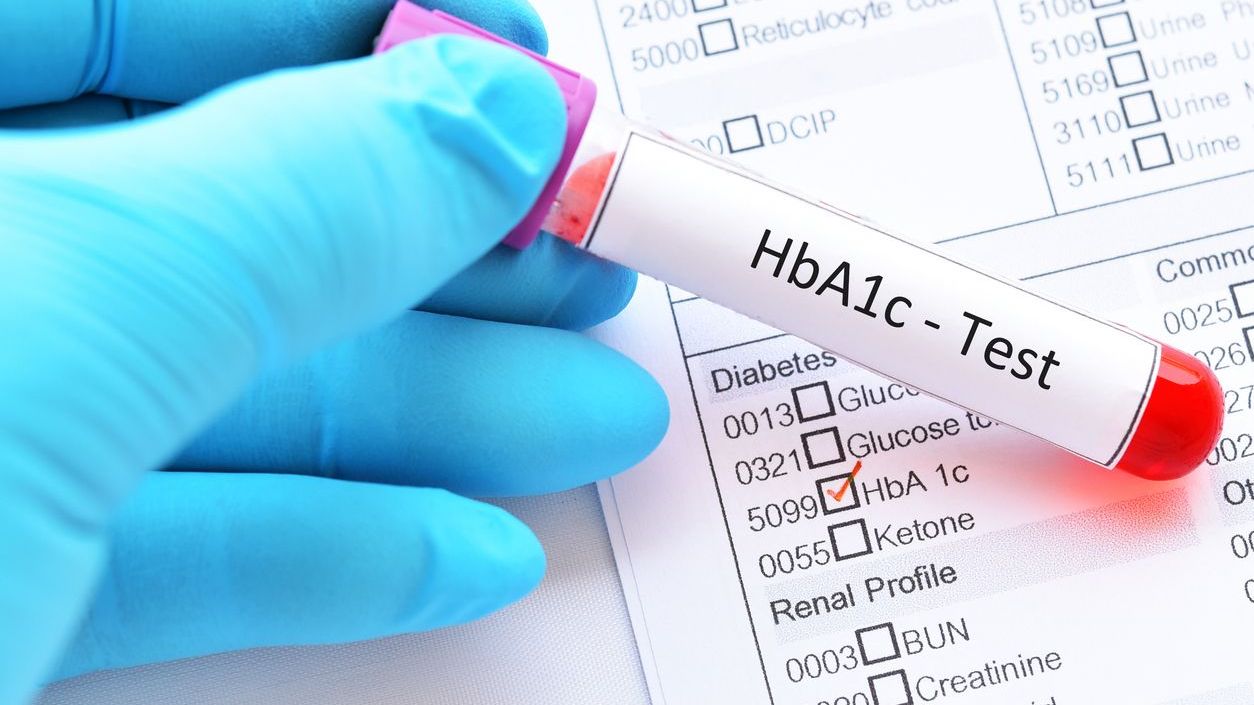
HbA1c test for diabetes diagnosis. (iStock)
Synopsis: A new analysis suggested that for millions of Indians, the HbA1c test for diabetes may be producing misleading results. Anything that disrupts the normal lifecycle of red blood cells, their production, their lifespan and their structure, will throw off the calculation, regardless of what’s actually happening with blood sugar.
Every day, hundreds of thousands of Indians walk into pathology labs and roll up their sleeves for a simple blood test that promises to reveal whether they have diabetes.
The HbA1c test has become ubiquitous, required by insurance companies, relied upon by doctors, and considered the gold standard for diabetes screening because it requires no fasting and captures average blood sugar over three months.
However, what if this test, used so universally across the country, is routinely getting it wrong?
A new analysis published in The Lancet Regional Health – Southeast Asia suggested that for millions of Indians, the HbA1c test may be producing misleading results — sometimes missing diabetes entirely, other times incorrectly flagging healthy people as diseased.
The culprits: Widespread anaemia, inherited blood disorders, and poorly regulated laboratories.
With India home to more than 100 million people living with diabetes and millions more on the borderline, the stakes couldn’t be higher. Accurate diagnosis isn’t just about numbers; it’s about preventing heart attacks, kidney failure, blindness, and early death.
To grasp why HbA1c can fail, one must first understand how it works. Dr Vidya Tickoo, an endocrinologist, explained the fundamental mechanism: “Basically, HbA1c reflects the average blood sugar over the past three months. It measures the percentage of haemoglobin that is coated with glucose. The reason it represents three months is that the normal lifespan of a red blood cell is about 120 days.”
This three-month window has made HbA1c incredibly attractive to clinicians. Unlike fasting blood sugar tests that capture just a single moment in time, HbA1c provides a broader picture of how well someone has managed their blood glucose over weeks and months.
However, therein lies the vulnerability. Anything that disrupts the normal lifecycle of red blood cells, their production, their lifespan and their structure, will throw off the calculation, regardless of what’s actually happening with blood sugar.
In India, that vulnerability is catastrophic. According to the National Family Health Survey-5 conducted between 2019 and 2021, a staggering 57 percent of Indian women and roughly 25 percent of men are anaemic. Some regions fare even worse: West Bengal reports anaemia in 71 percent of women, while states like Tripura, Assam, and Jharkhand all hover around 65-67 percent.
Dr Tickoo described what happens at the cellular level: “Now, if someone has iron deficiency anaemia, the situation changes. In such cases, new red blood cells do not form properly because of low iron and low haemoglobin levels. As a result, there is a higher proportion of older red blood cells in circulation. Older red blood cells have been exposed to glucose for a longer period and therefore accumulate more sugar.”
The consequence is insidious: “So even if the actual blood sugar levels are normal, the HbA1c can appear falsely elevated because there are more older red blood cells. The same mechanism applies in vitamin B12 deficiency anaemia. Here also, older cells predominate, leading to greater glycation and a falsely high HbA1c reading.”
This means people with perfectly normal blood sugar could be told they’re prediabetic or diabetic, potentially leading to unnecessary medications, psychological distress, and insurance complications. In resource-poor settings where nutritional deficiencies go unaddressed, the problem compounds.
When asked whether this affects her clinical practice, Dr Tickoo’s answer was unequivocal: “Yes, absolutely. We see this very frequently in practice. That is why we cannot rely only on HbA1c.”
She described a common scenario: “Many times, we notice a mismatch. For example, HbA1c may be elevated, but the fasting sugar is 82, and the post-meal sugar is 100. In such cases, we have to evaluate haemoglobin levels and several other factors.”
The prevalence of iron deficiency makes this particularly challenging. “Anaemia is very prevalent, and iron deficiency is extremely common. If we look only at HbA1c, we may get an incorrect impression. That is why we must assess the entire clinical picture. In many cases, once we correct the iron deficiency, the HbA1c level comes down and becomes normal.”
The Lancet paper reinforced these clinical observations with hard data. Studies across India reveal poor agreement between HbA1c and the oral glucose tolerance test (OGTT).
In one South Indian study involving 1,120 people, OGTT identified 87.8 percent as having pred,iabetes while HbA1c found only 45.4 percent, with minimal overlap between the two groups. In another study of young adults, HbA1c overestimated prediabetes prevalence at 23.3 percent compared to OGTT’s 7.8 percent.
Beyond anaemia lies an even more troubling discovery: Glucose-6-phosphate dehydrogenase (G6PD) deficiency, an inherited enzyme disorder that affects approximately 8.5 percent of Indians, particularly those from tribal populations.
The Lancet analysis cited a major genomic study showing that G6PD deficiency can lower HbA1c readings by about 0.9 percentage points without any corresponding change in actual blood glucose. The real-world impact is devastating: “Importantly, this discordance resulted in a median delay of 4.1 years in diabetes diagnosis and a 37 percent increase in microvascular complications,” the authors noted.
Four years is long enough for diabetes to silently damage the kidneys, nerves, and blood vessels. By the time diagnosis finally occurs, irreversible harm may already be done.
Sickle cell disease, thalassaemia, and other haemoglobinopathies add further complexity. These conditions, which affect millions of Indians, particularly in states like Madhya Pradesh, Chhattisgarh, and Maharashtra, alter both red blood cell structure and lifespan, compromising HbA1c accuracy in ways that are difficult to predict.
Even when biology cooperates, technology may not. The Lancet paper highlighted widespread problems with laboratory standardisation across India. A survey of 310 Indian laboratories found that while 75% used HbA1c for diabetes diagnosis, only 70% of these assays were certified by the National Glycohaemoglobin Standardisation Programme.
Dr Tickoo emphasised the importance of proper methodology: “HbA1c should ideally be measured using the HPLC method in a standardised laboratory. There are established standards to ensure that the equipment and assays are accurate, and it is important to use a certified lab.”
But even HPLC has limitations. “Conditions such as anaemia, recent blood transfusion, or blood loss can affect HbA1c results. For example, if a patient receives blood from a donor who has diabetes, the HbA1c may appear falsely high. If the donor does not have diabetes but the patient does, the HbA1c may appear falsely low. Kidney disease and other medical conditions can also alter results.”
Adding yet another wrinkle, a study of 8,138 Indian patients documented seasonal variations in HbA1c levels, with peaks during monsoon months and troughs in autumn — fluctuations that have nothing to do with diabetes control.
Given all these problems, why has HbA1c become so dominant? Dr Tickoo explained the practical reality: “It became important mainly because it is convenient and easy to use.”
She described a typical outpatient scenario: “Many patients come to my outpatient department at 1 pm. Suppose a patient with diabetes comes in the afternoon, and I want to assess their blood sugar control. I ask whether they monitor their sugars at home, and many of them do not. Some patients are visiting for the first time, often coming from villages outside Hyderabad. They may have had breakfast at 8 am, and by the time they reach me, it is already 1 pm.”
In that situation, fasting tests are impossible and point-in-time glucose readings tell you little about long-term control. “In such situations, I cannot perform a proper fasting test, and there is no immediate way to assess their long-term glucose control except through HbA1c. That is one of the reasons it became so popular. It does not require fasting and is not affected by day-to-day variations.”
Blood sugar, she noted, is inherently volatile: “If someone is unwell, glucose may temporarily rise. If a person with diabetes eats a sweet such as a gulab jamun the previous day, the sugar level may be high the next morning. On the other hand, if someone fasts, the sugar level may appear lower than usual. So many short-term factors can influence blood glucose readings.”
HbA1c sidesteps all that noise: “HbA1c, however, gives us an overall idea of how blood sugar has been over the past three months. That makes it very practical and extremely useful in routine clinical practice.”
Yet even this advantage contains a trap. Dr Tickoo warned: “Even without anaemia, HbA1c has its limitations because it is simply an average. If someone’s blood sugar drops to 60 at one time and rises to 240 at another, the HbA1c may still appear normal because it reflects the average. But such fluctuations are dangerous. Our goal in diabetes management is to minimise these variations.”
This is why modern diabetes care increasingly relies on continuous glucose monitors that track blood sugar in real-time, revealing dangerous spikes and drops that HbA1c smooths into benign-looking averages.
The Lancet authors are clear about what needs to happen: “Overall, reliance solely on HbA1c is constrained by several clinical and biological factors in India. A multiparametric, risk-stratified approach that integrates oral glucose tolerance test, self-monitoring of blood glucose, and, whenever possible, continuous glucose monitoring, in addition to relevant hematologic assessments are essential to enhance diagnostic and monitoring accuracy.”
Tickoo echoed this multimodal approach: “Ideally, an oral glucose tolerance test, or OGTT, should be done. This involves checking fasting blood sugar, giving 75 grams of glucose, and then measuring blood sugar again after two hours. However, in our setting, that can sometimes be impractical. So generally, we check fasting blood sugar, post-meal blood sugar two hours after food, and HbA1c.”
Crucially, she added: “That is why we must always interpret HbA1c alongside blood sugar readings, including fasting and post-meal values. In patients with diabetes, we often monitor glucose multiple times a day. Nowadays, we also use continuous glucose monitoring, or CGM, which provides detailed information about glucose trends and fluctuations.”
The Lancet paper called for better laboratory standardisation, routine screening for anaemia and blood disorders, and India-specific diagnostic algorithms rather than blindly following international guidelines developed for populations with different health profiles.
Dr Tickoo’s final assessment captured the paradox perfectly: “I am not saying we should stop using it. It is an excellent and indispensable test, especially in the Indian setting. We rely on it heavily. But we must always remember its limitations. We need to look at haemoglobin levels and consider other clinical factors. The assessment is complete only when HbA1c is interpreted along with blood sugar readings.”
The Lancet authors concluded with equal gravity: “The use of HbA1c as a standalone diagnostic or monitoring tool is often questionable in South Asian populations. Persistently high rates of anaemia, inherited haemoglobin variants, enzymatic red cell disorders, and poorly standardised HbA1c measurement instruments can produce misleading values—leading to underdiagnosis, inappropriate treatment decisions, and delayed initiation of care.”
For a country battling one of the world’s largest diabetes epidemics, getting diagnosis right isn’t a luxury — it’s a necessity. The evidence suggests that millions of Indians may currently be navigating their diabetes journey with an unreliable compass.
Fixing that will require not abandoning HbA1c, but finally acknowledging its limitations and building better systems around it.
(Edited by Muhammed Fazil.)


