

Published Jun 22, 2026 | 7:00 AM ⚊ Updated Jun 22, 2026 | 7:00 AM

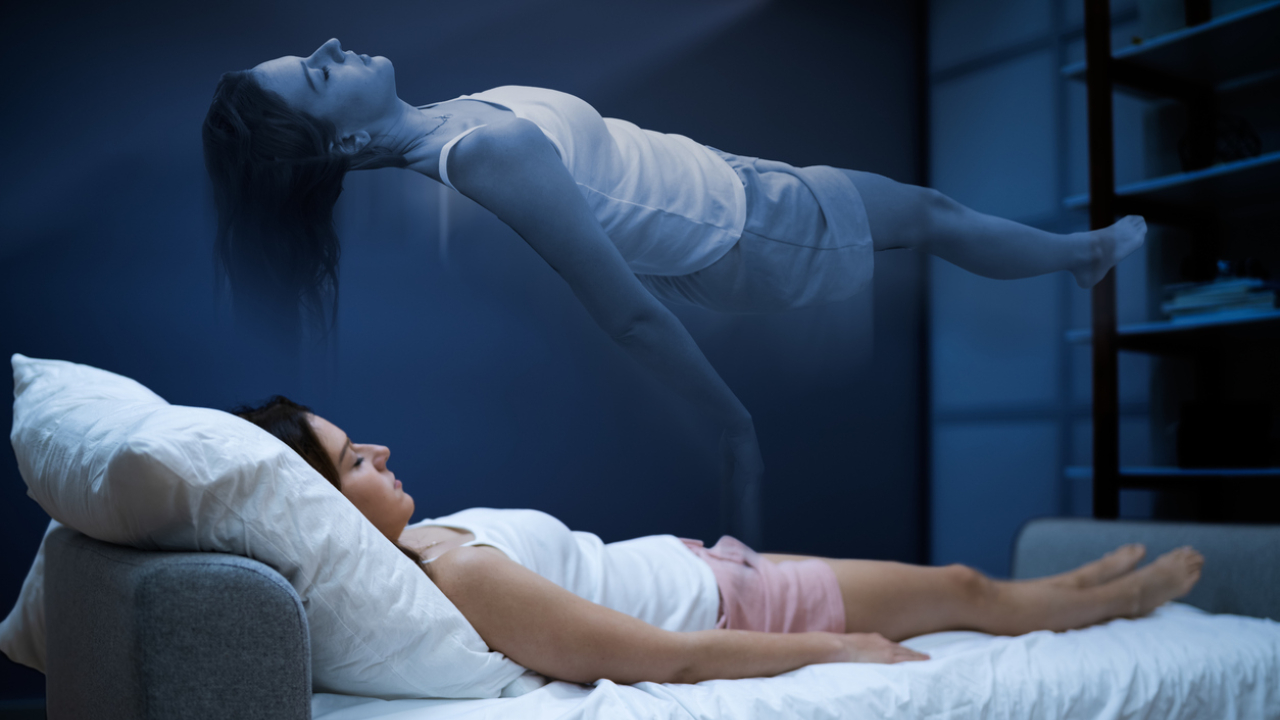
Representational image. Credit: iStock

Synopsis: Sleep paralysis occurs when consciousness returns during REM sleep while the body remains paralysed. Across cultures, people interpret the hallucinations it produces as demons, jinns or spirits. Neurologists say interpretation shapes distress, those who understand the science fare better. Most cases resolve with improved sleep hygiene and reassurance.
You try to scream. You try to move. But your body refuses to respond. A woman in a white sari walks in circles near your bed. There is light under the door and whispering beside you. You are awake, and completely unable to act.
Shania, a 21-year-old college student, recognises this experience. Episodes strike when she sleeps on her back or is heavily fatigued. Her hallucination takes the form of Kuchisake-onna, the slit-mouthed woman from Japanese folklore.
“In the beginning it was traumatising,” she tells South First. “I thought I was possessed.” Even after she understood what was happening, the paralysis itself did not become easier. “That awful feeling of not being able to move a single finger continues to drive me mad, even now.”
Dr Sudhir Kumar, Senior Consultant Neurologist, Apollo Hospitals, Hyderabad, says sleep paralysis is a benign phenomenon that occurs when a person becomes conscious while the brain remains temporarily in rapid eye movement, or REM, sleep.
During REM sleep, the body is naturally paralysed to prevent a dreaming person from acting out their dreams. “In sleep paralysis, this paralysis persists briefly after awakening,” Dr Kumar says to South First. “The person is awake and aware but unable to move or speak, often for a few seconds to a few minutes.”
What makes the experience so disturbing goes beyond the inability to move. Researchers believe the brain’s threat-detection systems remain active during the overlap between REM sleep and wakefulness. This produces a sense of presence, a feeling of being watched, chest pressure and fear, even when nothing is physically there. Dream imagery bleeds into consciousness, generating vivid visual, auditory or tactile hallucinations. The brain, caught between two states, creates an intruder where none exists. The result is an experience that feels entirely and terrifyingly real.
Sleep paralysis occurs at any age but appears most commonly among people aged 15 to 35. Risk factors include sleeping on the back, irregular sleep schedules, sleep deprivation, anxiety and narcolepsy.
Also Read: Falling asleep with earbuds plugged in? Here’s what doctors say
Across cultures, people have reached for local belief to explain what happens during sleep paralysis. In Newfoundland, the experience is attributed to the Old Hag. In Japan, it is called kanashibari. In parts of the Muslim world, a jinn sits on the chest. In Brazil, a figure called Pisadeira treads on sleeping people.
Although the names differ, the experiences described across cultures are remarkably similar, suggesting a shared biological phenomenon interpreted through different cultural beliefs.
Risha, who experiences sleep paralysis, describes her own frame. “According to Islam, sleep paralysis is caused by a jinn called Al Jathum, an evil spirit that sits on the chest and constricts the person,” she says. She tried reciting duas before sleeping and found it helped.
Narendra Nayak, President of the Federation of Indian Rationalist Associations, says there is no scientific evidence supporting paranormal explanations for sleep paralysis. “Since all types of so-called spirit possession have a physical explanation or can be ascribed to some psychological abnormality, we have to view it skeptically,” he says.
Counselling and treatment by qualified practitioners, he adds, remain the only evidence-based responses.
Dr Kumar argues that what a person believes about their experience shapes how distressing it becomes. “Research from multiple cultures suggests that the distress associated with sleep paralysis is influenced not only by the event itself but also by how it is interpreted,” he says.
“Patients who understand it as a sleep-related phenomenon are often reassured once the diagnosis is explained. In contrast, those who strongly believe it reflects a supernatural attack may experience greater fear, anticipatory anxiety and sleep avoidance.”
This may also explain why some rituals appear to help. Arul, a 21-year-old commerce student, describes the effect as a kind of placebo. “When you have complete faith and surrender to something, it helps, it does not matter if it is a tablet or a prayer,” he says. When a ritual reduces anxiety and restores a sense of control, sleep quality can improve, and that, in turn, can reduce the frequency of episodes.
Also Read: Posting life updates on social media helps your mental health, except for your sleep
While the experience can be frightening, sleep paralysis is usually harmless and manageable. Dr Kumar says most people do not require medical treatment. Maintaining a regular sleep schedule, ensuring adequate rest, managing stress and anxiety, and avoiding alcohol can all reduce the likelihood of episodes.
People who experience frequent attacks, episodes accompanied by vivid hallucinations, or excessive daytime sleepiness should seek evaluation from a sleep specialist or neurologist, who can assess whether an underlying condition such as narcolepsy is involved.
Early evaluation, Dr Kumar says, can prevent the anxiety around episodes from compounding the problem itself.
For someone lying awake and unable to move while a shadowy figure stands beside the bed, the experience can feel undeniably supernatural. Yet neurologists say the explanation lies not in demons, jinns or spirits, but in the strange overlap between dreaming and wakefulness. Understanding that distinction, they say, is often the first step toward reducing the fear.



