


WHO guidelines recommended long-term use of GLP-1 therapies — drugs like semaglutide and tirzepatide — for adults living with obesity.

Published Dec 02, 2025 | 7:00 AM ⚊ Updated Dec 02, 2025 | 7:00 AM

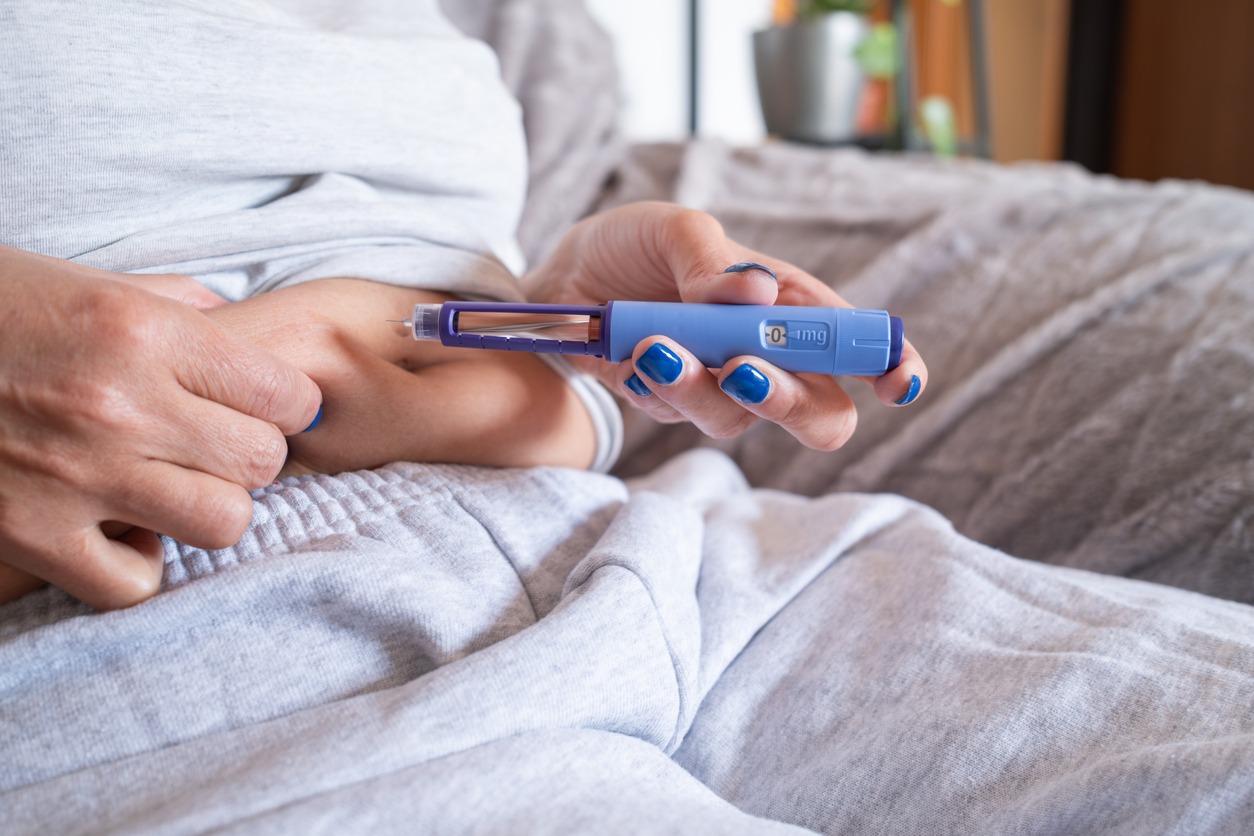
Obesity drug. (iStock)
Synopsis: The World Health Organisation released guidelines recommending long-term use of GLP-1 therapies for adults living with obesity. The guideline frames obesity as a complex disease shaped by genetics, hormones, metabolism, and environment.
Dr Vidya Tickoo recalls a patient with grade 3 fatty liver — six months on Mounjaro, the damage reversed to grade 1. Another patient unplugged the CPAP machine — sleep apnea vanished. A third started climbing stairs without wincing from joint strain.
“In modern medicine, we’ve never had anything like this before,” Tickoo, an endocrinologist at Yashoda Hospitals in Hyderabad’s Hitec City, told South First. “I’m seeing patients benefit enormously, medically. This really is a game changer.”
On Monday, 1 December, the World Health Organisation (WHO) released guidelines recommending long-term use of GLP-1 (glucagon-like peptide-1) therapies — drugs like semaglutide and tirzepatide — for adults living with obesity. The move marks a shift in how the global health body frames obesity: not as a lifestyle condition but as a chronic disease requiring lifelong care.
Worldwide, over one billion people are now living with obesity. The condition drove 3.7 million deaths in 2024, accounting for 12 percent of all non-communicable disease deaths. Global costs are projected to hit $3 trillion per year by 2030. In countries where 30 percent of the population is obese, the disease absorbs up to 18 percent of national health budgets.
GLP-1 therapies entered the market in 2005 for type 2 diabetes. By 2015, regulators approved liraglutide 3.0 mg for weight management after evidence showed that the drug acted on brain pathways controlling appetite and satiety. Recent trials demonstrated benefits beyond weight loss: The drugs reduce heart attacks by around 20 percent, improve kidney function, reverse fatty liver disease, and ease obstructive sleep apnea.
As of October 2025, 12 GLP-1 therapies have received approval for diabetes or obesity indications. Over 40 agents remain in development.
Novo Nordisk launched Wegovy — semaglutide 2.4 mg injection — in India in June 2025. The company cut prices by 37% in recent months, bringing the 0.25 mg dose to ₹10,850 per month. Eli Lilly introduced Mounjaro, a dual GLP-1/GIP agonist, in March 2025. Monthly costs range from ₹14,000 to ₹17,500. Sales climbed rapidly.
Rybelsus, an oral form of semaglutide, has dominated the Indian GLP-1 market since its 2022 launch. Ozempic, approved in September 2025 for type 2 diabetes, finds use off-label for weight control.
Generic versions loom. Semaglutide’s patent expires in 2026. Dr Reddy’s, Lupin, and Biocon plan launches. The government’s Production Linked Incentive scheme encourages local manufacturing.
“The only major limitation is cost, honestly speaking,” said Tickoo. “And even the cost may not remain a barrier forever, because semaglutide is losing its patent in March. A lot of companies will enter the market, so prices will come down eventually.”
The WHO guideline development group weighed evidence from three systematic reviews covering liraglutide, semaglutide, and tirzepatide. The panel opted to treat GLP-1 therapies as a class rather than separate drugs.
WHO recommends pairing the medications with intensive behavioural therapy — structured goal setting for exercise and diet, energy intake limits, weekly counselling sessions, and progress checks. The combination amplifies and sustains benefits.
Both recommendations carry a conditional grade. Limited data on long-term safety, high costs, inadequate health system readiness, and equity concerns tempered the panel’s confidence. For the behavioural therapy pairing, low certainty evidence and variation in patient priorities drove the conditional rating.
“When we talk about obesity and its management, the foundation is always lifestyle modification—it is at the centre of everything,” Tickoo said. “We have to look at Mounjaro or Wegovy as add-ons, tools that reinforce the behaviour modification we counsel.”
The guideline frames obesity as a complex disease shaped by genetics, hormones, metabolism, and environment—not simply overeating or laziness. Every individual maintains a weight “set point” that the body defends. This explains why people regain weight after losing it.
“These pharmacotherapies — and even surgical options — help with long-term weight maintenance,” Tickoo said. “Earlier, we didn’t have such molecules. Just like a hundred years ago, insulin didn’t exist; we didn’t have anything like this before.”
Current production capacity covers roughly 100 million people under the highest projected scenario. That represents less than 10 percent of those living with obesity today. Demand will surge to two billion people by 2030.
High costs, limited production, and supply chain constraints block universal access. WHO considers prequalification to expand availability after adding GLP-1 therapies to its Model List of Essential Medicines for high-risk populations.
Strategies include enabling generic production, pooled procurement, tiered pricing, voluntary licensing, and local manufacturing. Oral GLP-1 formulations may simplify production, distribution, and storage.
The guidelines identify three implementation challenges: ensuring equitable access to affordable therapies, preparing health systems to deliver comprehensive obesity care, and guaranteeing person-centred, nondiscriminatory treatment.
WHO plans to develop a framework for prioritising treatment allocation based on disease severity, comorbidities like diabetes and cardiovascular risk, and expected outcomes. The guideline development group meets in early 2026 to define stratification criteria.
Tickoo has prescribed the drugs to 300 to 400 patients so far. She recommended staying on treatment for a minimum of one to two years — longer if possible.
“Obesity is a chronic condition; it’s not a one- or two-year issue,” she said. “People live with it their whole lives, and the management has to reflect that.”
Study data showed patients regain about 50 percent of lost weight after discontinuing medication. Real-world experience remains limited to six months in India.
“Right now, the only major limitation is cost,” Tickoo said. “Apart from that, and a few groups where the drug is contraindicated, most people can take it.”
She expected cardiologists, nephrologists, gastroenterologists, and hepatologists would prescribe GLP-1 therapies as their specialities encounter obesity-related complications.
“Our cardiology, kidney, and liver departments exist because obesity-related complications exist,” she said. “When we actually treat obesity, many of these complications improve or disappear.”
Doctors in second-tier cities remain hesitant due to unfamiliarity with the drugs. Tickoo expected adoption will accelerate as specialists observe patient outcomes.
“Once they start seeing patients who have been prescribed these drugs elsewhere — once they see the results — even they will eventually start using them,” she said.
WHO frames GLP-1 therapies as a catalyst for building an integrated obesity management system — not a standalone solution.
Countries must address social determinants, including food systems, urban design, and income inequality. Embedding obesity prevention and treatment in universal health coverage, primary care packages, and insurance schemes ensures equitable access.
Sustaining progress requires research into next-generation therapies, robust collaboration among patients, providers, researchers, industry, and policymakers, and clear tracking mechanisms.
“Medication alone cannot solve the global obesity burden,” the WHO said. “The availability of GLP-1 therapies should galvanise the global community to build a fair, integrated, and sustainable obesity ecosystem.”
The guideline marks a shift from viewing obesity as a risk factor to treating it as a disease. WHO issues a call to member states and stakeholders to halt the epidemiological trajectory of obesity and associated conditions.
“Effective management and reversal of obesity across all ages, with early, sustained intervention to reduce and possibly eliminate related comorbidities, is now a realistic prospect,” the WHO said. “The way societies respond to this opportunity will determine whether this is truly the dawn of a new, more equitable era or a missed opportunity to record a historic global health success story.”
(Edited by Muhammed Fazil.)


