

Published Nov 07, 2026 | 7:00 AM ⚊ Updated Nov 07, 2026 | 7:00 AM

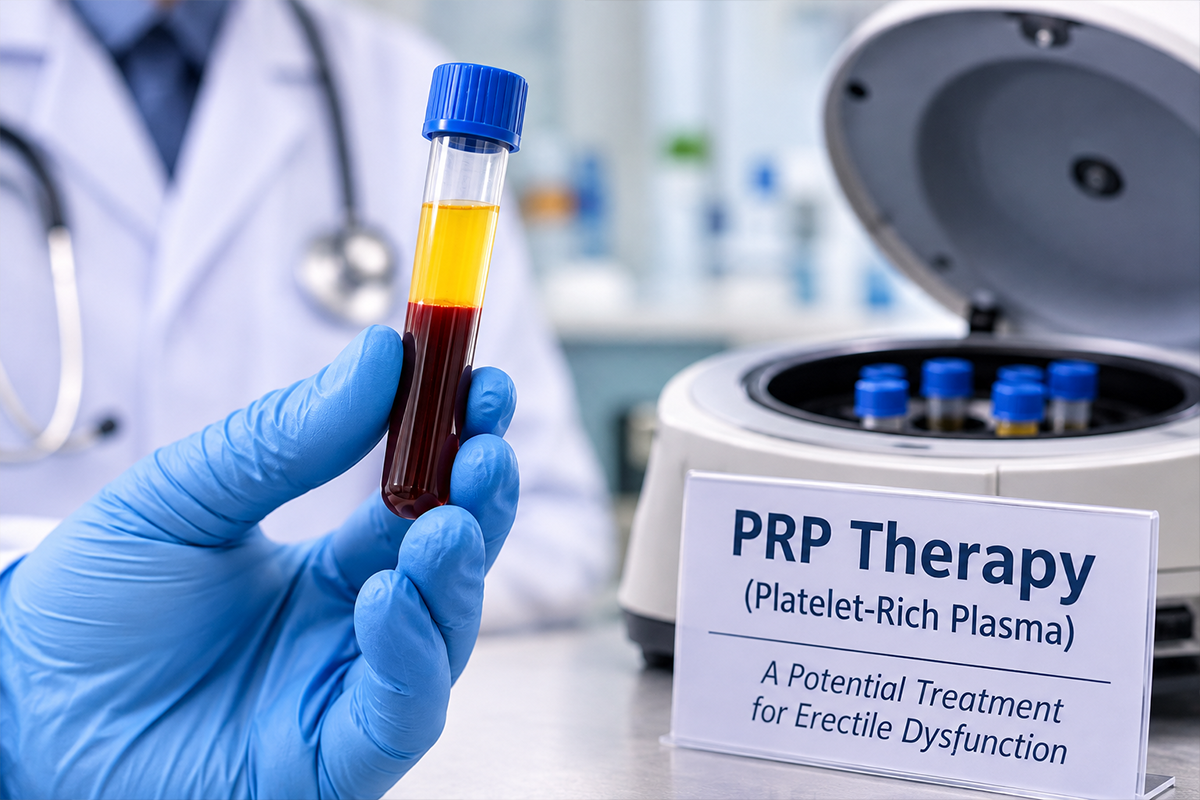
Urologists at Bengaluru's NU Hospitals administered PRP injections to 32 men who did not respond to conventional ED medication. (Ai generated image)

Doctors at a Bengaluru hospital tried platelet-rich plasma (PRP) therapy in men suffering from Erectile Dysfunction (ED) and found improvements in patients who had not responded to conventional medicines. According to a recent study published in the ‘National Board of Examinations-Journal of Medical Sciences’, the results were more encouraging in men with milder symptoms.
The researchers, however, cautioned that the procedure is still experimental.
Developed by American physician Dr Charles Runels, the procedure called ‘Priapus Shot’ (P-shot) is named after the Greek god of virility and clinics around the world sell it as a natural cure for impotence. Runels, who practises in Fairhope, Alabama, also developed the Vampire Facelift and the “O-Shot” for women’s sexual health.
A 2019 review had found that the procedure has been promoted as a regenerative therapy despite little scientific evidence. The review had counted 683 registered clinics worldwide and noted that many did not even publish their prices for the treatment online. The Bengaluru study is among the few attempts in India to measure whether it actually works.
Urologists at NU Hospitals in Rajajinagar, Bengaluru, administered PRP injections to 32 men who had not responded to conventional ED tablets as part of the study. They found that injecting men’s own blood plasma into the penis helped patients suffering from mild ED. It, however, proved effective in fewer than one in three men with moderate or severe ED.
“PRP is safe across all grades of ED but is effective only in mild and mild-moderate grades of ED,” the doctors concluded.
The research was led by Dr Pramod Krishnappa, consultant uro-andrologist at the NU Hospital. Co-authors of the study are Dr Wasim Jafri, Dr Prasanna Matippa, Dr Maneesh Sinha, Dr Kumar Prabhu, and Dr Venkatesh Krishnamoorthy of the same hospital’s urology department.
Speaking to South First, Dr Pramod said, “Each man received two injections of 4 ml each, one month apart, into one side of the penis under local anaesthesia. The men were young, with an average age of 36.5 years, and nearly half of them had severe ED.”
Unlike most earlier trials, this study included men with severe ED, as the doctors felt these individuals were the ones most likely to be desperate for alternative treatment.
Doctors draw 20 ml of the patient’s blood and spin it in a machine until it separates into distinct layers, after which the yellow, platelet-rich layer is drawn into a syringe. This is injected into the penis of the patient.
Platelets help blood clot, but they also carry growth factors that help the body repair tissue and grow new blood vessels. The theory is that injecting them into the penis can restore blood flow and repair damaged tissue, rather than simply producing an erection for the night.
That promise is what draws men in. The study notes that existing treatments often end up “depriving them of natural-feeling erections.”
The study, doctors said, found that the shot worked best where the damage was least: “Nine of 10 men with milder ED improved within a month, and all 10 had improved by three months.”
Meanwhile, among the 20 men with moderate or severe ED, none improved at one month, and only six had improved by three months; specifically, only one of the 13 men with severe ED showed improvement.
“The most severe the ED, the less likely PRP is to help,” explained the lead author of the study, Dr. Pramod.
The doctors noted that PRP requires healthy tissue to work effectively, explaining that in advanced cases, “extensive fibrosis or neurovascular damage” limits what the treatment can repair.
Meanwhile, the injections caused little pain and produced no adverse events among participants, though satisfaction remained moderate.
While the incidence of ED in men has definitely gone up, existing treatments include tablets, vacuum devices, injections before sex, and surgical implants. The authors note that these mostly “do not alter the underlying pathophysiologic mechanics.” Implants, they say, have high satisfaction rates, but “not everybody is satisfied with the concept of an artificially erect penis.”
However, the authors are candid about the gaps. Their study clearly mentions that they had no placebo group, so every man knew he was being treated. ED is strongly affected by anxiety and expectation. In one American trial, which the authors cite, more than half the men given only a saline injection also showed improvement!
The authors of the Bengaluru study also did not check what was in each syringe. The paper states: “Platelet concentration and PRP composition were not analysed before injection.” The authors call their statistics “exploratory in nature” and say that they “should be interpreted with caution.”
Meanwhile, guidelines also urge caution. While the study indicates that severe ED cannot be treated with the P-Shot, a Bengaluru urology provider, speaking on condition of anonymity, stated the indicative price range is approximately Rs 85,000 to about Rs 1.25 lakh.
“PRP therapy is already widely used in dermatology and orthopaedics, which prompted us to explore its potential role in andrology, particularly ED. Our ethics committee-approved study showed promising short-term improvements, especially in men with mild ED only. However, whether these benefits were due to PRP itself or a placebo effect remains uncertain,” Dr Pramod Krishnappa told South First.
He added that for patients and the general public, the key message is that PRP is still an experimental treatment for ED and not a guaranteed cure. It should not replace established treatments, and patients must be cautious of exaggerated claims regarding procedures performed by unqualified practitioners. Larger, placebo-controlled trials are essential.
(Edited by Fayisa CA)



