

Published Sep 28, 2026 | 11:58 AM ⚊ Updated Sep 28, 2026 | 7:16 PM

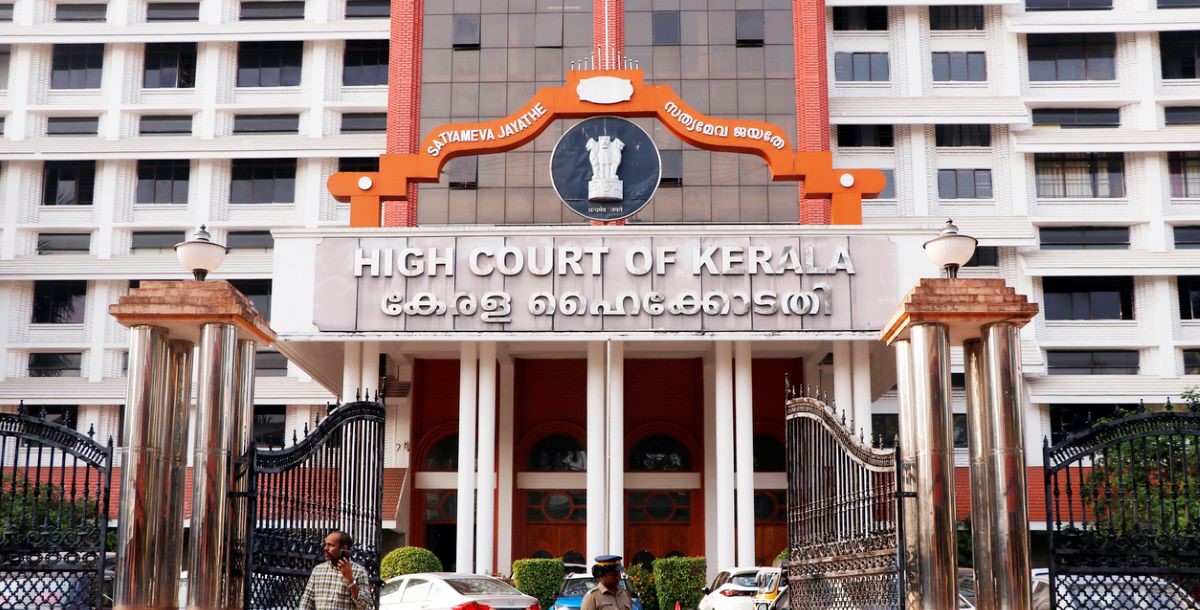
Kerala High Court. (iStock)

In a ruling that could make prohibitively expensive life-saving medicines more accessible, the Kerala High Court held that the government can invoke Section 100 of the Patents Act to manufacture and supply a patented invention as a medicine, including directly to a needy patient, on a non-commercial basis.
Justice Harisankar V Menon made the observation while disposing of a suo motu petition initiated over the steep prices of patented life-saving drugs, bringing to a close a legal battle that began more than four years ago.
The case, as South First earlier reported, had its roots in the plight of an Ernakulam woman, a retired bank employee diagnosed with HER2-negative metastatic breast cancer. She approached the High Court in June 2022 seeking access to Ribociclib, a drug prescribed by her doctors but priced beyond her financial means.
She and her husband had retired from the banking sector and were living on a combined monthly pension of ₹2.74 lakh.
Almost their entire income was being drained by the cost of cancer treatment and medicines, the petition said.
She died two months later, on September 16, 2022.
The proceedings, however, continued, with questions raised about the government’s power to intervene when patented medicines become unaffordable for patients who need them.
The court held that the scope of Section 100 is not confined merely to governmental use of a patented invention. The provision can also enable the government to manufacture a patented medicine and make it available to an individual, including a needy patient, without a commercial objective.
The government, the court said, must collect the necessary data and determine whether the price of a particular medicine is affordable. If it finds that intervention is warranted, it can proceed under Section 100. The court specifically noted that such intervention may become necessary where a patented medicine is being sold at an exorbitant price.
The proceedings had also brought scrutiny on the regulatory position surrounding Ribociclib and its cheaper alternative, Palbociclib.
An affidavit filed by the Central Drugs Standard Control Organisation (CDSCO) had claimed that both medicines were approved for the same indications.
However, records before the court indicated that Ribociclib had an additional approval for certain high-risk early-stage breast cancer patients, an indication not reflected for Palbociclib.
During the proceedings, the court-appointed amicus curiae, Maitreyi Sachidananda Hegde, had argued for government intervention to make the patented medicine more accessible. She submitted that the Centre could invoke Section 100 to use the patented invention for government purposes, or resort to Section 92 to facilitate wider availability in the public interest.
The matter had also attracted the attention of the Supreme Court, which took suo motu cognisance of the delay on July 16, 2026 and directed the High Court to conclude the proceedings expeditiously.
With the High Court’s ruling, the long-running litigation has now ended with a clear finding that the statutory powers available to the government can extend to making patented medicines available to patients on a non-commercial basis when circumstances warrant such intervention.
The Working Group on Access to Medicines and Treatment has welcomed the Kerala High Court’s clarification on the scope of the government-use provision under the Patents Act, saying the judgment could have wider implications for access to costly patented medicines.
The Working Group — a network of patient advocates, civil society organisations, legal experts and healthcare professionals — had earlier approached President Droupadi Murmu, Chief Justice of India Justice Surya Kant and Kerala High Court Chief Justice Justice Soumen Sen seeking expeditious disposal of the long-pending case.
Reacting to the judgment, amicus curiae Maitreyi Sachidananda Hegde said the court had recognised that the government could intervene under Section 100 of the Patents Act when a patented medicine is being sold at an exorbitant price. She described the clarification as significant for ensuring affordable access to patented medicines.
According to Chetali Rao of the Group, the court had also rejected the contention that Ribociclib and Abemaciclib could effectively be substituted by the cheaper, generic Palbociclib.
The court’s findings, based on expert material placed before it, indicated that Palbociclib could not simply be treated as an interchangeable alternative.
Rao also pointed to the court’s interpretation of “government purposes” under Section 100.
She said the judgment made clear that protecting public health falls within the legitimate functions of government and that the provision was not restricted to narrow institutional requirements.
However, KM Gopakumar, co-convenor of the Working Group, said the judgment stopped short of providing an immediate remedy to patients.
While the court had recognised the problem of exorbitant pricing and found that Palbociclib could not be treated as a substitute, the actual decision on invoking Section 100 had been left to the Centre as a policy matter.
Gopakumar said this left patients dependent on a government decision despite the court’s findings on affordability and therapeutic substitution.
The Working Group said the judgment nevertheless provides an important legal framework for future government intervention where the price of a patented life-saving medicine becomes a barrier to treatment.
Also Read:
₹2.5 lakh to ₹8,800: The Kurien order that made patent history
(Edited by R Rajesh Kumar.)



