

Published Feb 14, 2026 | 7:00 AM ⚊ Updated Feb 14, 2026 | 7:00 AM

AI use.
Synopsis: A large US study has found that adults who use generative artificial intelligence tools for personal use on a daily basis are more likely to report moderate depressive symptoms. The findings, based on responses from more than 20,000 people, show that daily users were about 29 percent more likely to report signs of depression, particularly among those aged 25 to 64. Researchers cautioned that the findings show association, not cause.
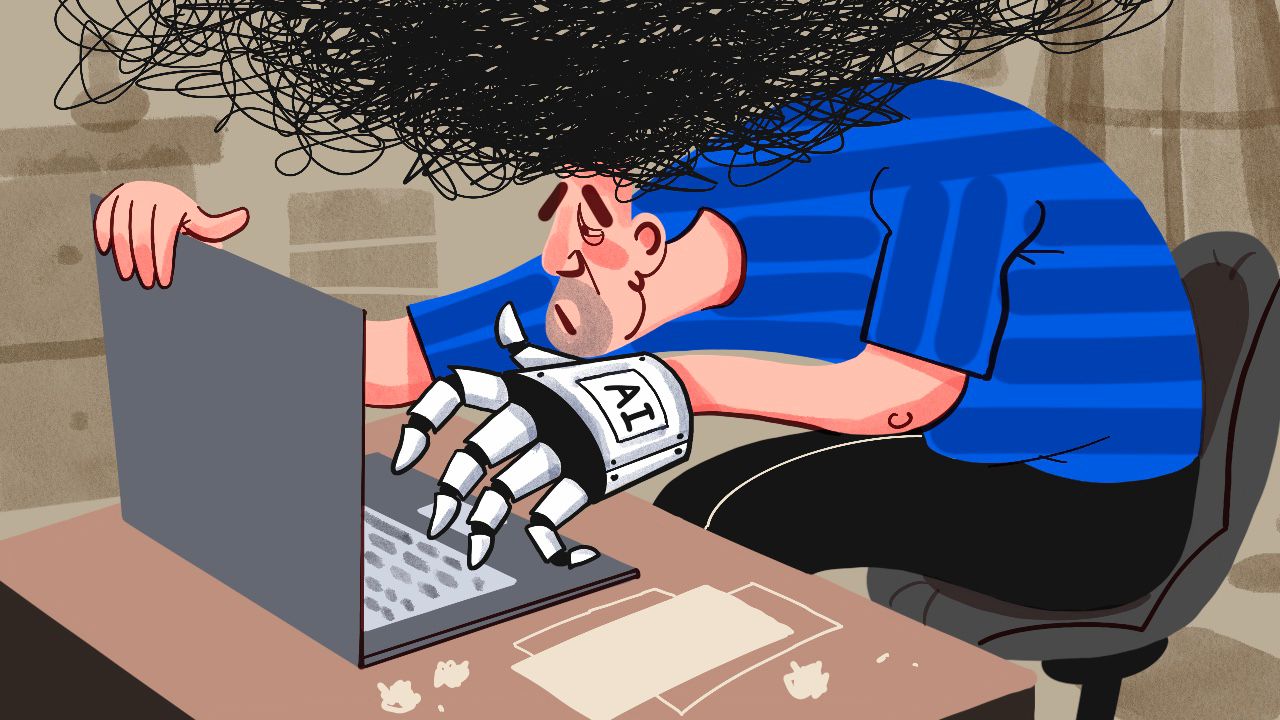
Daily use of generative artificial intelligence (AI) tools correlates with higher levels of depressive symptoms among adults in the United States, a new study has found.
The findings, published in JAMA Network Open, are based on data from 20,847 adults across all 50 US states and Washington, DC.
About 10.3 percent of respondents reported using AI at least daily. Of these, 87.1 percent used AI for personal applications, 48 percent for work, and 11.4 percent for school.
Among daily users, 32 percent showed at least moderate depressive symptoms, compared with 25.9 percent among people who did not use AI daily.
But only personal use showed a significant link to depressive symptoms. Work and school use did not.
“Daily or more frequent AI use was significantly more common among men, younger adults, those with higher education and income, and those in urban settings,” the study said.
After adjusting for age, income, education, gender, location and social media use, daily AI users were about 29 percent more likely to show moderate depression than non-users.
The strongest links appeared among adults aged 25 to 64.
The findings do not establish cause and effect, which the authors emphasised needs further research. But they said the results demand attention given the rapid adoption of AI.
“This survey study found that generative AI use was associated with modest but statistically significant increases in depressive and other negative affective symptoms, warranting efforts to understand the potential for a causal relationship,” the authors said.
The findings are “equally consistent with greater depressive symptoms leading to greater AI use, or with neither of these,” they cautioned.
“At minimum, randomised trials examining the potential benefits of AI use should also include measures of mood and anxiety, alongside standard assessments of productivity,” the authors said.
The study also drew parallels with research on social media use. “This emerging picture is consistent with previous observations regarding social media use,” the researchers noted, but added that the link between AI use and depression persisted even after controlling for social media use.
The authors also pointed to evidence that not all AI use is linked to poorer mental health.
“Briefer interactions have been associated with improvements in well-being, and a randomised trial showed benefits from using a chatbot based on a language model trained specifically to discuss mental health symptoms.”
This points to frequency and purpose of AI use as key factors.
The authors stressed that the scale and speed of AI adoption make the findings hard to ignore.
“Given the rapidity of AI dissemination and the scale of use, these results in aggregate suggest the need to better understand potential causation and heterogeneity of outcomes,” they wrote.
The study drew on responses from participants with a mean age of 47.3 years, collected between April and May 2025 through an online questionnaire. Researchers applied post-stratification survey weights based on US Census benchmarks to improve representativeness.
Mental health outcomes were measured using validated clinical screening tools, including the nine-item Patient Health Questionnaire (PHQ-9) for depression, the GAD-2 for anxiety, and the Brief Irritability Test.
While the study cannot show that AI use causes depression, it points to mental health risks linked to technology now embedded in daily life for millions of people worldwide.
“Differential associations in age strata also suggest the importance of considering mechanisms underlying these subgroup associations, if some individuals may be more apt to experience depressive symptoms associated with AI use,” the authors noted.
(Edited by Dese Gowda)


