


infected 4.9 million people in 2023 alone, but it's not just the contaminated water that's killing people anymore — it's the fact that our medicines have stopped working.

Published Jan 17, 2026 | 11:00 AM ⚊ Updated Jan 17, 2026 | 11:00 AM

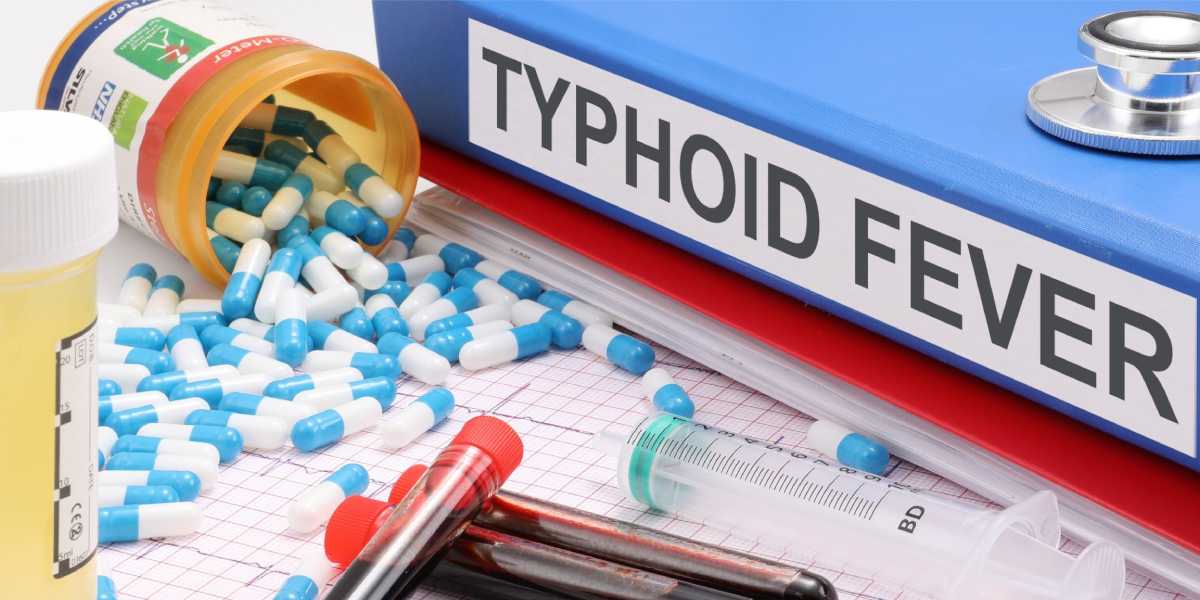
Typhoid. (Creative Commons)
Synopsis: A new study has found that the bacteria that cause typhoid have built formidable resistance walls against the very medicines that once reliably cured the disease. Doctors have largely abandoned fluoroquinolones for treating typhoid, turning instead to third-generation cephalosporins and azithromycin, an oral antibiotic, after seeing better clinical responses.
For generations, typhoid fever was a disease of contaminated water and poor sanitation. A child would fall ill with a high fever, their parents would rush them to a doctor, and antibiotics would save the day. It was a predictable crisis with a reliable solution.
Not anymore.
The bacteria that cause typhoid — Salmonella Typhi — have built formidable resistance walls against the very medicines that once reliably cured the disease. Antibiotics that doctors prescribed with confidence for decades are now failing, and children are dying as a result.
Nearly 8,000 Indians died from typhoid fever in 2023, according to a new study published in The Lancet Regional Health – Southeast Asia. The disease infected 4.9 million people in 2023 alone, but it’s not just the contaminated water that’s killing people anymore — it’s the fact that our medicines have stopped working.
Three out of four typhoid cases now involve drug-resistant bacteria. Strains resistant to fluoroquinolones — a widely used class of antibiotics including ciprofloxacin — were responsible for more than 80 percent of hospitalisations and nearly 90 percent of deaths. The bacteria have evolved faster than our ability to fight them.
For families across South India, where states like Karnataka, Tamil Nadu and Andhra Pradesh account for millions of cases, these numbers represent a daily reality of fever, desperate hospital visits, and in the worst cases, the unbearable loss of young lives to a disease we once knew how to cure.
The study painted a stark picture: Of the 7,30,000 people hospitalised for typhoid in 2023, approximately 6,00,000 were infected with bacteria that no longer respond to fluoroquinolone antibiotics —medicines like ciprofloxacin and ofloxacin that doctors once routinely prescribed for typhoid fever.
“We infer that the disease and mortality burden associated with FQR is high, while the burden of other main groups of antimicrobials, namely MDR, 3GCR, and AZR, is low,” the researchers noted, highlighting how one particular type of resistance is driving the crisis.
To put this in perspective: whilst multidrug-resistant (MDR) typhoid bacteria resistant to older antibiotics like chloramphenicol and ampicillin caused 122 deaths, fluoroquinolone resistance alone killed 4,700 people. Resistance to newer drugs like third-generation cephalosporins (such as ceftriaxone, given by injection) and azithromycin (an oral antibiotic) each accounted for 183 deaths.
What’s particularly troubling is that whilst resistance to those older first-line antibiotics has actually declined over time, fluoroquinolone resistance has stubbornly remained above 60 per cent in recent years. The bacteria have adapted, and our treatment options are running out.
The human face of this epidemic is overwhelmingly young. Children under five years accounted for roughly one-third to nearly half of all hospitalisations and deaths, depending on how the data was modelled. Meanwhile, children aged five to nine experienced the highest number of overall infections.
Nearly 90 percent of all typhoid cases and three-quarters of deaths occurred in people under 15 years of age. These aren’t just statistics; they represent classrooms with empty desks, families shattered by preventable deaths, and a healthcare system struggling to keep up.
Whilst Uttar Pradesh, Maharashtra, and West Bengal recorded the highest absolute numbers of cases due to their large populations, the southern states bear a significant share of India’s typhoid burden.
Tamil Nadu and Andhra Pradesh, including Telangana, rank among the top five states for overall typhoid cases nationwide. Karnataka stands out for a different reason: it’s one of just three states — alongside Delhi and Maharashtra — that together contribute 30 percent of all fluoroquinolone-resistant typhoid cases and deaths in the country.
These three states have the highest rates of drug-resistant typhoid incidence and mortality, making them priority areas for urgent intervention.
Here’s the frustrating part: India has a solution sitting on the shelf. The typhoid conjugate vaccine (TCV), a newer, more effective typhoid vaccine that provides longer-lasting protection, has been recommended for inclusion in the Universal Immunisation Programme, but the rollout strategy may fall short of what’s needed.
The researchers are emphatic in their warning: “Relying solely on the routine immunisation programme, which targets TCV around nine months, would be insufficient for the immediate control of typhoid fever in India, as it could take decades to reach older people, who also bear a significant disease burden.”
Instead, they’re calling for catch-up campaigns and school-based vaccination drives to protect the millions of children aged 5-14 who are currently vulnerable. Waiting for routine immunisation alone to solve the problem could mean decades more of preventable deaths.
“Our assessment of the typhoid fever burden in India by age, state, and AMR categories in 2023 has timely public health implications to inform targeted TCV introduction and prioritisation strategies in India,” the authors wrote, urging immediate action.
The situation on the ground has already changed medical practice. Doctors have largely abandoned fluoroquinolones (ciprofloxacin and similar drugs) for treating typhoid, turning instead to third-generation cephalosporins — injectable antibiotics like ceftriaxone — and azithromycin, an oral antibiotic, after seeing better clinical responses.
The Government of India caught up with this reality in July 2025, publishing updated treatment guidelines that exclude fluoroquinolones entirely and recommend cephalosporins and azithromycin as primary treatments. The guidelines even brought back cotrimoxazole — one of the original typhoid drugs from the 1970s and 1980s — after Salmonella Typhi bacteria regained susceptibility to it.
However, here’s the catch: resistance to these newer antibiotics has remained relatively low so far. The study warns that even small increases in resistance to these drugs could sharply increase mortality, given how few effective treatments remain.
The researchers estimated that around 2,400 people died from typhoid without ever seeking treatment — perhaps unable to afford care, living too far from hospitals, or simply unaware of how serious their illness had become.
“If TCV can reach these people, it could significantly reduce mortality,” the authors noted. Vaccination could save these lives before illness even begins.
The situation could deteriorate further. Extensively drug-resistant (XDR) S Typhi, a nightmare strain resistant to first-line drugs, fluoroquinolones, and third-generation cephalosporins all at once, has emerged in Pakistan. With porous borders and constant movement of people, the arrival of these super-resistant strains in India is a matter of when, not if.
Treatment options for XDR typhoid are down to just azithromycin and carbapenems, a class of powerful “last-resort” injectable antibiotics usually reserved for the most serious infections. If resistance develops to these final antibiotics, doctors will be left with almost nothing to fight the infection.
The researchers are clear about what India needs: a three-pronged approach.
First, aggressive vaccination targeting all children under 15, not just infants. Karnataka, Tamil Nadu, Andhra Pradesh, and other high-burden states should be priority areas for catch-up campaigns.
Second, genuine improvements in water quality, sanitation, and food hygiene. “The vaccination should complement antimicrobial stewardship and enhanced water, sanitation, and hygiene measures,” the authors emphasised. Vaccines alone won’t solve a problem rooted in environmental conditions.
Third, stricter antibiotic stewardship to slow the development of further resistance. The typhoid conjugate vaccine could actually help here by reducing unnecessary antibiotic prescriptions for fevers that might not even be typhoid.
Without these comprehensive measures, the authors warned, antimicrobial resistance will continue to amplify both the human cost and the burden on India’s healthcare system.
(Edited by Muhammed Fazil.)


