

Published Mar 17, 2026 | 7:00 AM ⚊ Updated Mar 17, 2026 | 8:29 AM

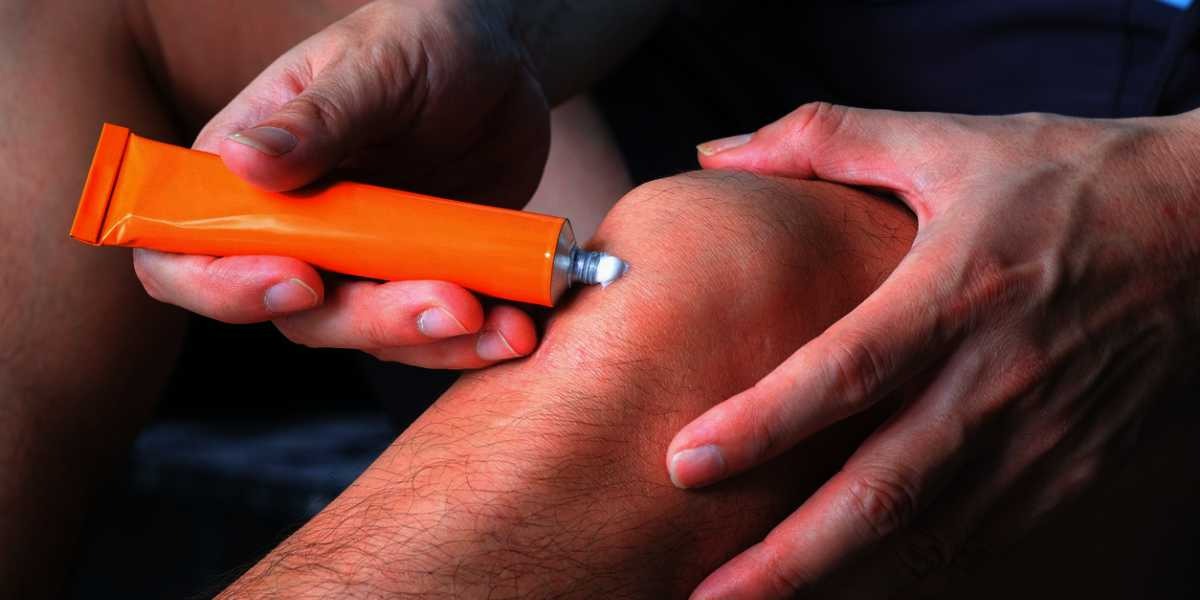
Steroid cream. (iStock)
Synopsis: A new fungal infection, Trichophyton indotineae, spreading across the world bears India’s name. Researchers traced the emergence of this organism to the widespread use of over-the-counter steroid combination creams used to treat itching, rashes, and fungal infections.
A new fungal infection spreading across the world bears India’s name. Scientists have called it Trichophyton indotineae. The term “indo” refers to India, while “tineae” comes from the Latin word used in medicine for fungal skin infections such as ringworm. Put together, indotineae effectively means “the India-associated fungus that causes tinea infections.”
The name is not a compliment.
Researchers traced the emergence of this organism, saying its rise is closely linked to a common practice in India: The widespread use of over-the-counter steroid combination creams used to treat itching, rashes, and fungal infections. These creams, sold cheaply at pharmacies, contain drug combinations that dermatologists say should never be in the same tube.
Across India, these creams have become the default treatment for common skin complaints. They act quickly, suppress symptoms within days, and cost very little. But the same properties that make them attractive to patients also create conditions that allow fungi to evolve resistance and spread.
The consequences are now visible far beyond India’s borders.
For many patients in India, treatment for a skin infection begins not at a clinic but at a pharmacy counter. Someone walks into a medical store complaining of itching in the groin, thigh, or waist. The pharmacist recommends a cream. It is cheap, easily available, and promises quick relief.
Within days, the itching often stops. The redness fades. Patients assume the infection has cleared.
Inside the tube sits a pharmaceutical mixture known as a fixed-dose combination, or FDC. Instead of containing a single drug designed to treat a specific condition, the cream typically carries three or more medicines combined into one formulation.
A potent topical steroid, usually clobetasol propionate, forms the core component. This drug is among the strongest steroids used in dermatology. Alongside it sit an antifungal agent such as clotrimazole or terbinafine and an antibiotic such as gentamicin or neomycin. Some creams contain even more antimicrobial ingredients.
These combinations have become widespread across Indian pharmacies because they are cheap and accessible. Pharmaceutical companies often price them lower than standalone antifungal medicines, making the cocktail creams more attractive for both pharmacists and consumers.
Patients rarely require a prescription. Pharmacists frequently recommend the creams directly. When symptoms return, another tube is purchased.
Dermatologists say this cycle has contributed to widespread steroid misuse in India.
“Steroid creams have been abused in India, and they are being used in the form of potent, very strong steroids, something called clobetasol, in combination with antibiotics and antifungals,” Dr Rajetha Damisetty, president-elect of the Indian Association of Dermatologists, Venereologists and Leprologists (IADVL), Telangana, told South First.
“Because of that, antimicrobial resistance and antifungal resistance have increased so much that it has led to the emergence, the birth of a new organism. That new organism is being named after our country.”
Dr Manogna Vellala, Assistant Professor in the Department of Dermatology at Osmania Medical College, explained that these combinations work by offering quick symptomatic relief rather than treating the infection effectively.
“Steroid antifungal antibiotic combinations work by empirical treatment of infections. The steroid component is anti-inflammatory and gives relief from symptoms of itching, redness, etc., but a combination of a topical steroid with an antibiotic AND an antifungal is not recommended in dermatological literature,” she told South First.
“They should not be used because the steroid essentially suppresses the local immunity, which is essential to fight the infection. Combining the steroid with an antibiotic and antifungal gives brief respite from symptoms while the underlying infection continues unchecked.”
She added that such combinations can worsen the long-term course of infection.
“Moreover, the combination of a topical steroid with an antimicrobial creates an environment where the microorganisms are exposed to a low concentration of the drug, which is not enough to eliminate them but can lead to adaptations which cause drug resistance. These combinations have been cited to cause chronic, recurrent and recalcitrant infections in affected patients. So in simple terms, the infection does not reduce completely, the microorganisms emerge stronger, and the patient’s problem gradually worsens,” Dr Vellala said.
To understand how a simple cream could contribute to the emergence of a new fungal species, scientists point to the biological role of clobetasol propionate.
Human skin functions as a defensive barrier with its own immune responses. When fungi land on the skin and begin to colonise its surface, the body reacts immediately. Blood vessels dilate, immune cells gather at the site, and inflammatory signals are activated. The resulting redness, swelling, and itching are signs that the immune system is fighting the infection.
Clobetasol suppresses this entire response.
The drug belongs to a class of steroids known as glucocorticoids, which reduce inflammation by shutting down immune signalling pathways. When applied to infected skin, clobetasol quickly reduces redness and swelling. The itching stops. The skin appears to heal.
But the fungus itself may remain alive.
With the immune response suppressed, the fungus encounters a more favourable environment. It spreads deeper into the skin layers and colonises areas that topical medications cannot easily reach.
Meanwhile, the antifungal drug included in the same cream attempts to kill the organism. However, the drug concentration reaching the fungus may be high enough to stress it but not strong enough to eliminate it.
This is precisely the condition under which microbes develop resistance.
A study published in the Journal of Fungi notes that long-term unsupervised use of topical glucocorticoids, particularly clobetasol propionate, remains poorly understood among patients, pharmacists, and even some healthcare providers in India.
Under continuous exposure to antifungal stress, the fungus begins to adapt. Scientists have identified mutations in a gene called squalene epoxidase, the molecular target of the antifungal drug terbinafine. Once this mutation appears, terbinafine can no longer kill the fungus effectively.
This resistance affects not only topical creams but also oral terbinafine tablets used to treat fungal infections.
Researchers have documented high levels of resistance among isolates collected in India. In one multicentre study, up to 76 percent of T. indotineae samples showed resistance to terbinafine in laboratory testing.
Around 2015, dermatologists across India began noticing a shift in the behaviour of common fungal infections. Patients with ringworm, medically known as dermatophytosis, were no longer responding to standard treatments. Rashes that once cleared with antifungal therapy began spreading across the groin, trunk, buttocks, and sometimes the face.
Researchers eventually traced the problem to a genetic variant within the Trichophyton mentagrophytes fungal complex.
By 2019, researchers formally recognised the strain as a separate species and named it Trichophyton indotineae.
Dr Vellala explained that routine fungal infections do not automatically transform into this resistant species.
“Fungal skin infections are caused mainly by three genera of fungus — Trichophyton, Epidermophyton and Microsporum. Among these, Trichophyton indotineae is a species with strong resistance to terbinafine, an antifungal drug,” she said.
“So a routine fungal infection does not turn into Trichophyton indotineae, but if the infection is caused by Trichophyton indotineae in the first place, it has severe symptoms and requires a longer duration of treatment with antifungals other than terbinafine.”
The fungus has now spread across several regions of the world, including Europe, the Gulf countries, North America, and Australia.
Germany has reported one of the highest numbers of infections among patients with no travel history to India. Researchers have also documented family clusters of infection, where the fungus spreads through shared towels, bedding, and close contact.
Treating infections caused by Trichophyton indotineae has become increasingly challenging.
Clinical studies suggest that itraconazole is currently among the most effective available oral antifungal drugs. But dermatologists warn that the continued misuse of topical steroid combinations could drive resistance to newer treatments as well.
“Trichophyton indotineae can be treated with other systemic antifungals. But the emergence of topical preparations containing combinations of powerful systemic antifungals with potent topical corticosteroids remains a concern and prompts fears that a fungus with resistance even to these drugs might emerge,” Dr Vellala said.
Regulators have attempted to address the issue in the past.
“The DCGI, through a gazette notification under Section 26A of the Drugs and Cosmetics Act, 1940, on 10 March 2016, enforced a ban on the manufacture of 349 irrational fixed-dose combinations. In 2024, some more combinations of topical antifungals with antibacterial agents and topical steroids were banned,” she said.
Despite these bans, dermatologists say many irrational combinations continue to circulate widely in pharmacies across the country.
In clinics across India, dermatologists say they repeatedly see patients whose infections have persisted for months or even years after repeated self-medication with steroid creams.
“People often go to a pharmacy and buy something on their own. Everything from tinea to melasma is treated with steroids over the counter. The emergence of resistant mutants is mainly because of the use of over-the-counter topical steroids,” Dr C Karishni, a Hyderabad-based dermatologist, told South First.
She said many patients stop treatment the moment itching subsides, assuming the infection has cleared.
“The fungus actually travels deeper into the dermis. It requires two to three months of antifungal therapy to clear. When treatment is stopped early, the infection returns and often spreads further,” she said.
Dr Karishni also pointed to the widespread role of unqualified practitioners in worsening the problem.
“Quackery is a very big and rampant problem in our country. It is time people become aware that they should go to the right physician and consult a dermatologist,” she said.
Researchers now call for stricter enforcement of prescription-only drug regulations, improved diagnostics, and stronger public awareness campaigns.
Until those changes occur, dermatologists warn the cycle will continue.
A global infection now bears India’s name. Its origins trace back not to a laboratory or a hospital outbreak, but to a small tube of cream sold cheaply on pharmacy shelves and used repeatedly by patients seeking quick relief from an itch.
(Edited by Muhammed Fazil.)


