

Published Feb 18, 2026 | 7:00 AM ⚊ Updated Feb 18, 2026 | 11:55 AM

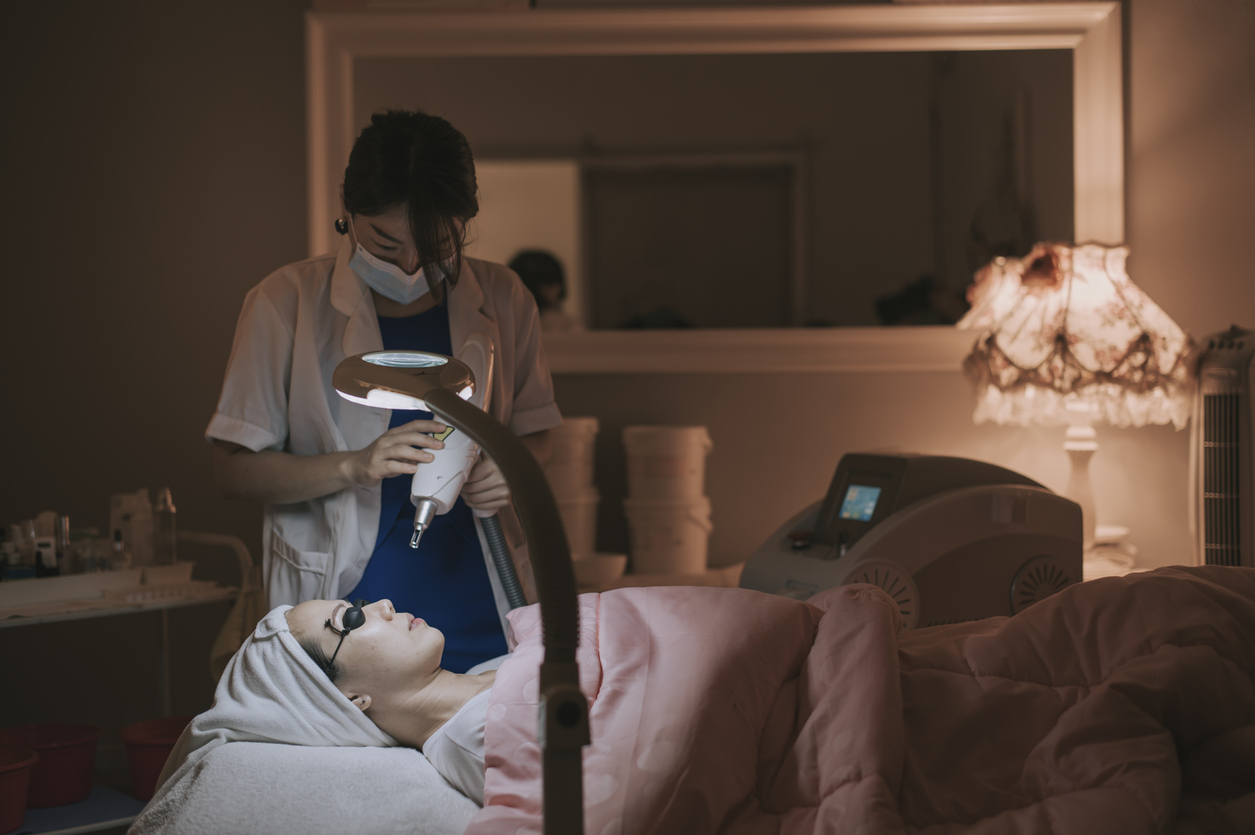
Representational image. Credit: iStock
Synopsis: Tamil Nadu Medical Council has warned that aesthetic procedures like hair transplants and laser treatments are strictly medical interventions requiring qualified, registered doctors and licensed facilities. Citing NMC’s 2022 guidelines, it stressed patient safety, informed consent, and record-keeping. Experts noted rising complications from unqualified practitioners, urging strict enforcement, inspections, and public awareness to curb unsafe practices.
As aesthetic procedures such as laser treatments and hair transplants become increasingly common, the Tamil Nadu Medical Council (TNMC) has issued a public awareness notice cautioning that these are strictly medical procedures for qualified, registered doctors.
Referring to guidelines issued by the National Medical Commission (NMC) on September 20, 2022, the Council said the regulations were introduced to address the “increasing incidence of complications and fatalities arising from aesthetic procedures performed by unqualified persons and in unregistered or non-compliant clinical establishments.”
The Directorate General of Health Services (DGHS) has also prescribed minimum standards for cosmetology clinics.
The clarification, issued in the interest of public awareness and professional guidance, reiterates that patient safety must remain central as demand for cosmetic skin and hair procedures rises.
TNMC has made it clear that aesthetic and cosmetology procedures involving skin and hair — including hair transplantation and laser-based treatments — “shall be performed only by Registered Medical Practitioners (RMPs) possessing recognized specific medical qualifications” and duly registered with the Tamil Nadu Medical Council.
It further stated that such procedures must be carried out only in TNCEA-licensed healthcare establishments, in compliance with applicable laws, ethical standards and patient safety protocols.
Informed consent must be obtained, and proper medical records maintained as per prevailing regulations.
Warning of strict action, the Council said any person performing these procedures without recognised qualifications would be deemed to be engaging in unethical medical practice.
Legal action would be initiated against both individuals and establishments where such procedures are conducted. The notice also said regular inspections would be carried out by State Health Authorities and competent regulatory bodies.
Responding to the Tamil Nadu Medical Council’s clarification, Dr Maya Vedamurthy, Director, RSV Skin Clinic, and Senior Consultant Dermatologist at Apollo Hospitals, Chennai, told South First that the issue of unqualified individuals performing aesthetic procedures is not new.
“This has been happening for some time, unqualified people are performing aesthetic procedures without proper qualifications or licences,” she said, adding that regulatory directives would help curb such practices, even if they may not eliminate them entirely.
“Importantly, it can reduce complications, including deaths after hair transplants.”
Referring to the 2022 NMC directive, she reiterated that only registered medical practitioners with the required qualifications — dermatologists and plastic surgeons — are allowed to perform these procedures.
Aesthetic treatments, she stressed, are medical interventions that require proper training, assessment and infrastructure.
Highlighting the risks, Dr Vedamurthy said complications from procedures carried out in unregistered centres are a serious concern.
“With lasers, we have seen burns, facial damage and scarring due to improper training. In hair transplants, there have been deaths, including among young people, at unrecognised centres. These incidents are being reported across the country,” she said.
Speaking to South First, Dr KR Sharmatha, Senior Consultant, Dermatology at SIMS Hospital, Chennai, said the problem is “more serious than most people realise,” pointing to the growing marketing of aesthetic procedures by non-medical establishments.
She noted that patients often assume these are simple beauty services and fail to verify the practitioner’s qualifications.
Both doctors emphasised that enforcement will be critical. Dr Vedamurthy said medical councils must strictly inspect centres and ensure required qualifications and ethical standards are followed, warning that vigilance often weakens over time if monitoring is not consistent.
While clear guidelines send a strong message, sustained inspections and public awareness will ultimately determine whether unsafe practices are effectively reduced.
(Edited by Amit Vasudev)


