

Published Dec 06, 2025 | 12:25 AM ⚊ Updated Dec 06, 2025 | 12:25 AM

Synopsis: Andhra Pradesh has reported three confirmed deaths and around 775 cases of scrub typhus, with health officials also examining two additional suspected fatalities. The infection has spread beyond its usual rural areas, with districts such as Kakinada, Chittoor and Visakhapatnam recording the highest numbers. Authorities said treatment is effective when given early and have assured the public that the situation remains under control.
Andhra Pradesh has reported three deaths and 775 cases of scrub typhus as of Thursday, 4 December, with the infection spreading beyond its traditional presence in rural areas and reaching unexpected locations.
In November, two women died in Palnadu district while undergoing treatment at separate hospitals. A third woman died in Vizianagaram district, though health authorities are examining whether other conditions contributed to the death.
Nagamma, 64, from Rajupalem, reached Guntur Government General Hospital on 14 November after fever persisted for days. She died two days later, before test results confirmed scrub typhus. Her liver had failed.
Jyothi, 20, from Rudravaram in Muppalla block, died at All India Institute of Medical Sciences (AIIMS), Mangalagiri on 1 November. Doctors are scrutinising her case sheets to determine whether other illnesses played a role. In Vizianagaram, Chandaka Rajeshwari, 45, from Mettapalli village, died with similar symptoms.
Two more suspected deaths occurred in Bapatla and Nellore districts, bringing the total fatalities under investigation to five.
The numbers indicate a steady expansion. In 2023, the state recorded 579 cases. By 2024, this climbed to 803. This year, 736 cases had been recorded by 30 November, and the count reached around 775 days later.
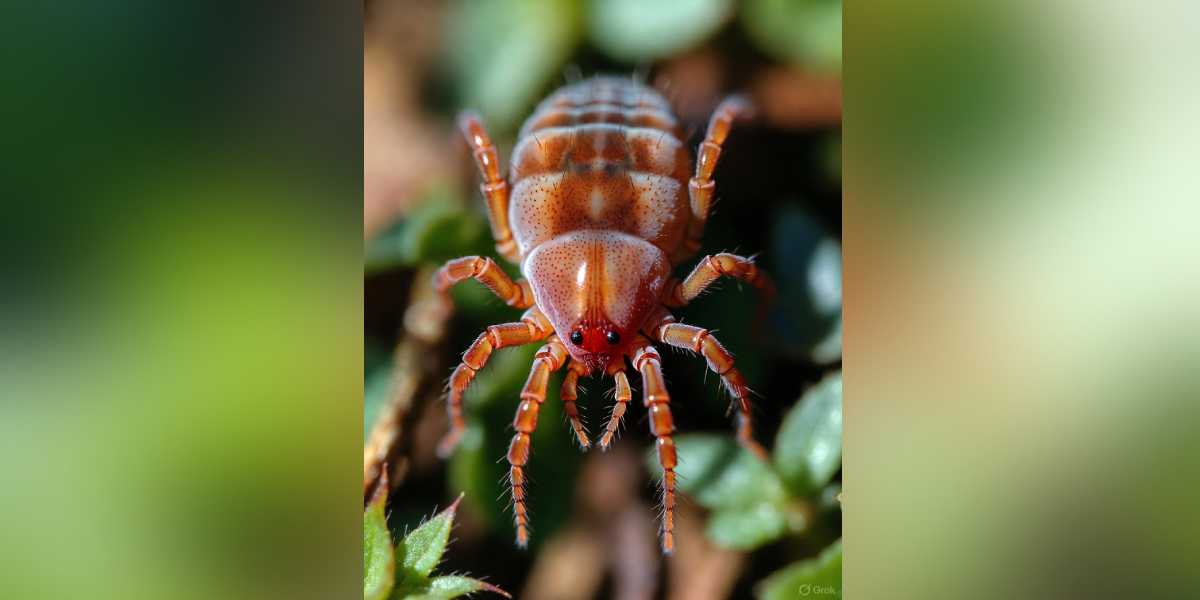
Scrub typhus spreads when a person is bitten by the larval stage of a trombiculid mite, commonly called a chigger. These mites carry the bacterium Orientia tsutsugamushi, which enters the body through the bite and triggers infection. People are usually exposed in areas with dense vegetation or scrub where the mites thrive.
Kakinada recorded the highest number of cases with more than 150, followed by Chittoor. Visakhapatnam reported 120 cases in third place, despite the city’s urban environment lacking the forests and farmlands typically associated with the disease.
More striking is that Alluri Sitharama Raju, Konaseema, Parvathipuram-Manyam and West Godavari, all dominated by forests and farmland, reported zero confirmed cases.
Health Minister Satya Kumar Yadav addressed reporters about the situation.
“The presence of a black lesion along with fever may indicate scrub typhus, although such lesions do not appear in all cases,” he said. “Although some fever cases have tested positive for scrub typhus during surveillance, no deaths have been reported so far.”
Scrub typhus typically begins with sudden fever, chills, headaches and body pain, symptoms that resemble several other seasonal infections.
“At the bite site, a lesion forms. It is known as an eschar. It looks like a black scab, a cigarette burn, a dark crater on the skin. This mark serves as the signature of scrub typhus, the clue that separates it from other fevers,” said Dr Kumar.
However, he noted that the eschar is not seen in all patients, which makes diagnosis difficult. “The bacteria’s genetics add another layer of confusion. Different strains of Orientia tsutsugamushi circulate, each with variations that affect how the disease manifests and how tests detect it,” he said.
Diagnosis requires an enzyme-linked immunosorbent assay (ELISA) test, but these facilities operate in limited locations. Currently, seven Viral Research and Diagnostic Laboratories handle testing across the state.
Sri Venkateswara Institute of Medical Sciences in Tirupati and AIIMS in Mangalagiri also conduct tests. Health and Family Welfare Commissioner G Veerapandian announced plans to expand testing to all teaching hospitals.
“Steps are being taken to ensure that this test is available across all teaching hospitals in the state,” Veerapandian told reporters Thursday evening in Vijayawada after meeting with doctors from primary health centres. “Measures are being taken to increase the number of tests and supply necessary reagents to hospitals.”
Treatment exists and works. Two antibiotics, doxycycline and azithromycin, kill the bacteria effectively when administered early. The state has stockpiled one crore tablets of each medicine at sub-health centres across Andhra Pradesh. Health and wellness centres now hold supplies ready for immediate distribution.
Patients who receive antibiotics within the first week typically recover without complications. Those who delay treatment risk organ failure, bleeding disorders and death.
Scrub typhus cases tend to rise during the monsoon, when conditions allow mites to flourish. “Scrub typhus is not a fatal disease,” Veerapandian said. “It is a type of small insect, a chigger mite similar to a blackhead. It is only an infection that occurs when bitten. Importantly, this disease is not transmitted from one person to another and is not a contagious disease.”
Agricultural workers face the highest risk. Health department advisories recommend wearing rubber boots while entering fields, particularly at night when mites are most active.
“People with chronic illnesses should take extra precautions, just as they did during COVID,” Veerapandian said. “Those living near dense vegetation or farmlands are more vulnerable. These mites tend to bite mostly at night. People going for farm work should wear rubber boots. Residential surroundings must be kept clean.”
The guidance applies to anyone living near farms or forested areas. It includes keeping grass trimmed, clearing brush and debris and reducing spaces where rodents can nest.
People are also advised to watch for fever with body aches, check the skin for dark lesions and seek medical care quickly if symptoms appear after possible exposure.
As officials investigate whether scrub typhus alone caused the five deaths or whether underlying conditions played determining roles, Veerapandian assured the public.
“The current situation is completely under control and there is no need to panic,” he said.
Full details will emerge after all reports arrive and doctors complete their analysis.
(Edited by Dese Gowda)


