

Published Oct 06, 2026 | 9:14 PM ⚊ Updated Oct 06, 2026 | 9:14 PM

Is India prepared for its children with cerebral palsy? By most measures, no.

Synopsis: Therapy for cerebral palsy is a lifelong commitment: physiotherapy, occupational therapy and speech therapy, ideally combined and delivered several times a week for years. Most Indian families cannot sustain this. This World Cerebral Palsy Day, “Unique and United” reminds us that every child has a distinct story and no family should carry it alone.
Preeti, a 40-year-old woman from Bangalore, never expected motherhood to look like this. Her son Ayush, now 15, began having seizures a few hours after birth. He was full-term and a healthy weight, and tests in the neonatal ICU came back normal.
But his parents and neonatologist noticed he was not moving his limbs. After extensive evaluation, the doctor told them he might never walk and could have seizures for life.
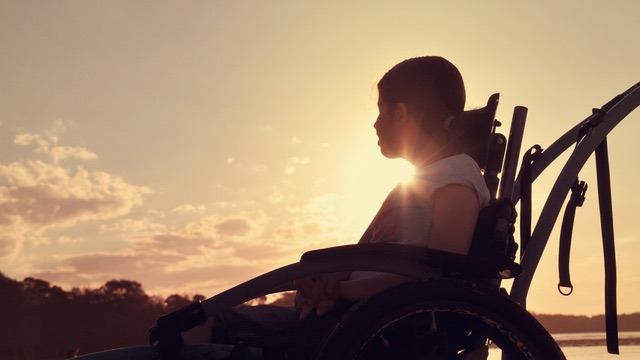
Today Ayush lives with severe cerebral palsy. His arms lack the strength to use a wheelchair. Preeti, who worked in a bank, never returned from maternity leave. She feeds, cleans, dresses and moves him.
His seizures have been controlled with medication for over a year, though the risk remains. Ayush is bright and happy, and never misses an Indian cricket match. Yet what could improve their lives, such as accessible transport, easier access to therapy and support for caregivers, largely does not exist.
This is not one family’s story. India’s prevalence of cerebral palsy is about 3 per 1,000 live births, above the global average of 2 to 2.5. World Cerebral Palsy Day, observed every 6 October, carries the 2026 theme “Unique and United.”
“We have become very good at pulling babies back from the brink of death,” said Dr Sheetal Srivastava, a paediatrician in Bangalore. “We have not become good at giving them a life worth surviving for.”
Also Read: Medicine Nobel 2026: How a light-sensitive algae protein gave scientists a brain control switch
Therapy for cerebral palsy is a lifelong commitment: physiotherapy, occupational therapy and speech therapy, ideally combined and delivered several times a week for years. Most Indian families cannot sustain this.
Preeti has a stable home and income, yet says taking Ayush to therapy is a full-time job. Physiotherapy is needed at least three times a week, and in Bangalore traffic a round trip takes half a day.
“When we skip a session, his legs stiffen again, and we lose ground,” she said. Speech therapy is scarcer still. A private session can cost ₹750 to ₹800, and India has only about 5,000 registered speech therapists.
Dr Prema Khatri, a clinical physiotherapist in Chandrapur, Maharashtra, has worked with children with cerebral palsy for years. “I cannot ask a mother to come five times a week if she has to travel two hours each way and look after other children,” she said. “Therapy that doesn’t fit into a family’s life doesn’t happen.”
As children grow, the challenges change. A five-year-old can be carried to a session. A 15-year-old cannot. Physiotherapist Dr Soumya has watched the pattern repeat. “Young children can be carried. Older children cannot. That is when families drop out,” Soumya said. “Not because they have given up, because their bodies have.”
Indian research has found hip subluxation in as many as 53 percent of children with cerebral palsy. The need for therapy intensifies, yet support for adolescents is almost entirely absent.
Also Read: Kerala HC has ruled Centre can step in when patented medicines are too expensive. How will it work?
Dr Swati Surkar, an assistant professor of physical therapy in the United States, sees a stark contrast.
“In the US, therapy is delivered in structured, intensive blocks with coordinated teams and insurance that covers ongoing care,” Surkar said. “In India, therapy is often episodic, families pay out of pocket, and travel is a major barrier. When a child grows older, the burden falls almost entirely on the family.”
Pediatric neurorehabilitation has advanced, but facilities are concentrated in metropolitan centres and mostly reachable only through out-of-pocket payment. For rural families, rehabilitation remains a patchwork of unmet needs.
Anil Patil, Founder and Executive Director of Carers Worldwide, has seen this through the organisation’s work with unpaid caregivers.
“When caregivers are supported, heard and empowered, they can care better for their loved ones with cerebral palsy,” he said, “while also gaining the confidence to speak up and help shape better systems for all families.”
Ravi Ranganathan, Director of Programmes at an NGO working with persons with disabilities, says rehabilitation must be a core element of any approach. “Distance, cost, and the need for trained professionals often make it difficult for families to receive timely care,” he said. “We are working to change that by bringing services closer to home.”
The impact shows in individual lives. Four-year-old Pranav, who has cerebral palsy affecting the right side of his body, began attending an early intervention centre in Delhi a year ago.
He could not sit or stand without support, and his right hand was held in a tight fist. Today the fist has opened completely. “Even if a child makes a tiny movement, it creates a very big impact,” said Dr Ifrah, a physiotherapist at the centre. “The same hard work also comes from the parents’ side.”
Nivedita from Pacta, a Bengaluru-based law and policy think tank, points to another exclusion. A 2023 study by the organisation assessed 32 public parks and found that internal accessibility features, such as paved walkways and ramps to play areas, were present in only about 38 percent of cases. For a child with cerebral palsy, play, the most ordinary part of childhood, remains out of reach.
Is India prepared for its children with cerebral palsy? By most measures, no. Being prepared means pediatricians in every district hospital who can recognize early signs.
It means botulinum toxin injections and follow-up therapy covered by public insurance, accessible transport, speech therapy in every district, and government schools equipped with accessible spaces and support staff.
This World Cerebral Palsy Day, “Unique and United” reminds us that every child has a distinct story and no family should carry it alone.
In a country that keeps more newborns alive, the next moral question is unavoidable: what are we building to catch the lives we have saved?
(Edited by Dese Gowda)



