

Published Dec 26, 2025 | 7:00 AM ⚊ Updated Dec 26, 2025 | 7:00 AM

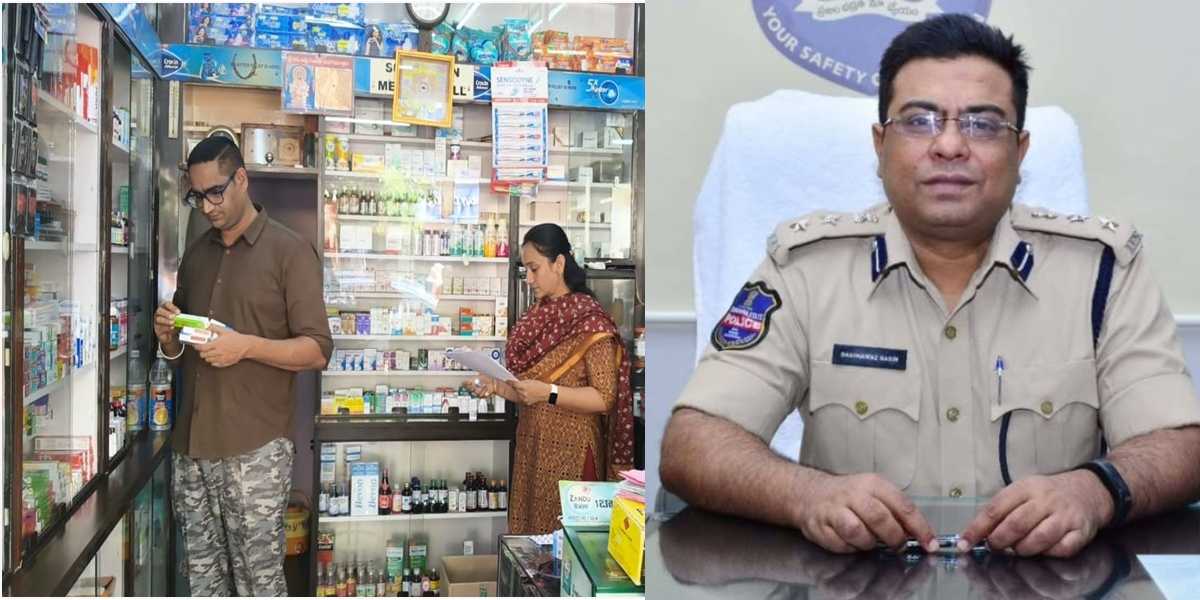
Shahnawaz Qasim, Director General of the Telangana Drug Control Administration.
Synopsis: The DCA issued a statewide advisory reiterating that Mephentermine Sulphate and anabolic steroids are prescription-only drugs, warning of licence cancellation and prosecution under the Drugs and Cosmetics Act for violations.
Telangana’s Drugs Control Administration (DCA) issued an advisory to all wholesale and retail medical shops in the state, warning them against indiscriminate sale of prescription drugs, including Mephentermine and Atracurium Besylate injections.
The advisory warned that those continuing to sell such medicines would face cancellation of their licence and prosecution.
Mephentermine Sulphate is a cardiac stimulant intended strictly for life-saving during surgeries to maintain blood pressure. Atracurium Besylate is a neuromuscular blocking agent used during surgical procedures to induce muscle relaxation.
Both are classified under Schedule H of the Drugs Rules and require prescriptions from registered medical practitioners.
“The abuse of habit-forming drugs and other prescription medicines can lead to severe health consequences. Continued misuse or overdose may result in respiratory depression, coma, and, in extreme cases, death,” the advisory stated.
The DCA’s concern stemmed from the discovery of Mephentermine misuse in gyms during October raids in Hyderabad. Bodybuilders and fitness enthusiasts have been using the injection to enhance endurance and achieve sharper muscle definition, unaware of the health risks involved.
Misuse of Mephentermine can dangerously elevate blood pressure, cause irregular heartbeat, weaken heart muscles and trigger heart attacks.
The advisory also warned against the indiscriminate sale of Atracurium Besylate and other prescription medicines, requiring strict medical supervision.
Speaking to South First, Shahnawaz Qasim, Director General of the Telangana Drug Control Administration, said the advisory reflected the agency’s strategy of prioritising prevention over enforcement.
“We have increased the number of advisories. Advisories work better than enforcement alone. If we prevent harm through advisories, the need for reinforcement reduces. That is the approach we are taking,” Qasim said.
He said the DCA had expanded its reach to areas traditionally not under its direct jurisdiction, particularly where drugs and health risks intersected with commercial activities.
In October, the agency conducted coordinated searches at 20 gymnasiums across Hyderabad and Secunderabad, uncovering widespread misuse of Mephentermine Sulphate injection.
The searches based on police intelligence exposed an underground supply chain sourcing Mephentermine Sulphate from Odisha, Delhi and Uttar Pradesh through online platforms.
Gym trainers and dealers bought the injections cheaply online and resold them at several times the price to bodybuilders and fitness enthusiasts seeking enhanced endurance or sharper muscle definition.
“Some areas do not come directly under our purview, but we still intervene where drugs are involved. One such area is gyms. Gym culture is affecting the health of the youth. A gym, per se, is not bad, but the lack of awareness about what people consume to build their bodies is a major grey area,” Qasim said.
He pointed to a pattern of medical emergencies in fitness centres after the COVID-19 pandemic.
“We are seeing many people collapsing midway through gyms. This is not new, but post-COVID, visibility has increased. Earlier, it may have happened, but there was no data or media attention.”
Health officials warned that misuse of Mephentermine Sulphate can dangerously elevate blood pressure, weaken heart muscles and trigger heart attacks.
Many users remained unaware of the risks, and some developed psychological dependence, using the drug to cope with stress or train longer despite exhaustion.
Qasim attributed this trend to the pursuit of shortcuts.
“People want bodies like the ones they see in the digital world, without understanding that those images are digitally enhanced. The body has become a product. Health has become a commodity to be bought. But health is not a product. It is a living experience.”
Following the searches, the DCA issued a statewide advisory reiterating that Mephentermine Sulphate and anabolic steroids are prescription-only drugs, warning of licence cancellation and prosecution under the Drugs and Cosmetics Act for violations.
The DCA has been facing significant resource constraints in conducting enforcement operations.
“We have around 48,000 retail medical shops and about 760 manufacturing units, and other wholesale units. That means nearly 50,000 regulated units. We have only about 65 to 70 drug inspectors. You can imagine the gap,” Qasim said.
Laboratory staffing has been equally stretched, with only 10 to 15 people at the headquarters’ drug lab, even as responsibilities have expanded.
The DCA has sought funding under a central scheme to recruit at least 100 personnel for five years, including field staff and laboratory personnel, along with equipment.
A committee under former Chief Secretary Shanti Kumari has been formed to examine the demand for 100 additional drug inspectors.
“Otherwise, we will not be able to meet public expectations,” Qasim said.
He said inspectors often faced operational challenges on the ground.
“Unlike the police, we do not have court constables. A drug inspector has to conduct about 25 inspections a month, attend court, and coordinate with CDSCO.”
Despite manpower constraints, the DCA has refined its enforcement approach to target entire supply chains rather than just end users or retailers.
“I am not going there to catch the gym. I am trying to find out where the drug has come from; who supplied it without a prescription,” Qasim said.
He outlined a four-point framework used by the DCA. “There are four elements: Source, courier, receiver, and consumer. Once you identify these four, the enforcement story becomes clear.”
This reverse linkage strategy was applied while investigating the gym. Investigators traced Mephentermine Sulphate from gyms to dealers to online platforms and suppliers in other states.
“If we catch it at the courier level, we ask who sent it, who received it, and who it was meant for next. We want the entire chain. Only then can enforcement be effective,” Qasim said.
He clarified that enforcement action in gyms is justified when prescription drugs are found to be supplied illegally.
“The mandate of the Health Department is very clear. It exists to protect the health of the citizens of Telangana. That is the bottom line.”
The gym raids highlighted how online platforms have created new channels for illegal drug distribution. Qasim said platforms and quick-commerce services fall under scrutiny if drugs are supplied without a licence or prescription.
“Indiamart is not a seller. It is a directory, like a telephone directory. They do not supply drugs themselves. The sale happens from a shop listed on the platform,” he clarified.
When an unlicensed seller is identified, the DCA directs the closure of that product listing. For licensed shops that violate rules, licences are suspended or cancelled.
The DCA has also written to quick-commerce platforms about selling exercise-related substances without proper licensing.
“In the exercise category of platforms, delivery personnel have also been caught. We have written to these platforms clearly stating that they cannot sell such products without a licence,” Qasim said.
He described this as an evolving enforcement space.
“These are new areas of regulation. First, we advise. If it repeats, enforcement follows. Somewhere, accountability has to be fixed.”
Beyond prescription drug misuse, Qasim identified counterfeit medicines as a major emerging focus for the DCA.
“For the first time in India, arrests were made under drug-related provisions for counterfeit cases. Bail was not granted initially, and the magistrate was convinced,” he said.
He explained the difference between non-standard quality and counterfeit drugs.
“Non-standard quality does not always mean poison. You may get 70 percent therapeutic value. Counterfeit means zero percent. It is impersonation. The label is genuine, but the product is not made by that company.”
Counterfeit medicines harm patients who receive no therapeutic benefit and fuel parallel economies through revenue loss.
The DCA is building a real-time alert system to notify over 48,000 retail shops, wholesalers, distributors and drug inspectors across states when non-standard quality drugs are identified.
“Once NSQ is declared, messages will go to over 48,000 retail shops, wholesalers, distributors and drug inspectors. Even DCAs of other states will receive it,” Qasim said.
In Gujarat and Madhya Pradesh, batches have been withdrawn on the same day using WhatsApp.
“We want a nationwide real-time system.”
On public disclosure, he said transparency was not an issue.
“We are ready to share information the same day. Our mandate is health protection. We do not want anyone consuming a bad batch.”
Qasim acknowledged regulatory gaps in digital health platforms and alternative medicine systems.
“On digital platforms, the government itself has not yet taken final steps. Even now, there is discussion around online medicine advertisements. This is still a grey area,” he said.
He said enforcement challenges have emerged in alternative medicine, where some practitioners perform invasive procedures.
“Unscientific treatments like kidney removal and other invasive procedures are not happening in allopathy. They are happening in alternative systems of medicine. We were very clear on this,” Qasim said.
Referring to action taken against certain alternative medicine practices, he mentioned legal hurdles.
“In one month, we closed several shops. The matter went to court. The court order said we cannot take action in some Ayush-related areas. That case is ongoing.”
Digital health influencers presented another challenge that required coordination across departments.
“There are influencers. Oversight should come from multiple authorities. Police can also intervene. Departments must work in coordination,” he said.
(Edited by Majnu Babu).


