


Published Mar 20, 2026 | 5:21 PM ⚊ Updated Mar 20, 2026 | 5:21 PM

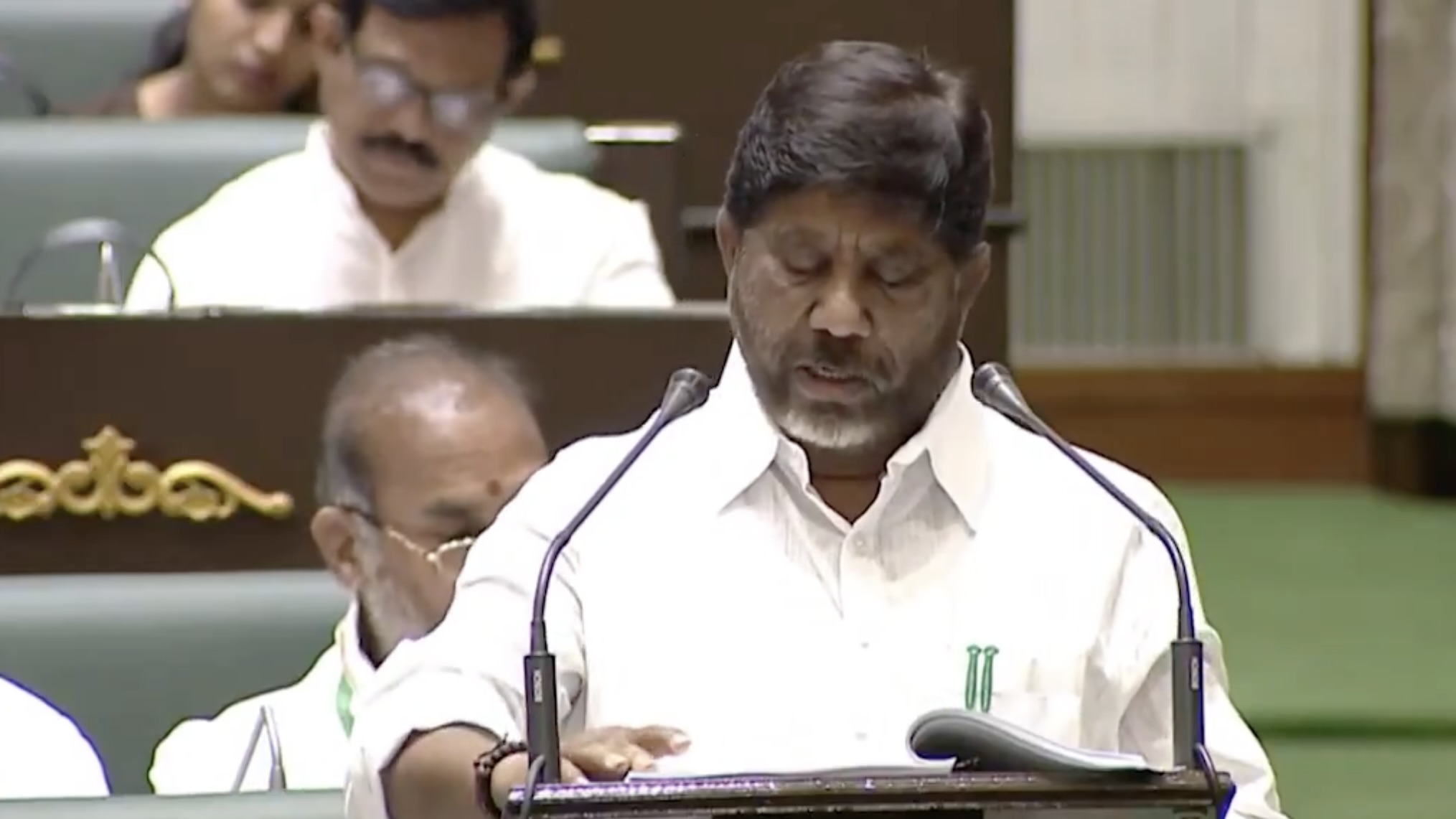
Deputy Chief Minister and Finance Minister Bhatti Vikramarka Mallu.
Synopsis: Telangana has increased its health budget by 10.4 percent to ₹13,679 crore for 2026–27, with a focus on expanding infrastructure and shifting towards preventive care. Doctors welcomed parts of the budget but said the rise in spending has not yet matched needs on the ground, pointing to staffing gaps, unpaid dues and missing allocations for key programmes.
Presenting the Telangana budget for 2026–27 on 20 March, Deputy Chief Minister and Finance Minister Bhatti Vikramarka Mallu announced an allocation of ₹13,679 crore for the Medical and Health Department, up 10.4 percent from last year’s ₹12,393 crore.
This is the highest allocation the department has received. Within hours of the speech, doctors’ associations and patient advocates set out a more complicated picture of what the money must do.
Vikramarka said the increase is part of a deliberate shift. “We are bringing about a shift from a treatment-based system to preventive healthcare services,” he told the legislature, a line that drew the most attention from health professionals across the state.
The budget ties that shift to the rollout of universal digital health profiles and health cards for every citizen in Telangana. The Finance Minister said the system is “not seen anywhere else in the country” and otherwise available only in developed nations.
Most capital spending in the department—about 79 percent of the ₹1,948 crore allocation—flows through the Directorate of Medical Education. New medical colleges and hospitals account for ₹381 crore, super-speciality hospital projects take ₹252 crore, and a new line item, the construction of the Osmania General Hospital complex, receives ₹100 crore for the first time.
The government has also allocated ₹339.76 crore for the Integrated Hospital Management System and ₹175 crore for equipment purchases across medical education institutions.
On infrastructure, Vikramarka set out figures that show expansion. By the end of 2026, tertiary care bed capacity in state government hospitals is projected to reach 44,029, above the Indian Public Health Standards norm of one bed per 1,000 people.
Nine new government medical colleges are already operational. In addition, 16 nursing colleges and 28 paramedical colleges have been added alongside them. The Telangana Vaidya Vidhana Parishad, earlier a grant-in-aid institution with 12,720 beds, is being converted into a full secondary healthcare department.
Three new TIMS hospitals at Sanathnagar, LB Nagar and Alwal are under way, along with the expansion of Nizam’s Institute of Medical Sciences and the Warangal Multi Super Speciality Hospital.
The cashless Employee Health Scheme will cover 23.51 lakh government employees, pensioners and their families for treatment across 1,998 diseases in both government hospitals and 421 empanelled private hospitals.
The Healthcare Reforms Doctors Association (HRDA) said the budget’s “emphasis on preventive healthcare is a significant and progressive shift”.
It welcomed digital health profiles, bed capacity expansion, and the wider range of services now on offer, including cancer care, NCD clinics, geriatric and palliative care, and dedicated clinics for transgender persons.
“The introduction of the cashless Employee Health Scheme is another positive step that enhances financial protection and access to healthcare services for employees and their families,” the association added.
Dr Ranga Reddy Burri of the Infection Control Academy of India praised the preventive shift and credited Health Minister Damodar Rajanarasimha for what he called a “strategic reorientation”.
He said his organisation “fully applauds the ₹13,679 crore outlay and the balanced emphasis on both tertiary care expansion and preventive healthcare”.
The Telangana Junior Doctors Association (T-JUDA) also acknowledged the government’s efforts, saying the current administration had resolved the long-standing issue of stipend delays that had affected junior doctors. “The present government’s health sector has firmly resolved the issue,” T-JUDA said, and urged it to “continue the same concern towards health sector warriors.”
HRDA pointed to a structural gap the headline number obscures. Health spending as a share of the total state budget remains at 4–5 percent, below the national average of about 6 percent and well short of the 10 percent the government had committed to at the Telangana Rising Global Summit.
“Moving progressively towards this goal in the coming years will further strengthen the healthcare system,” the association said. It cast this as unfinished work, but the gap between the stated target and the current allocation is large.
T-JUDA raised a recurring concern in rapid infrastructure expansion: staffing. “Rapid expansion of infrastructure is not matched with adequate recruitment of doctors and healthcare staff, leading to increased burden on existing workforce,” the association said. It added that workload and burnout among junior doctors are causing “excessive working hours” without enough staff to absorb patient load.
Dr Ranga Reddy Burri raised a more specific issue. His organisation had written to Health Minister Damodar Rajanarasimha on 15 February, seeking ₹250 crore for the Telangana Action Plan for Containment of Antimicrobial Resistance and another ₹250 crore for Infection Prevention and Control across public facilities. Neither appears as a line item in the budget.
“Protecting these substantial investments requires explicit, ring-fenced funding for AMR containment and IPC at the scale requested,” he said. He added that the proposed comprehensive Healthcare Policy should set these as “core, measurable pillars”.
The sharpest critique came from Dr Jagan, president of the Telangana Public Health Victims Association. He questioned not the direction of the budget but its adequacy.
He cited ₹600 crore in outstanding Aarogyasri dues owed to hospitals for services already delivered, no progress on the promised 100-bed government hospitals across all 33 districts, and acute shortages of doctors, medicines and ventilator beds in existing facilities.
At Nizam’s Institute of Medical Sciences, he said, patients are being turned away due to a shortage of ventilator beds.
“Despite Telangana having a population exceeding 4 crores, the existing hospital infrastructure is woefully inadequate when measured against population density,” he said, and called on the government to “recognise healthcare as an essential public service requiring immediate attention” and to allocate a significantly larger budget.


