

Published Dec 18, 2025 | 7:00 AM ⚊ Updated Dec 18, 2025 | 7:00 AM

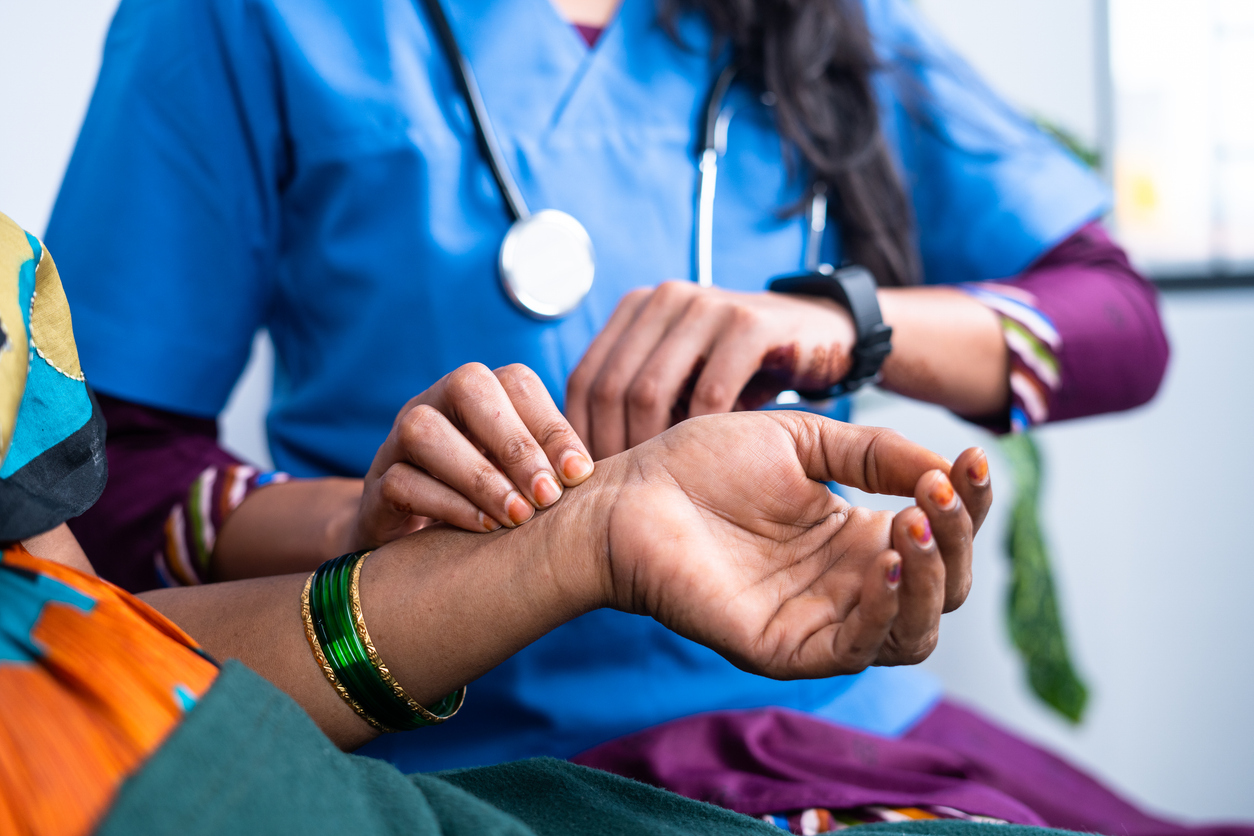
Representational image. Credit: iStock
Synopsis:Cancer patterns in Tamil Nadu vary sharply by district, shaped by urbanisation, access, and risk factors. While cities report more lifestyle-related cancers, several rural districts face higher burdens of preventable cancers due to tobacco use, infection and late diagnosis. This is South First’s second report examining the cancer surge in Tamil Nadu and the government’s response to tackle it.
Cancer in Tamil Nadu does not follow a uniform trajectory across districts. While some districts are witnessing a rise in lifestyle-related cancers associated with urbanisation and ageing populations, others continue to report a high burden of preventable cancers linked to infection, tobacco use, and late diagnosis.
District-wise cancer registry data point to an uneven cancer transition that is increasingly shaping how the state approaches prevention and care. In 2021, Tamil Nadu recorded 76,968 new cancer cases, according to the Tamil Nadu Cancer Registry Project (TNCRP).
Women accounted for more than half of all cases, and projections indicate that the State’s annual cancer burden could cross one lakh cases by 2025.
However, these headline numbers mask wide variations across districts — both in the number of cases reported and in the types of cancers diagnosed.
Experts caution against reading Tamil Nadu’s cancer burden in isolation or comparing it directly with other states.
According to Dr. R. Swaminathan, Associate Director, Professor and Head of Biostatistics and the Cancer Registry of Tamil Nadu, the state’s figures are often misunderstood.
“Tamil Nadu is the only place in southern India that runs state-wide cancer surveillance,” Dr. Swaminathan told South First. “That is why detailed district-level figures are available. Other states usually have only one or two population-based registries, limited to major cities.”
He noted that states such as Karnataka or the erstwhile unified Andhra Pradesh would likely report much higher cancer numbers if similar surveillance systems were in place.
“If you apply city-level cancer rates to the entire population of those states, the incidence would be much higher,” he said, cautioning against simplistic inter-state comparisons.
Unsurprisingly, urban and peri-urban districts report the highest number of cancer cases in absolute terms.
Chennai, which represents 155 divisions of the old metropolitan limits, Kanchipuram (including Chengalpattu), Vellore (including Ranipet and Tirupattur), Tiruvallur and Coimbatore together account for a large share of the state’s cancer burden.
Chennai alone is projected to record 8,505 new cancer cases in 2025, the highest among districts.
Experts attribute this to a combination of large population size, urban lifestyle patterns, ageing demographics and the concentration of diagnostic and treatment facilities.
“Cancer incidence is generally higher in urban areas than rural areas,” Swaminathan said. “Patterns are different — breast cancer in women, prostate cancer in men and colorectal cancers are more common in cities.”
These trends reflect dietary changes, reduced physical activity and better detection, rather than any single environmental exposure.
Urban cancer patterns among women have also changed over time. Cervical cancer, once the leading cancer even in metropolitan areas, has declined, giving way to breast cancer as the most commonly diagnosed cancer among women in cities.
“With sustained interventions, including awareness, improved hygiene practices and better education, cervical cancer incidence has declined in cities, and breast cancer has now become the dominant cancer among women,” told Dr. Surendra Veeraiah, Head of the Psycho-Oncology Department at the WIA and Regional Cancer Treatment Centre, to South First.
District-level data, however, reveal a more complex picture beyond urban centres. Several smaller and less urbanised districts — including Ariyalur, Perambalur, Tiruvannamalai and Dharmapuri — report fewer cancer cases in absolute numbers but show a disproportionately high share of certain cancers, particularly among women.
In these districts, cervical cancer remains one of the leading cancers, unlike in metros where breast cancer dominates. Oral and stomach cancers also feature prominently, reflecting persistent tobacco use, infection-related risks and delayed diagnosis.
These patterns underscore that lower case counts do not necessarily translate into lower cancer risk, especially in districts with weaker screening and delayed access to care.
The Nilgiris illustrates how access and reporting can shape cancer statistics. The hill district recorded 625 new cancer cases in 2021 and is projected to report 831 cases by 2025 — figures that may suggest a relatively low burden at first glance.
However, women accounted for nearly 58 percent of cancer cases in 2021, with a higher crude incidence rate (98.7/1,00,000) than men (76.9).
The lifetime cancer risk in the district stands at one in 13, with lung cancer most common among men and breast and cervical cancers dominating among women.
Dr. Swaminathan cautioned that these figures likely reflect under-diagnosis rather than low risk, given geographic barriers and limited access to diagnostic facilities.
“Because access and reporting vary across districts, places like the Nilgiris may appear to have fewer cases on paper, but that does not necessarily mean cancer risk is lower,” he said.
Clinical experience mirrors these disparities. Dr. Sathish Kumar Anandan, Senior Consultant in Surgical Oncology at Kauvery Hospital, Chennai, said that while cancer incidence is rising, most patients continue to present at advanced stages.
“In recent years, we are seeing more cancer cases, including among younger patients,” he said. “But sadly, most patients in India are still diagnosed at advanced or even terminal stages.”
Although Tamil Nadu has expanded oncology services and ensured that every district has at least one medical college, radiotherapy services remain unevenly distributed, forcing patients to travel long distances.
Long waiting times in government hospitals, driven by heavy patient loads, further complicate timely treatment.
These district-level disparities are now influencing Tamil Nadu’s prevention strategies. The most visible example is the state’s decision to roll out free Human Papillomavirus (HPV) vaccination to prevent cervical cancer.
While the programme will eventually cover all 36 districts, it was first launched in Ariyalur, Perambalur, Tiruvannamalai and Dharmapuri — districts where cervical cancer accounts for a larger share of female cancers despite lower absolute numbers.
According to TNCRP data, these districts are marked by infection-linked cancers, weaker screening uptake and later diagnosis, making primary prevention through vaccination particularly relevant.
“HPV vaccination, if done before exposure, can lead to the elimination of cervical cancer in the future,” Dr, Anandan said, noting that vaccination complements, rather than replaces, screening.
Despite screening programmes for cervical, breast and oral cancers, uptake remains low across districts. Fear, stigma and lack of awareness continue to delay diagnosis.
“People fear the diagnosis more than the disease,” Dr. Anandan said. “Because of this fear, they delay tests even when they have symptoms.”
Women, in particular, often present late, prioritising family responsibilities over their own health.
As cancer incidence continues to rise, experts say Tamil Nadu’s response will need to remain district-specific — combining surveillance, prevention, early detection and decentralised treatment — while recognising that where cancer is detected most often is not always where prevention is most urgently needed.
(Edited by Amit Vasudev)


