

Published Jan 22, 2026 | 11:20 PM ⚊ Updated Jan 22, 2026 | 11:20 PM

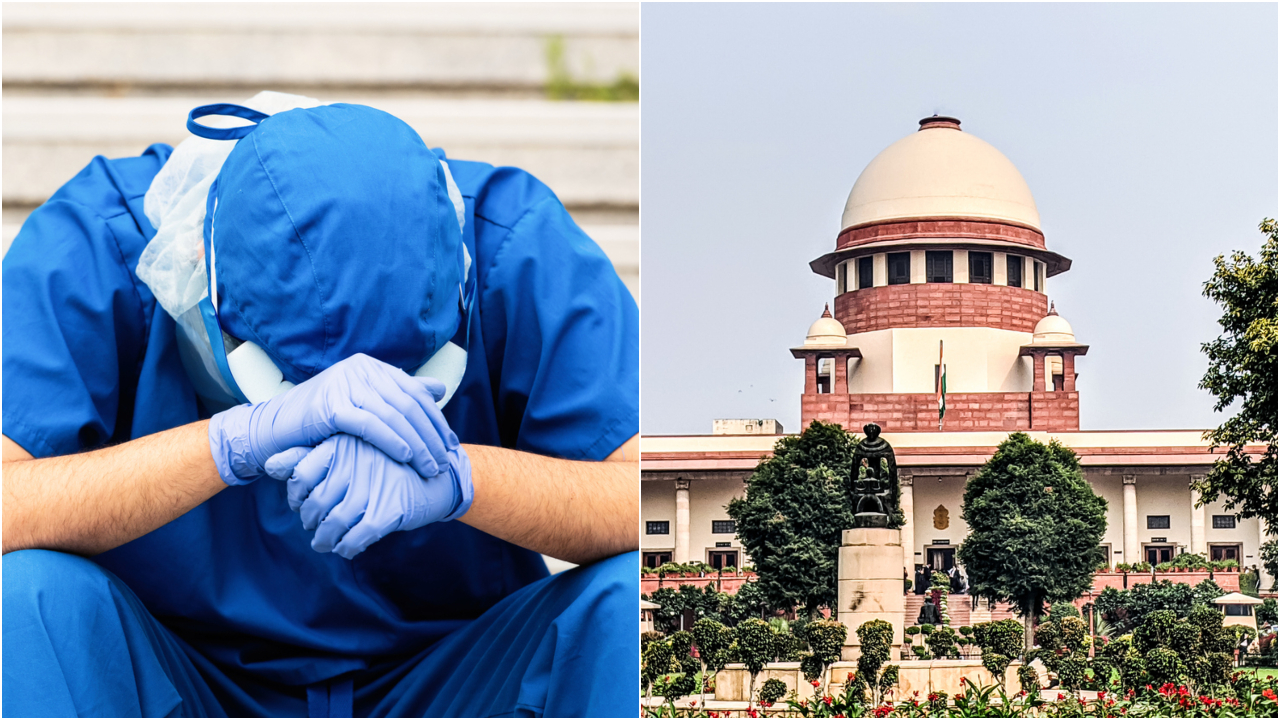
The judgment emphasises that the transition to higher education often transforms students from being "over-achievers" into "one of many," creating "a culture of heightened anxiety and competition." Credit: iStock
Synopsis: The Supreme Court, in a 15 January judgment on rising student suicides, condemned India’s medical education system as a “borderline exploitative academic culture.” It highlighted extreme 36-48 hour on-call shifts, normalised stressors, absent mental health support, tokenistic grievance mechanisms, persistent ragging, discrimination, and scholarship delays. Binding directives mandate reforms—including faculty/staff recruitment, emergency medical access, and strict compliance—within four months.
Medical students in India routinely work on-call hours stretching 36 to 48 hours at a stretch—well beyond prescribed limits—in what the Supreme Court has now termed a “borderline exploitative academic culture.”
In a judgment delivered on 15 January addressing the crisis of student suicides across higher education, Justices JB Pardiwala and Justice R Mahadevan singled out medical education as exemplifying the kind of “institutionally normalised stressors” driving students to despair.
The observations came as part of a National Task Force report examining why 13,000 students across all disciplines took their own lives in 2022—making suicide the leading cause of death for young women aged 15-29 and the second-highest for young men.
Medical students, the court found, face discipline-specific pressures that, combined with systemic failures in mental health support and grievance redressal, create conditions the judges described as resembling “pressure cookers that normalise distress.”
During the National Task Force’s institutional visits and nationwide surveys, medical students specifically highlighted the extreme nature of their working conditions.
“Medical students, in particular, spoke about the entrenched borderline exploitative academic culture coupled with on-call hours being stretched well beyond the prescribed limit—going as far as 36-48 hours at a go,” the judgment states.
The apex court noted that whilst students across all disciplines face academic pressure—from rigid attendance policies to unplanned curriculum scheduling and faculty shortages—medical education presents unique challenges. The prolonged on-call hours represent just one manifestation of what the Task Force identified as “institutionally normalised stressors” that contribute to student distress.
These concerns had already prompted the National Medical Commission (NMC) to form a Medical Institutions Task Force in 2024, which the Supreme Court’s National Task Force reviewed as part of its broader examination. Yet despite this previous scrutiny, the Supreme Court found that interventions remained “generic, abstract and reactive” rather than preventive, with “no implementation roadmap” to ensure genuine reform.
The judgment emphasises that the transition to higher education often transforms students from being “over-achievers” into “one of many,” creating “a culture of heightened anxiety and competition.” For medical students facing life-and-death training environments whilst working extreme hours, this competitive pressure compounds physical exhaustion in ways the court found unacceptable.
Even as medical students navigate these demanding conditions, the support available to them mirrors the systemic failures plaguing higher education more broadly. The National Task Force’s surveys revealed that approximately 65 percent of higher education institutions “provide no access to Mental Health Service Providers,” whilst 73 percent “lack full-time” mental health professionals.
Medical colleges are not exempt from these statistics. The irony, the court noted, is stark: students training to treat mental health conditions in others have minimal access to psychological support themselves. Where services do exist, “uptake is poor due to stigma, lack of trust in administration, and doubts regarding the maintenance of confidentiality,” along with “apprehensions about negative academic or social consequences.”
The judgment reserves particularly harsh language for institutional grievance mechanisms that medical students, like their peers across higher education, are meant to rely upon. Equal Opportunity Cells and Internal Complaints Committees, established under UGC regulations, were found to be “merely tokenistic.”
“Though these bodies may find existence in several institutions, they lack independence and often work to favour the perpetrators or aggressors rather than the students for whom it was created,” SC observed.
“Cases are suppressed and proceedings are often biased.” Even when properly constituted, these bodies “lack any real authority in the larger administrative framework of the HEIs to take any action, rendering them virtually powerless.”
For medical students experiencing harassment, discrimination, or seeking to report exploitative working conditions, this means that formal channels for help are “virtually powerless” to effect change. The judgment notes that students across institutions reported fears of “academic or social backlash” if they accessed grievance mechanisms—a particularly acute concern in medical education where small cohorts and hierarchical clinical environments can amplify retaliation risks.
Whilst the judgment does not provide medical college-specific data on ragging, it establishes that the practice “still seems to persist within several HEIs” despite anti-ragging regulations dating to 2009. The Court criticised how ragging continues to be “normalised and touted as a ‘bonding exercise’ or a ‘friendly ice-breaking effort.'”
“While HEIs obtain anti-ragging declarations from students on paper, in the event of such incidents occurring, they are not properly addressed and the consequences for erring students are minimal or absent,” the judgment states.
For medical students from marginalised backgrounds, discrimination compounds academic and physical pressures. The court noted that “students belonging to marginalised groups (SC/ST/OBC), persons with disabilities, transgenders, women, students from rural and non-English speaking backgrounds” face lived realities that “remain different even within the college atmosphere.”
The judgment emphasises that “affirmative action cannot stop at merely ensuring their entry into higher education. It must also reflect in the creation of adequate support systems which ameliorate instead of exacerbate existing inequities.” Yet the Task Force found these support systems either absent or, where they existed, “only exist on paper, or not at all; even when they exist in actuality, they are merely tokenistic.”
Medical students, like their peers across higher education, face significant financial stress—a factor the court identified as “directly impacting the mental well-being of several students, especially those belonging to rural and middle-income backgrounds.”
The judgment highlights “extensive delays, inconsistencies and inequities in scholarship disbursement” across institutions. More troublingly, “some HEIs even have institutional policies wherein the students are held accountable for the payment of fees when reimbursements/disbursements from the government faced any administrative delays.”
Given the high costs associated with medical education—including tuition, hostel fees, examination fees, and other expenses—these delays create acute pressure. The court noted that students have been “prevented from appearing in an examination, removed from hostels, barred from attending classes, or have their marksheets and degrees withheld because of delays in disbursal of scholarships.”
The Supreme Court directed unequivocally: “Even in cases of unavoidable administrative delay, HEIs must not, as a policy, make the student recipients accountable for paying or clearing their fees. No student should be prevented from appearing in an examination, removed from hostels, barred from attending classes, or have their marksheets and degrees withheld because of delays in disbursal of scholarships. Any such institutional policy, may be viewed strictly.”
The judgment imposes binding directives with four-month deadlines that apply to all higher education institutions, including medical colleges.
Medical institutions must fill “all vacant faculty positions (both teaching and non-teaching)” within four months, “with priority given to posts reserved for candidates from marginalised and underrepresented communities including those posts reserved for PwDs.” The court ordered that “special recruitment drives may be held for faculty recruitment that come under various forms of reservations.”
Crucially, the court addressed the leadership vacuums that plague many institutions: “Appointment and filling of vacancies of the post of vice-chancellor, registrars, and other key institutional/administrative positions, must also be made within a period of four months.” Going forward, these positions must be filled “within a period of one month from the date on which the vacancy arises” to “ensure the smooth functioning of HEIs.”
“Since the date of retirement is known much ahead in time, recruitment processes must begin well in advance to ensure that such posts do not remain vacant for more than a month,” the judgment states.
On scholarships, the directive is unambiguous: “The backlog of any and all pending scholarship disbursements must be cleared within a period of four months by the relevant Central and State government authorities.” Future disbursements must follow “clear timelines, without any delay,” with schedules made known to students.
Medical colleges must ensure “qualified medical help round the clock” is available—”if not on campus, then within a one-km radius to provide emergency medical health support to students.” The irony of medical institutions potentially lacking emergency medical access for their own students was not lost on the Court.
All medical colleges must now “report any incident of suicide or unnatural death of a student, regardless of the location of its occurrence (i.e. on campus, hostels, PG accommodations, or otherwise outside the institutional premises), to the police authorities no sooner they come to know about the incident.”
Additionally, medical colleges must submit “an annual report of student suicides or unnatural deaths” to the NMC. This reporting requirement aims to create better data tracking after the Task Force found existing suicide statistics inadequate for understanding patterns in medical education specifically.
The court placed all institutions, including medical colleges, on “strict notice, to remain fully compliant with all the regulations that have a binding effect on them.” This includes the UGC’s regulations on curbing ragging (2009), promoting equity (2012), preventing sexual harassment (2016), and redressing student grievances (2023).
“More, particularly, the establishment of Anti-Ragging Committees and Anti-Ragging Squads, Anti-Discrimination Officers, Internal Complaints Committees and Student Grievance Redressal Committees along with the procedures detailed for the respective grievance redressal mechanisms, must be strictly adhered to,” the judgment states.
The court’s language here is uncompromising: any violations “may be viewed strictly.”
(Edited by Amit Vasudev)


