

Published May 06, 2026 | 6:47 PM ⚊ Updated May 06, 2026 | 6:47 PM

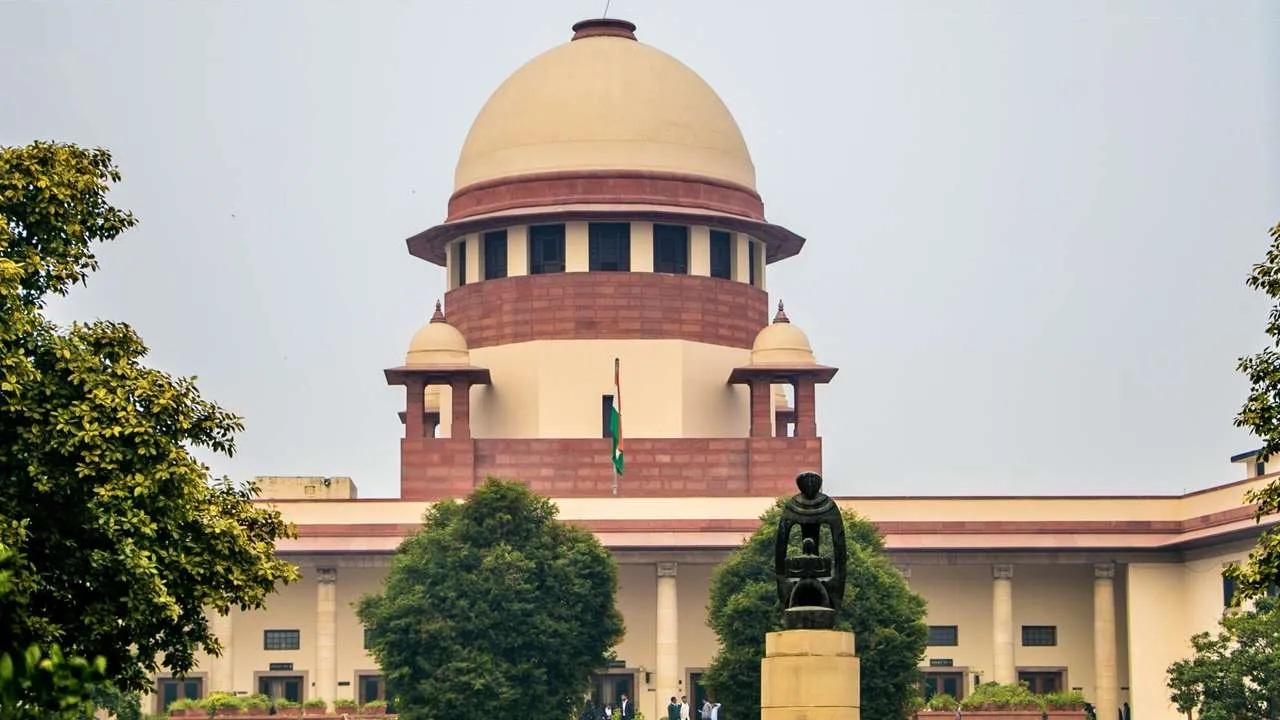
Supreme Court

Synopsis: A doctors’ association has raised concerns over the judgement, saying the verdict may unintentionally contribute to defensive medical practice and discourage young doctors from entering high-risk specialities and underserved rural healthcare sectors.
In a landmark judgement which could have far-reaching ramifications, the Supreme Court has said that a doctor’s liability does not end with his death. His legal heirs could be impleaded in medical negligence cases.
A Bench of Justice JK Maheshwari and Justice Atul S Chandurkar delivered the verdict while settling a question of law that had remained unresolved for over three decades.
Also Read: Eyeball removal case: Not only medical negligence but also fabrication of consent forms?
On 10 February 1990, a man in Munger, Bihar, took his wife to Dr PB Lall, an ophthalmologist, after she reported severe pain in her right eye. The woman underwent surgery the next day.
However, the pain returned. When further treatment brought no relief, the couple travelled to Shankar Netralaya in Madras (now Chennai), where another doctor told them the right eye had lost its vision due to the previous treatment, and that the left eye also faced risk.
The woman underwent a second surgery in 1994.
A case was filed under the Consumer Protection Act, 1986, in August 1997, seeking ₹4.5 lakh in compensation. The district forum in Munger found Dr Lall negligent and awarded ₹2.6 lakh. The State Consumer Disputes Redressal Commission reversed that, holding that the vision loss resulted from glaucoma and that the surgery had been performed within accepted medical standards.
The complainant moved the National Consumer Disputes Redressal Commission in revision. While the case was in pendency, Dr Lall died in August 2009. The complainant sought to bring Dr Lall’s wife and son on record. They resisted, arguing the proceedings had abated.
After the deaths of the original complainant and the doctor, their respective legal heirs carried the dispute forward.
Also Read: Scissors left inside Kerala woman’s abdomen is not a rare case
The Bench examined whether the legal heirs of a doctor who dies during appellate proceedings can be impleaded and held liable for alleged medical negligence. It answered yes, with limits.
The court examined the common law maxim, actio personalis moritur cum persona, which translates to “a personal right of action dies with the person.” It traced the maxim through English law, Indian legislation dating to 1855, and Section 306 of the Indian Succession Act, 1925.
Section 306 preserves most rights to sue after a person’s death, but carves out exceptions, including causes of action for “personal injuries not causing the death of the party.” The court held that this exception bars purely personal claims but does not block claims tied to pecuniary loss to the estate.
“Upon the death of the alleged medically negligent doctor, his/her legal heirs can be impleaded and brought on record,” the Bench observed. It added that “the legal heirs shall be liable to satisfy the decretal amount to the extent payable from the estate left behind, on conclusion of the proceedings.”
The court also overruled a 2001 five-judge Bench ruling of the NCDRC in Balbir Singh Makol vs Chairman, Sir Ganga Ram Hospital, which had held that medical negligence claims extinguish entirely on the doctor’s death.
The Bench found that the ruling had misread the law by applying the common law maxim without accounting for statutory modifications in India.
The matter returns to the NCDRC for adjudication within six months.
Also Read: Stray dogs, closed gate, and cardiac arrest
The ruling draws a line between personal claims and estate claims.
Claims for pain, suffering, and personal injury abate with the doctor’s death. But claims representing financial loss, treatment costs, documented expenditure, loss traceable to the negligence, survive and can proceed against the inherited estate.
The court noted that the complainant must first establish negligence, then demonstrate which heads of claim qualify as estate claims under Section 306 of the 1925 Act. It directed the NCDRC to examine this carefully.
The Bench also recommended that the Law Commission reconsider the scope of Section 306, noting that English law had moved further to preserve tortious liabilities after death, and that both the Law Commission of India’s 178th Report and the Haryana Law Commission’s 8th Report had criticised the mechanical application of the old maxim.
Also Read: Doctors still punishable for medical negligence in new criminal law bill but IMA cheers it
The Healthcare Reforms Doctors Association (HRDA), Telangana, issued a response on Thursday, 6 May, expressing concern about the ruling’s reach.
The association said it respects the Supreme Court’s constitutional authority but believes “the wider implications of this judgement on the medical profession, particularly on the families of doctors, require urgent national discussion and legislative reconsideration.”
HRDA argued that medical practice involves “complex clinical decision-making under stressful and emergency conditions” and that extending litigation to family members “who were never involved in patient care may create severe emotional, financial, and psychological distress.”
The association also raised concerns about what it called an already deteriorating environment for doctors, one marked by violence, criminal prosecutions, prolonged litigation, and social media harassment.
It warned that the ruling “may unintentionally contribute to defensive medical practice and discourage young doctors from entering high-risk specialities and underserved rural healthcare sectors.”
HRDA distinguished medical negligence and ordinary commercial disputes, pointing to factors such as disease severity, emergency conditions, and infrastructure limitations that shape clinical outcomes. It said retrospective proceedings after a doctor’s death raise “important ethical and practical concerns regarding fair defence and natural justice.”
The association appealed to the Government of India, the Ministry of Health and Family Welfare, the National Medical Commission, and national medical bodies to “collectively deliberate on this issue and pursue constructive legal and policy remedies.”
The Supreme Court has sent the matter back to the NCDRC with a six-month deadline. The commission must now determine whether Dr Lall’s conduct amounted to negligence and, if so, which claims qualify as recoverable against his estate.
The verdict establishes a precedent that extends beyond medical negligence; the court noted its holdings apply to tortious claims generally, including motor vehicle accidents and industrial accidents involving personal injury that does not cause death.
For now, the families of deceased doctors face the prospect of defending cases in consumer forums. The legal heirs of patients who died before resolution gain a clearer path to pursue claims that would otherwise have ended with them.
(Edited by Majnu Babu).



