


Published Jan 10, 2026 | 7:00 AM ⚊ Updated Jan 24, 2026 | 6:02 PM

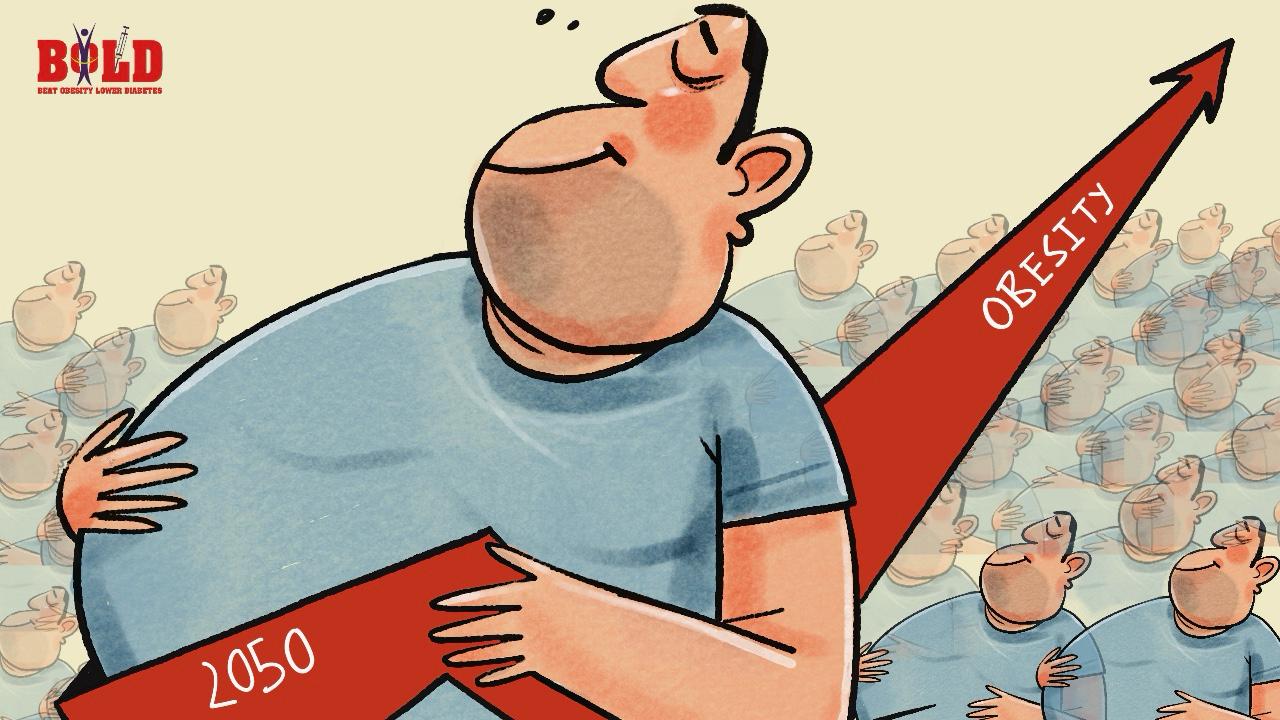
Obesity.
Synopsis: Recent studies have shown that one in four adults in India is currently affected by obesity, and the WHO has projected that it could rise to one-third of its population to be obese by 2050. Doctors explained that fat deposits in the body can lead to diabetes and, thereby, other complications. The fat that drives diabetes risk most strongly is visceral fat, which is stored deep in the abdomen, around internal organs.
Step into any endocrinology outpatient department, and you will meet people who insist they’re not diabetic. Their reports disagree: Waistlines increasing, fasting sugar creeping, HbA1c (glycated haemoglobin) edging into the danger zone. Doctors said this is where obesity starts rewriting the body’s glucose story.
Recently, in its guidelines, the World Health Organisation (WHO) formally declared Obesity a “growing global health problem, affecting more than one billion people worldwide”. Recent studies have shown that one in four adults in India is currently affected, and the WHO has projected that it could rise to one-third of its population to be obese by 2050.
South India’s numbers show the same rise in obesity and diabetes patterns. NFHS 5 data for Karnataka reports 37.1 percent of urban women and 39.4 percent of urban men as overweight or obese, with raised blood sugar (high or very high, or on medication) at 18.0 percent in urban women and 21.4 percent in urban men.
In Telangana, NFHS 5 reports overweight or obesity at 41.7 percent among urban women and 40.2 percent among urban men, while raised blood sugar is 21.2 percent in urban women and 21.4 percent in urban men.
So what exactly is happening inside the body when weight climbs, and sugar follows?
Speaking to South First doctors explained, “Your waistline is not just a measurement, it is metabolic information.” The most dangerous fat isn’t what you can pinch on the arm. It’s the fat packed around organs in the belly.
The fat that drives diabetes risk most strongly is visceral fat, which is stored deep in the abdomen, around internal organs. Speaking to South First in an earlier interview, Senior Consultant, HPB and Liver Transplantation at Aster Integrated Liver Care in Bengaluru, Dr Sonal Asthana, explained that “Unlike the fat under the skin, visceral fat behaves like an overactive endocrine organ. It releases fatty acids and inflammatory signals that interfere with insulin, the hormone that helps move glucose out of the blood and into muscles and other tissues.”
As insulin resistance grows, the liver starts ignoring insulin’s “stop” signal and continues producing glucose even when it is not needed, pushing up fasting sugars. Meanwhile, muscles respond less effectively to insulin, so after-meal glucose stays higher for longer.
The pancreas compensates by producing more insulin, sometimes for years. That is where prediabetes often sits: The body is still able to “overproduce” insulin to keep up, but it is doing it at a cost.
With time, this “overwork” can exhaust pancreatic beta cells. When the body can no longer make enough insulin to overcome resistance, blood sugar shifts from normal to prediabetes, and then to type 2 diabetes.
A 10-year follow-up from the Chennai Urban Rural Epidemiology Study demonstrated the rapid progression of this condition: Among individuals who initially had normal glucose tolerance, 19.4 percent developed diabetes and 25.7 percent progressed to prediabetes; among those who already had prediabetes, 58.9 percent progressed to diabetes.
Just as important is what doctors call “wrong-place fat.” Dr Asthana explained, fat doesn’t always stay stored under the skin. With obesity, the body can start storing fat where it does not belong, especially in the liver, causing fatty liver disease (NAFLD). This matters because the liver is a key regulator of blood sugar levels.
When the liver becomes fatty, it becomes less responsive to insulin and can keep releasing glucose into the bloodstream even when it shouldn’t, driving up fasting sugars. This ectopic fat can also accumulate in muscles and around the pancreas, further weakening insulin’s effect and straining insulin-producing cells.
That is why some people move from borderline sugars to diabetes faster when fatty liver and ectopic fat are part of the picture, even if their diet has not dramatically changed overnight.
Obesity can also alter the body’s hormone messaging, including signals from the gut. After you eat, the intestines release hormones called incretins, including GLP-1, which help the pancreas release insulin at the right time, reduce excess glucagon, and support a feeling of fullness.
In obesity and insulin resistance, these signals can become blunted, weakening appetite regulation and making post-meal sugar control less efficient. Sleep disruption can add another layer, especially obstructive sleep apnea, which is more common with obesity.
Repeated drops in oxygen and fragmented sleep can raise stress hormones such as cortisol and adrenaline, making the body more insulin-resistant and more likely to run higher sugars, particularly in the morning.
In other words, it is not only what you eat or how much you weigh; it is how obesity can rewire hunger signals, sleep, and glucose-control hormones in ways that keep blood sugar climbing.
Doctors agreed that one of the most common pushbacks comes before diet or exercise is even discussed. Patients see an HbA1c of 5.8 or 6 and brush it off as “almost normal”, especially if they feel fine.
“We must be careful before we brush it off,” said Dr Abhay G, renowned diabetologist from Bengaluru. He said, “An HbA1c of 5.8 sits in the prediabetes range. It tells us the body is already working harder to keep sugar in check, even if it hasn’t crossed into diabetes yet.”
Nutritionists said the refusal is often driven by fear, stigma, and wishful thinking. “Prediabetes sounds optional to people, like a label you can ignore and come back to later,” said Swetha Adarsh, clinical nutritionist from Bengaluru.
“But 5.8 is your early window, when small changes can show results quickly. If someone waits until HbA1c reaches the diabetes threshold, it often means insulin resistance has been building in the background for a while, and it can take longer to pull numbers back,”
Dr V Mohan, Chairman of Dr Mohan’s Diabetes Specialities Centre and Chairman of the Madras Diabetes Research Foundation in Chennai, an ICMR-Collaborating Centre of Excellence (ICMR-CCoE), told South First that people should consider prediabetes a time-bound warning, not a “borderline” status to live with for years.
Doctors insist that focus has to shift from chasing a number on the weighing scale to tackling what obesity is doing inside the body: shrinking the waistline, improving muscle insulin sensitivity, and reducing liver fat.
Speaking to South First, Shashikant Iyengar, Founder, Metabolic Health India, said, “Even a modest weight loss of five to 10 percent of body weight can make a significant difference in blood sugar control. Studies have shown that this level of weight loss improves insulin sensitivity, lowers fasting glucose and HbA1C, and can delay or even prevent progression from pre-diabetes to diabetes.”
He explained that in people with higher weights, losing 10 to 15 percent offers an even greater benefit and increases the chances of diabetes remission or better control.
“Weight loss does not need to be rapid to be effective. A sustainable weight loss of 2-3 kg per month is ideal for preserving muscle mass and supporting long-term success.”
“However, with a low-carbohydrate dietary pattern, many people experience improvements in blood sugar and insulin levels within days to weeks, even before major weight loss occurs, because carbohydrate restriction reduces post-meal glucose spikes and insulin demand,” he added.
(Edited by Muhammed Fazil.)


