

Published Jan 11, 2026 | 7:00 AM ⚊ Updated Jan 24, 2026 | 6:01 PM

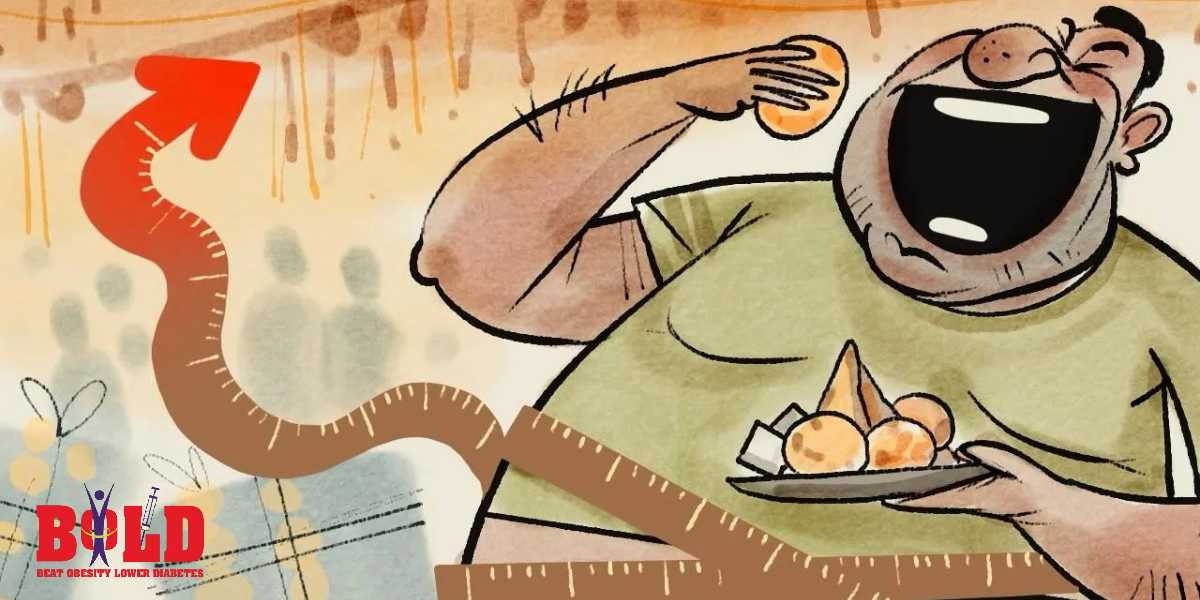
Southern states' individual obesity burden matched or exceeded the same in rich countries.
Synopsis: The southern states’ individual obesity burden matched or exceeded the same in rich countries. The concentration in the southern region reflected decades of economic development, urbanisation, and diet and lifestyle changes. It also underscored that these states are critical sites for understanding and formulating prevention and treatment protocols at a larger scale.
Nearly one in four Indians in the 15 to 49 age group has excess weight, according to the National Family Health Survey (NFHS) conducted between 2019 and 2021.
Women constitute 24 percent of the overweight or obese population, while men comprise 23 percent, marking a shift in the country’s nutritional landscape, tossing India into a metabolic health crisis that South First‘s BOLD campaign aims to address.
The headline figure is only a part of the story. The Indian picture changed dramatically when waist circumference — instead of just body weight — was measured.

The southern states and urban areas led an overweight surge accompanied by the full spectrum of metabolic complications: type-2 diabetes, fatty liver disease, hypertension, cardiovascular disease, and a torrent of medicines and specialist visits that have become a part of daily life.
The numbers shinned up the graph in urban areas. Thirty-three percent of urban women were found to be overweight or obese, compared to 20 percent in rural India. Among men, 30 percent in cities fell in this category, against 19 percent in villages.
This urban-rural divide was stark in nearly every aspect of India’s obesity burden, shaped by differences in work patterns, food environments, physical activity, and access to (or the lack of) healthcare that could either identify problems early or let them aggravate.
Puducherry recorded the highest proportion of overweight or obese women at 46 percent in the NFHS-5 data, positioning it at the top of India’s obesity burden.
The ICMR-INDIAB study, which surveyed 31 states and Union Territories using both body mass index and waist circumference measurements, found that 53 percent of Puducherry’s population showed generalised obesity, with 61 percent carrying abdominal (truncal) obesity.
In Tamil Nadu, 41 percent and 37 percent of women and men, respectively, were found to be overweight or obese in NFHS-5. ICMR-INDIAB found 29 percent generalised obesity and 33 percent abdominal obesity.
Kerala showed 38 percent of women overweight or obese in NFHS-5 and 36 percent of men, but ICMR-INDIAB revealed a starker picture: 46 percent generalised obesity and 59 percent abdominal obesity.
Karnataka recorded 30 percent for both women and men in NFHS-5, with ICMR-INDIAB showing 27 percent generalised obesity and 35 percent abdominal obesity. NFHS-5 found 36 percent of women in Andhra Pradesh to be overweight or obese, compared to 31 percent of men. The ICMR-INDIAB found lower rates at 27 percent generalised obesity and 30 percent abdominal obesity.
Telangana registered 30 percent for women and 32 percent for men in NFHS-5, with ICMR-INDIAB recording 26 percent generalised obesity and 27 percent abdominal obesity.
Among men specifically, the Andaman and Nicobar Islands topped NFHS-5 at 45 percent, followed by Puducherry at 43 percent and Lakshadweep at 41 percent.
The findings revealed the southern states’ individual obesity burden matched or exceeded the same in rich countries. The concentration in the southern region reflected decades of economic development, urbanisation, and diet and lifestyle changes.
It also highlighted something more significant: these states, where the metabolic health crisis has arrived and is most visible, make them critical sites for understanding and formulating prevention and treatment protocols at a larger scale.
NFHS-5 found 44 percent of women in Chandigarh to be overweight or obese, with ICMR-INDIAB recording 44 percent generalised obesity and 55 percent abdominal obesity.
Delhi showed 41 percent of women overweight or obese in NFHS-5 and 38 percent of men, while ICMR-INDIAB found 46 percent generalised obesity and 60 percent abdominal obesity in the capital.
In Punjab, the NFHS-5 figures were 41 percent for women and 32 percent for men. ICMR-INDIAB recorded 44 percent generalised obesity and 60 percent abdominal obesity.
Haryana registered 33 percent of women overweight or obese and 28 percent of men in NFHS-5, but ICMR-INDIAB revealed the highest abdominal obesity rate in the entire survey: 61 percent, even though only 40 percent of the population registered as obese by traditional body mass index standards.
The above gap between scales and where fat has actually accumulated is significant. Abdominal fat, particularly visceral fat around organs, drives metabolic risk in ways that body weight alone does not capture.
Himachal Pradesh followed a similar pattern, showing 39 percent generalised obesity but 56 percent abdominal obesity. Uttarakhand recorded 35 percent generalised obesity alongside 49 percent abdominal obesity.
The surveys revealed obesity as a condition tied to wealth. In the poorest households, 10 percent of women had excess weight. In the wealthiest households, the figure reached 39 percent. Men followed the same trajectory, rising from 10 percent in the lowest wealth bracket to 37 percent in the highest.
This pattern reflected how rising incomes in India have changed not just what people could afford to eat, but how they worked, travelled, and spent time. Sedentary jobs, motorised transport, ultra-processed foods, and screen-based leisure — markers of economic progress — reshaped human bodies in ways that increased disease risk.
The wealth gradient and its relation with obesity showed an interesting pattern within and also between states. Urban centres in relatively poorer states often showed obesity rates closer to wealthier states, while rural areas in wealthy states had rates closer to the poorer ones. This suggested that the drivers of obesity operated through economic development and urbanisation rather than through state boundaries alone.
The consistent pattern across multiple states suggested that BMI-based measurements, while useful for population screening, missed a significant portion of metabolic risk. People who appeared only moderately overweight by weight standards may be carrying dangerous fat distributions, increasing their risk of diabetes, heart disease, and liver complications.
West Bengal illustrated this clearly: 23 percent of women were recorded as overweight or obese in NFHS-5, yet ICMR-INDIAB found 26 percent generalised obesity and 43 percent abdominal obesity. Sikkim showed 35 percent of women and 36 percent of men to be overweight or obese in NFHS-5, with ICMR-INDIAB recording 41 percent generalised obesity and 54 percent abdominal obesity.
Goa stood out with 36 percent of overweight or obese women in NFHS-5 and 33 percent of men, but ICMR-INDIAB recorded substantially higher rates at 44 percent generalised obesity and 52 percent abdominal obesity.
This matters for clinical practice and public health planning. A person with normal BMI but high waist circumference faces metabolic risks that routine screening might not flag. States with large gaps between generalised and abdominal obesity need screening protocols, looking beyond weighing scales.
Bihar, Jharkhand, Madhya Pradesh and Chhattisgarh showed lower obesity rates in both surveys, but narrated a more complex story. These states still grapple with undernutrition alongside emerging obesity, creating what public health researchers call a double burden.
Bihar showed 16 percent of women as overweight or obese in NFHS-5 and 15 percent of men, with ICMR-INDIAB recording 13 percent generalised obesity and 24 percent abdominal obesity.
Jharkhand registered 12 percent of women to be overweight or obese and 15 percent of men in NFHS-5, with ICMR-INDIAB finding 12 percent generalised obesity and 18 percent abdominal obesity.
Meghalaya recorded the lowest rates in NFHS-5 at 12 percent for women and 14 percent for men. Assam showed 15 percent for women and 16 percent for men, with ICMR-INDIAB recording 13 percent generalised obesity and 21 percent abdominal obesity.
These states face the challenge of addressing malnutrition in some populations while preventing obesity in others, often within the same communities and sometimes within the same households. The nutrition transition is uneven, creating complex demands on health systems built primarily to address undernutrition.
Both surveys showed age transforming the body composition in consistent patterns. Among women aged 15 to 19, only 5 percent carried excess weight in NFHS-5. By age 40 to 49, that proportion reached 37 percent. Men followed the same pattern, rising from 7 percent at age 15 to 19, to 32 percent at age 40 to 49.
The mean BMI for women rose from 19.6 at age 15 to 19, to 24.1 at age 40 to 49. For men, it climbed from 19.7 to 23.6 across the same age span. This gradual accumulation, a little weight gain each year, represented the kind of progression that made metabolic disease hardly noticeable until complications appeared.
The pattern suggested that prevention efforts must start early, before weight gain becomes established and harder to reverse. By the time people reach their 40s, they navigate not just excess weight but often consequent multiple metabolic conditions.
NFHS-5 data showed that the Sikhs carried the highest proportion of overweight or obese women at 39 percent, followed by Christians at 31 percent and Muslims at 26 percent. Hindus registered 23 percent. Among men, Christians and Sikhs both led at 29 percent, followed by Buddhists at 27 percent.
Caste patterns revealed deeper inequalities. Women from general categories showed 30 percent overweight or obese, compared to 25 percent in other backward classes, 22 percent in scheduled castes, and just 13 percent in scheduled tribes.
Men from general categories registered 26 percent, other backward classes 24 percent, scheduled castes 21 percent, and scheduled tribes 15 percent.
Scheduled tribe populations showed the lowest obesity rates but carried the highest burden of undernutrition, highlighting varied nutritional challenges for different communities. These patterns reflected generations of social and economic stratification that shaped access to food, work, healthcare, and the environment.
The two surveys used different methods but told a consistent story. NFHS-5 surveyed 636,699 households using BMI as the primary measure. ICMR-INDIAB examined over 113,000 individuals using both BMI for generalised obesity and waist circumference for abdominal obesity.
Both surveys used standardised protocols and large sample sizes, making the findings nationally representative. The data established baselines against which future trends could be measured, and identified populations and geographies where the burden concentrated.
The surveys found India at a transition point. Undernutrition still affects significant populations, particularly in rural areas and poorer states. But overweight and obesity now affect equal or larger proportions, particularly in urban areas and wealthier households. Southern states show what the future may look like for much of the country if current trends continue, making their experience crucial for understanding prevention, early detection, and treatment.
(Edited by Majnu Babu).


