
Published Sep 08, 2026 | 7:00 AM ⚊ Updated Sep 08, 2026 | 7:00 AM

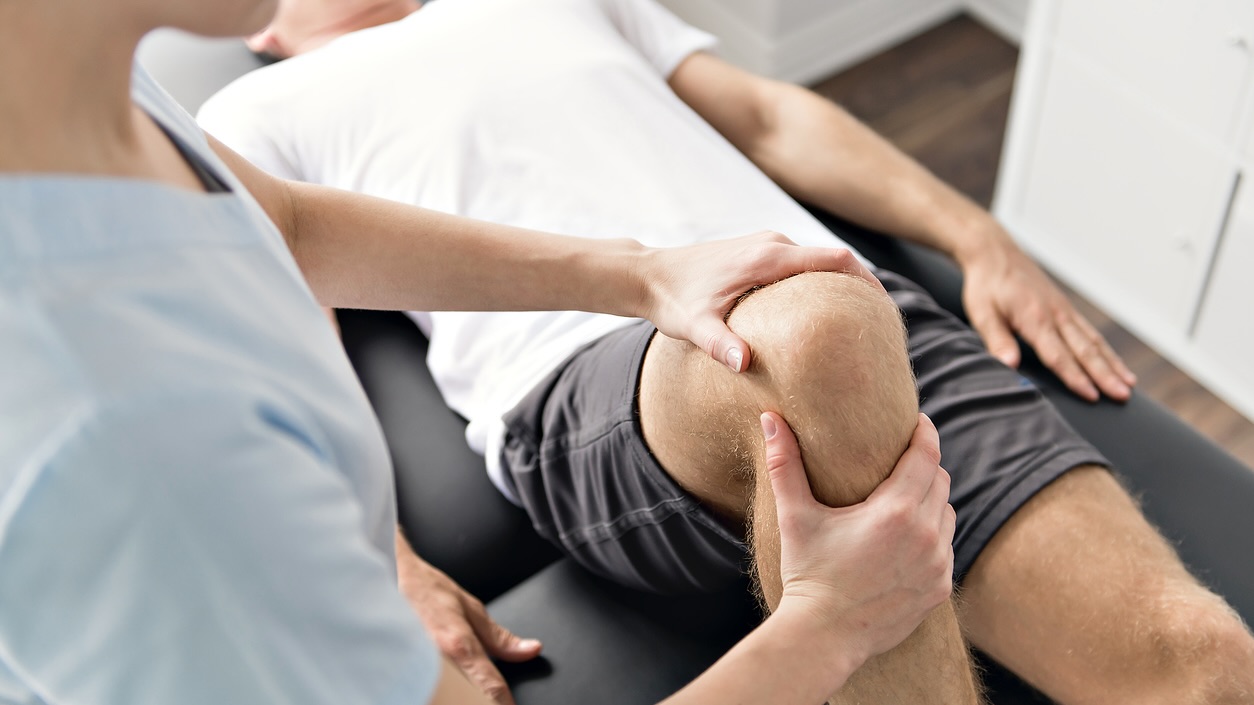
India has a growing need for physiotherapy.

Synopsis: On World Physiotherapy Day, a 25-year-old man’s struggle after a haemorrhagic stroke highlights a critical gap in India’s healthcare system: accessible rehabilitation. It suggests that saving lives is not enough without affordable physiotherapy, especially in rural and underserved communities. Community-based rehabilitation, training and stronger government support are the need of the hour.
When Rahul Paul was only 25 years old, he suffered a haemorrhagic stroke. Doctors saved his life, but recovery required a long period of rehabilitation. For his family, continuous treatment became so financially difficult that they had to sell all valuable possessions.
Rahul is young. He has many decades of life ahead of him. But the question remains: what sort of life will he be able to live if he is not able to afford rehabilitation?
If a person survives a stroke but cannot regain the ability to move, work, participate in family life or live with some independence because rehabilitation was out of reach, can we say that the job of healthcare is complete?
Across India, thousands of families face the same struggle. A life is saved, but the recovery that follows is left to chance. Some families sell everything they own. Others simply give up. The result is the same: people who could have returned to work, to family life, to some semblance of independence are left dependent, isolated and forgotten.
The central question is whether physiotherapy is being treated as an important component of lifesaving care that must reach everyone who needs it the most.
Rahul survived his stroke. His story reminds us that survival and recovery are not the same thing. It is not an argument against hospitals or doctors. Quite the opposite. Acute medical care saves lives. But saving a life is only the first part of recovery. Rehabilitation helps a person make use of the life that has been saved.
Also Read: Cancer drug case: Big question ahead of final hearing, did regulator present the full picture?
This year’s World Physiotherapy Day, observed on September 8, focuses on the role of physiotherapy and physical activity in preventing, managing and rehabilitating cardiovascular disease and stroke.
India has a growing need for physiotherapy. It is not limited to treating back pain or helping an injured athlete. It can make a meaningful difference to people recovering from stroke, heart disease, injury, surgery and many other conditions. It can help a person stand and walk again, use an affected limb, improve balance, become physically active and return to everyday life.
Yet having physiotherapists in the country does not necessarily mean that people can reach them.
The World Physiotherapy profile of the Indian Association of Physiotherapists estimates 52,000 practising physiotherapists in India, equivalent to only 0.36 physiotherapists per 10,000 people. The number itself tells only part of the story. The more important questions follow: Are they available close to the homes of people living in rural areas? Are they available in smaller towns? Can someone from an economically weaker background receive regular treatment without emptying their pockets? Are physiotherapy clinics accessible to people who can’t walk or lack other transportation facilities, especially several times a week?
A person recovering from stroke may need weeks or months of support. Someone with heart disease may need help becoming physically active safely. An older person may need help maintaining strength and balance. A person recovering from an injury or surgery may need rehabilitation to return to work. For all of them, physiotherapy can be the bridge between being medically stable and becoming an active, functioning person. But that bridge is often missing.
Also Read: Rabies vaccine Abhayrab fails potency test, CDSCO flags possible counterfeiting
The harsh reality is that physiotherapists in India are concentrated in cities. According to estimates, more than 70 per cent of physiotherapists work in urban areas, while nearly 65 per cent of India’s population lives in rural areas. This mismatch means that the people who need rehabilitation the most are often the least likely to receive it.
A stroke survivor in a village has to travel dozens of kilometres to reach a physiotherapist. A daily wage labourer with a heart condition cannot afford to lose a day’s work and pay for transport to a city clinic. An elderly woman in a slum with balance problems cannot navigate crowded buses to reach a hospital. For these individuals, the distance is not just measured in kilometres. It is measured in lost wages, lost time, lost dignity and lost hope.
This is why physiotherapists must work in the community. Rehabilitation cannot be a service that only exists in hospitals and private clinics in wealthy neighbourhoods. It must be available where people live, work and struggle.
Working in rural areas, small towns and urban slums is not about charity. It is about recognising that rehabilitation is a right, not a privilege. It is about understanding that a farmer who cannot walk cannot earn. A mother who cannot lift her child cannot care for her family. A young worker who cannot use his hand cannot support his parents. These are not abstract problems. They are the daily realities of millions of Indians.
Physiotherapists working in the community can identify problems early, prevent complications and help people recover in their own familiar surroundings. They can work with families, teach caregivers and adapt treatment to local circumstances. They can build relationships and trust, making rehabilitation a natural part of healthcare rather than a distant, intimidating service.
One example of how this can be done comes from Dr Shyam Ganvir, Principal and Professor at Dr Vithalrao Vikhe Patil Foundation’s College of Physiotherapy in Ahilyanagar, Maharashtra.
Dr Ganvir has taken a practical approach to preparing students for community-based rehabilitation. He gives students opportunities for structured postings in rural and underserved communities, allowing them to experience and learn about the barriers patients face in accessing regular physiotherapy. Students learn that distance, transport, affordability and family circumstances can make repeated hospital visits difficult or impossible.
Dr Ganvir also encourages his students to consider rural and community settings as genuine career opportunities, not as temporary postings to be endured. He helps them explore ways of taking rehabilitation services closer to people’s homes.
What Dr Ganvir is doing deserves wider attention. Such practical community-based training should become a standard part of physiotherapy education across India. When students see rural communities not as difficult postings but as places where they can build meaningful careers, they are more likely to stay and serve. This changes the entire equation for access to rehabilitation.
Also Read: Vitamin D2 and D3 have the same impact on bones – but not on muscle and heart, Hyderabad study finds
Teaching families how to safely continue simple rehabilitation at home is another crucial strategy. A physiotherapist does not have to be physically present for every exercise. Families can be shown how to help with safe movement, positioning, walking and everyday activities, while the physiotherapist checks progress and changes the programme when needed. This reduces the burden of frequent travel and empowers families to participate actively in recovery.
Technology can help too. Tele-rehabilitation cannot replace hands-on treatment when a person needs physical examination or direct treatment. But it can allow a physiotherapist to follow up, demonstrate exercises, answer questions and keep in touch with patients who find regular travel difficult. A simple video call can make a significant difference.
Community health workers can also play a role. With basic training, they can identify people who need rehabilitation, provide simple support and connect them with physiotherapists. This creates a chain of care that reaches into the most remote areas.
India also needs to think about where physiotherapists work. If most opportunities are concentrated in large cities and private clinics, many people who need rehabilitation will continue to be left behind. Students should have meaningful opportunities to work in villages, smaller towns, primary healthcare centres and underserved communities not as an afterthought, but as an important part of the profession.
Government policies must support this shift. Incentives for physiotherapists to work in rural areas, better pay and working conditions in public health centres, and recognition of community-based rehabilitation as a specialised skill can all help. Physiotherapy should be included in primary healthcare packages and national health programmes.
This World Physiotherapy Day, as we talk about stroke and cardiovascular disease, we must ask the hard question: Are we only saving lives, or are we also making sure that people can live those lives?
Rahul Paul deserves to live the life that was saved. So does every stroke survivor, every heart patient, every person whose life has been touched by illness or injury. Making that possible is the job of physiotherapy. And it is a job that must be done in the community, where people live, where they struggle and where they hope to recover.
(Edited by Fayisa CA)



