

Published Nov 16, 2026 | 7:00 AM ⚊ Updated Nov 16, 2026 | 7:00 AM

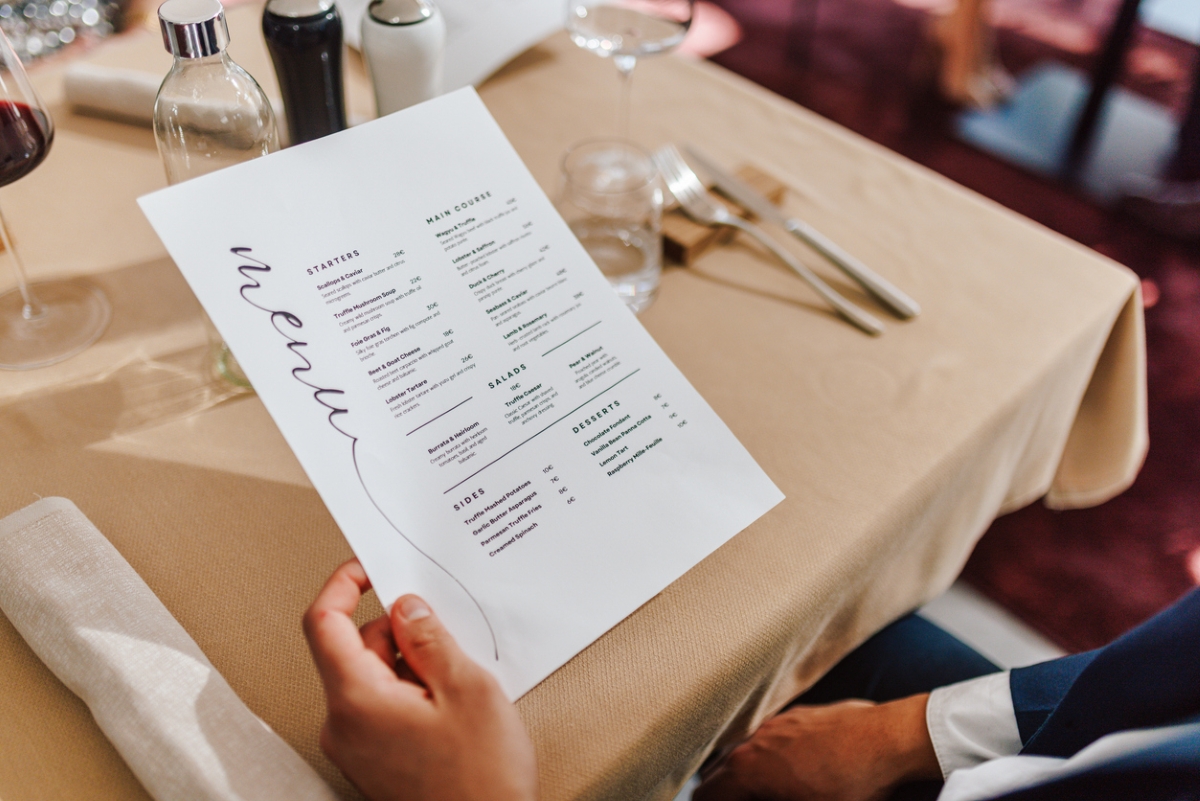
Food menu (iStock/ representational)

Synopsis: An ICMR-backed study involving 23 stakeholders examines why calorie labelling remains difficult for restaurants in India. It identifies inconsistent recipes, expensive nutritional analysis, unclear regulatory guidance and concerns about customer preferences and sales as key barriers. Researchers recommend standardised methods, clearer FSSAI guidelines and consumer-friendly labels to improve implementation.
Restaurants in India may be required to display calorie counts and nutritional information on their menus, but calculating how much energy a dish contains is proving difficult. With varying recipes between restaurants and regions, nutritional analysis can be expensive.
Further according to a new study, there is uncertainty over how the information should be calculated and verified.
Published in the Journal of Health, Population and Nutrition, the study examined barriers to implementing restaurant menu labelling in India. Researchers interviewed 23 stakeholders between February and December 2024, including policymakers, nutrition experts, restaurant owners, chefs, consumers and consumer representatives.
They found that although stakeholders generally viewed menu labelling as a useful public health measure, inconsistent recipes, a lack of clarity on nutritional calculations, consumer preferences and concerns about restaurant sales could affect its implementation.
The issue matters because nutritional information is intended to help people make informed choices when eating outside their homes. But the information can only be useful if the calorie and nutrient values are accurate and consumers can understand them.
Also Read: Do menu labels make diners choose fewer calories? ICMR trial in Chennai says yes, by 12%
A dish with the same name can contain different ingredients and quantities depending on where it is prepared. This makes it difficult for restaurants to provide a single, accurate nutritional value for every serving.
“The dal makhani that we make in the north is different from the one we made in the south … Think about how much hotel-specific recipes vary. It is very difficult for a chef to give a 100% accurate recipe,” a nutrition analyst told the researchers.
The study found that regional influences, chefs’ expertise, signature recipes, customer-requested changes and ingredient availability can all affect a dish’s nutritional composition. Even a change in chef can alter cooking methods and ingredients.
Calculating nutritional values also requires technical expertise and resources that some restaurants may not have.
“We lack technical experts, and getting this done is expensive. If we opt for cheaper alternatives, we compromise on the quality of nutrition information, as there can be up to a 25% deviation. Anyone can do calculations and provide data, but accurately calculating a nutritional profile is a lengthy process,” a nutrition analyst said in the study.
Another expert questioned whether restaurants should rely on existing food-composition data or send prepared dishes to laboratories for analysis.
“Whether we use existing data for calculation or send the samples to the lab for nutrient analysis … what will be the baseline or the critical parameters for calculation at that stage?” the expert asked.
The Food Safety and Standards Authority of India (FSSAI) introduced the Food Safety and Standards (Labelling and Display) Regulations in 2020 and issued a guidance note on menu labelling in 2022.
Restaurants and hotels with 10 or more outlets are required to display calorie values, nutritional content per serving, serving size, recommended dietary allowance (RDA), allergen information and vegetarian or non-vegetarian logos. Enforcement began in July 2022.
However, the study found uncertainty among stakeholders about how nutritional information should be calculated and who should verify its accuracy.
The researchers recommend that FSSAI establish standardised requirements for nutritional calculations, recipes, serving sizes and the presentation of information. They also call for clear responsibilities for verifying the details displayed on menus.
Also Read: South India’s nutrition paradox defies prosperity
Not necessarily. Some consumers interviewed for the study said taste, hunger and the occasion for eating out mattered more than nutritional information.
“We come to a restaurant to enjoy tasty food. If I’m a regular visitor, I might think about the calories. But if I go once every 15 or 20 days, or just once or twice a month, I’ll eat whatever I feel like having,” one consumer said in the study.
A chef described a similar gap between interest in healthy eating and actual food choices. Restaurants had introduced millet-based dishes, but customers did not choose them as often.
“Last year, it was the year of millet, so we were serving a variety of millets-based dishes in our buffet. Even in our à la carte, we used to keep millet-based food items. However, these dishes were the least preferred by customers,” the chef said in the study.
Food prices can also influence choices. One academic interviewed for the study questioned whether millets could become part of everyday diets if they remained expensive.
“Because if it’s not affordable, even though we have a national programme on millets, it still costs ₹80 per kilo. How can we expect a poor person to eat millets every day? It’s no longer a poor man’s food,” the expert said.
Nutrition experts expressed concern that restaurants might hesitate to display calorie counts if the information discouraged customers from ordering popular dishes.
“I seriously wonder whether restaurants would even want to display that the dish contains a thousand calories. It is like saying, eat one Dosa and you have already consumed more than half the calories. I am not sure how they are going to react,” one expert said.
However, the researchers noted that restaurant owners and chefs interviewed for the study did not agree that menu labelling would affect revenue. Some instead viewed nutritional information as a way to build customer trust.
“Yes, customers are also going to come back to the restaurant. They will definitely come. People can lure customers only if you teach them,” one chef said.
The study had limited participation from restaurant owners. Of the eight approached, only two agreed to participate, and both represented restaurants that had not implemented menu labelling. The researchers said this could mean the findings do not capture the full range of views within the industry.
Consumers had different preferences for how nutritional information should be displayed. Some favoured symbols because they could help people identify healthier options without having to interpret detailed nutritional figures.
“I feel this is much better, because restaurants aren’t only visited by educated or knowledgeable people. Common people also go. In such cases, using symbols would be more effective,” one consumer said.
But symbols can also create confusion. A consumer welfare forum representative questioned whether everyone would understand traffic-light labels.
“Traffic lights per se can be confusing, because I think the orange one in the middle is a bit confusing,” the representative said.
Some participants wanted menus to explain how much of a person’s daily calorie requirement a dish would provide. A consumer said this could help diners plan their other meals.
“If something is over-fried or too high in calories, say around 50% to 60% of my daily intake, I have to adjust my other meals accordingly. So why choose a food which takes up 60 to 70% of calories? I will prefer something which consists of only 30 to 40% of my daily calories,” the consumer said.
Participants also called for simple, jargon-free information in local languages.
“Considering the population, we need to label the menu in such a way that will overcome the barriers like illiteracy and language, so it should be interpretative and very clear,” a consumer representative said.
Also Read: How Indian adolescents choose what to eat
The authors recommend that FSSAI clarify how nutritional calculations should be carried out, who should be responsible for them and how the accuracy of information should be verified. They also call for consumers to be involved in designing menus and for restaurants to consider interactive formats.
The researchers further recommend nutrition education in schools and hospitals to help people understand food labels from an early age.
“We need to provide the nutrition education and create this kind of awareness among people so that even children can tell if something has refined sugar or refined flour (Maida),” a nutrition analyst said.
The study identified policymakers, policy advisers, implementers, nutrition analysts, restaurant owners and chefs as key stakeholders in implementing menu labelling. Consumers were generally found to have less power and interest in influencing the process.
The authors cautioned that the findings were based on interviews in urban centres and might not reflect conditions in rural and semi-urban areas.
The study cited estimates that dietary risk factors contributed to 1.31 million deaths and 36.66 million disability-adjusted life years in India in 2023. A diet high in sodium alone was estimated to account for approximately 174,000 deaths.
The researchers said menu labelling could help improve the food environment, but its implementation would depend on accurate nutritional information, clear regulatory guidance and labels that consumers can understand.
(Edited by Sumavarsha)



