

Published Feb 07, 2026 | 7:00 AM ⚊ Updated Feb 07, 2026 | 7:00 AM

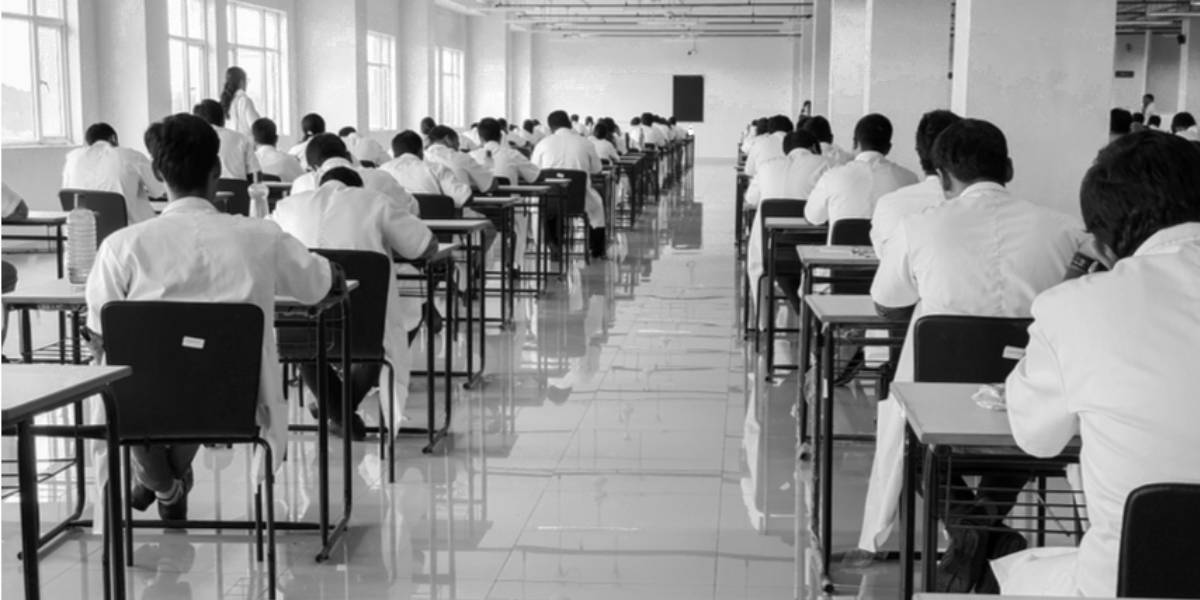
medical colleges hostels
Synopsis: A survey by the Telangana State Resident Doctors Association has found that 27 departments across 36 government medical colleges in the state have no teaching faculty at all, with more than half the required posts vacant and many departments running without Professors or Associate Professors. The shortage is worst in newer district medical colleges and in pre-clinical and para-clinical subjects, where reliance on contract staff and rotating Senior Residents has weakened training, leaving students at risk of lacking strong academic foundations.
The Telangana State Resident Doctors Association (TSRDA) has found that 27 departments across 36 government medical colleges in the state do not have a single teaching faculty member, effectively existing only on paper.
The finding comes from a survey conducted by the TSRDA in January across medical colleges in Jogulamba Gadwal, Asifabad, Kodangal, Bhupalpally, and Narayanpet.
More than one in three departments—159 of the 441 surveyed by the TSRDA—operate without a single Professor, the most senior academic position responsible for curriculum planning, examinations, and postgraduate training.
“Only about 47 percent of the required faculty strength, as mandated by the National Medical Commission, is currently in place across all 36 government medical colleges in Telangana. That means there is a faculty deficiency of nearly 53 percent,” said Dr D Srinath, president of the TSRDA.
Further, of the 396 departments that responded to the survey, the association found that more than 150 have no senior faculty at all—no Professors and no Associate Professors—leaving them to be run by junior faculty or, in many cases, by no one.
The TSRDA found that older institutions such as Osmania Medical College, Gandhi Medical College, and Kakatiya Medical College retain some senior faculty, but newer district medical colleges often have no Professors across multiple departments, particularly in foundational subjects such as Anatomy, Physiology, Biochemistry, Pharmacology, and Microbiology.
The association also identified “single-faculty departments”. More than 120 departments across the state are run by just one faculty member, usually an Assistant Professor, with no senior supervision at all.
“If you look closely at first-year departments like Anatomy, Physiology, and Biochemistry, most of them are running either with a single Assistant Professor, a contract faculty member, or sometimes even by senior residents like me,” Dr D Srinath said.
“One person has to handle practical classes, theory teaching, internal assessments, university examinations, seminars, and administrative work. Everything falls on a single faculty member.”
TSRDA survey data shows that the shortage is most acute in pre-clinical and para-clinical departments, the foundation of undergraduate medical training.
“As per norms, for 100 MBBS students in a Biochemistry department, there should be one Professor, one Associate Professor, two Assistant Professors, and two Senior Residents. That is at least six faculty members,” Dr D Srinath said.
Such shortages, according to Dr D Srinath, will have dire consequences for the quality of medical education in the state.
“The first and second years are the foundation of medicine. Pre-clinical and para-clinical subjects are the basics on which the entire clinical understanding depends. The ground reality is that in many departments, students do not truly learn anatomy or physiology,” he explained.
“They prepare only by studying previous years’ question papers just to pass exams. Later, when they enter clinical departments like surgery, how will they manage?”
The TSRDA survey highlighted another troubling aspect of medical education in the state.
Even where Assistant Professors are hired, they are often on short-term contracts. Many departments rely on mandatory-service Senior Residents who rotate annually, and several survey entries explicitly state “No regular faculty”, “Only SRs”, or “All contract”. In some departments, 100 percent of the teaching staff were found to be contractual.
Dr Kiran Madhala, Secretary General of the Telangana Teaching Government Doctors Association (TTGDA), said the recruitment system has essentially collapsed.
“Take Government Medical College, Bhupalpally, for example. Last year, the college issued a notification for around 100 contract faculty posts, ranging from Assistant Professor to Professor. Out of those 100 posts, only three doctors applied, and all three were appointed on a contract basis in 2025,” he said.
“Recently, the government allotted 40 Senior Resident posts each to Bhupalpally and Siddipet. Hardly three or four doctors joined out of 40. Most of them later changed their postings.”
Unstable pay in contractual positions is one of the reasons for the lack of candidates willing to take up these posts, Dr Madhala said.
“Doctors are not interested in contract posts because of salary instability. For three months, they receive salary only after the budget is released. Then they wait for two months without pay until the next budget cycle. No one wants to work without assured monthly salaries.”
The crisis stems from a rapid expansion of medical education without parallel investment in faculty development, doctors said.
Between 2021 and 2024, Telangana opened 24 new government medical colleges, taking the total to 36. Faculty numbers, however, did not rise in proportion.
“The major problem is in peripheral medical colleges like Bhupalpally, Mulugu, Narsampet, and other newly established colleges that are two or three years old,” Dr Srinath said.
“These colleges together have thousands of MBBS seats. If students here do not get strong basics, it will impact the healthcare system in the long run.”
Dr Madhala pointed out that faculty development takes years of structured training.
“You cannot produce faculty overnight. Faculty members are not created in a single day. Even in four years, at best, an Assistant Professor may become eligible to move up one level. To become a Professor, a minimum of seven years is required,” he said.
“Yet the same limited pool of faculty was spread across dozens of new colleges.”
Policy confusion around private practice has added to the crisis. In 2022, the government banned private practice for medical college faculty but did not introduce a Non-Practising Allowance (NPA), which is standard across India at 20 percent of basic pay.
“Nearly 1,000 doctors recruited after 2022 are not allowed to practise privately, and at the same time, they are not being given any Non-Practising Allowance,” Dr Madhala said.
“Naturally, doctors ask why they should join government service when they cannot practise outside and are not compensated for it.”
Both the TTGDA and TSRDA have repeatedly raised these issues with the government. They have called for incentives similar to those in neighbouring Andhra Pradesh, which offers 30–50 percent additional salary to doctors posted in peripheral and tribal areas.
The TSRDA survey also found a severe shortage of Associate Professors across government medical colleges.
Across 36 colleges, there are 399 Professors and 1,051 Assistant Professors, but only 310 Associate Professors.
The gap is the result of a recent state government decision to promote large numbers of Associate Professors to Professor positions to meet National Medical Commission requirements for starting postgraduate courses. Corresponding promotions from Assistant Professor to Associate Professor, however, have yet to materialise.
“If similar relaxation is applied at the Assistant Professor level, nearly 300 to 400 doctors from the 2020 and 2021 batches are eligible for promotion as Associate Professors. However, no government order has been issued for this,” Dr Madhala said.
At the same time, the state’s recruitment drive to hire around 2,000 Assistant Professors has moved at a crawling pace.
“A recruitment notification was issued three or four months ago, sometime in 2025,” Dr Madhala said. “The merit list was supposed to be released on December 22, but it has still not been published. This notification covers more than 1,000 posts. Many candidates applied and are now waiting for the results.”
Dr Srinath said that despite notifications being issued months ago, the recruitment process has not begun.
“Many of my seniors completed their Senior Residency and are waiting for Assistant Professor posts. Notifications were issued nearly eight months ago, but the recruitment process has not started. Merit lists have not been released. If these posts had been filled on time, one full academic year could have benefited from their services.”
Dr Madhala added that nearly 300 doctors are eligible for absorption from other government health services into teaching positions, but “not a single person has been absorbed so far” due to what authorities describe as “technical issues”.
If both processes were completed, he said, “nearly 1,300 faculty members can enter the system. If you distribute that across 35 medical colleges, each college can get around 30 to 40 faculty members on average. That alone would make a huge difference.”
Dr Narendra Kumar, Director of Medical Education (DME), pointed to several state initiatives to address the crisis, including the “You Quote, We Pay” programme implemented through the National Health Mission.
Under the scheme, the government will offer up to three times the standard consolidated pay for high-demand specialties in difficult locations.
“For example, if the usual pay is around ₹2 lakh per month, the offer can go up to ₹6 lakh,” Dr Kumar explained. “We have identified districts like Adilabad and Asifabad where doctors are particularly unwilling to take up postings. This scheme will help attract faculty to such locations.”
He said Associate Professor posts remain the main bottleneck. “At present, Professors are available and Assistant Professors are being recruited. The real bottleneck is at the Associate Professor level. That is where the gap exists,” he said.
In addition, the government is finalising a separate incentive package for doctors posted in peripheral and tribal districts. “The proposed allowance ranges from 30 to 50 percent of basic pay, depending on location,” he said, though timelines remain uncertain.
The DME also said that 607 Assistant Professor appointments are being processed, with results to be announced shortly.
(Edited by Dese Gowda)


