

Published Dec 03, 2025 | 6:18 PM ⚊ Updated Dec 03, 2025 | 6:18 PM

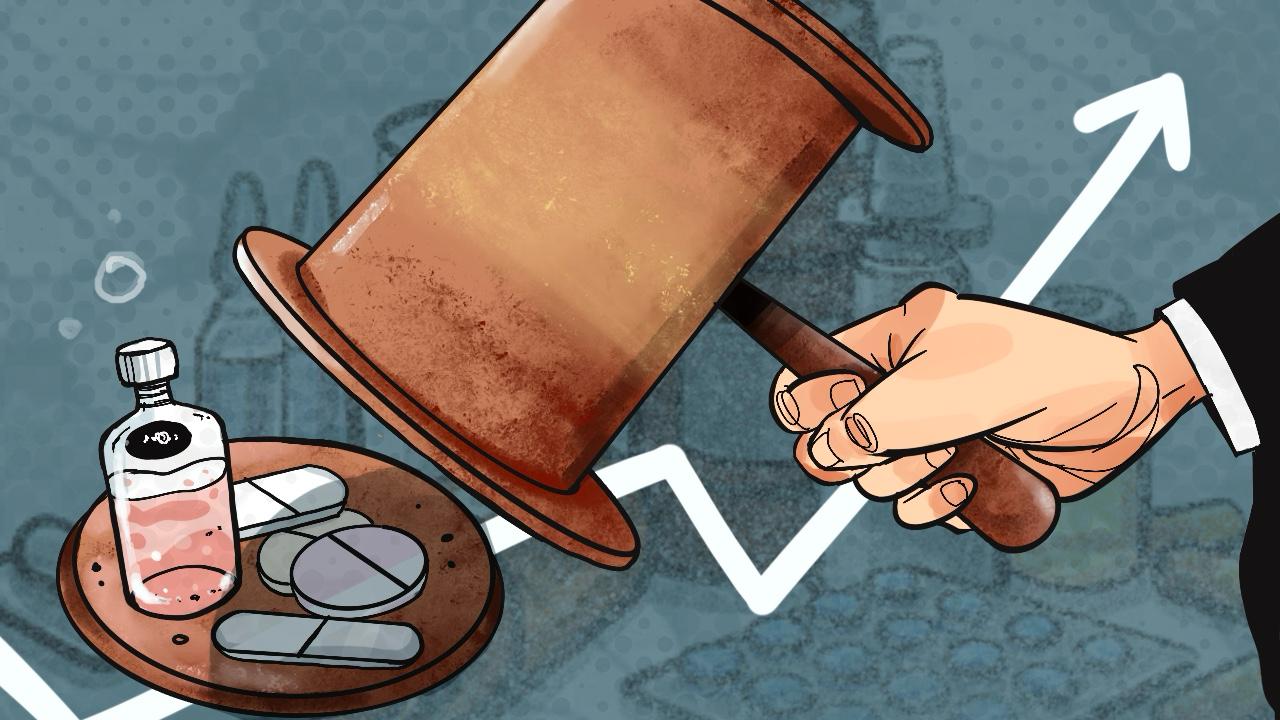
Authorities launched nearly four legal actions for every spurious drug detected.
Synopsis: India recorded 961 prosecutions for spurious and adulterated drugs in 2024–25, the highest in five years even as the detection of fake medicines fell to a five-year low. Government data presented in the Rajya Sabha shows that testing has expanded to more than one lakh samples annually, yet the proportion of spurious drugs has declined and the baseline level of Not of Standard Quality medicines has remained largely unchanged.
The Union government launched 961 prosecutions for the manufacturing, sale and distribution of spurious and adulterated drugs in 2024-25, the highest number in five years and a 59 percent jump from the previous year, even as the detection of such drugs fell to a five-year low of 245 cases.
The figures, presented by Minister of State for Health and Family Welfare Anupriya Patel in the Rajya Sabha on 2 December, show that testing laboratories examined 1,16,323 drug samples during the year. Of these, 3,104 were declared Not of Standard Quality (NSQ) and 245 were found to be spurious or adulterated.
The prosecution count means authorities launched nearly four legal actions for every spurious drug detected, compared to roughly one prosecution per detected case in previous years.
The data comes in the aftermath of the Coldrif cough syrup tragedy, which killed children in Madhya Pradesh after a batch manufactured by Sresan Pharmaceuticals in Tamil Nadu was found contaminated with 46.28 percent diethylene glycol, a toxic chemical used in antifreeze.
The five-year data shows a system that is testing more samples each year but finding proportionally fewer problems, while simultaneously increasing legal action.
In 2020-21, laboratories tested 84,874 drug samples and found 263 spurious or adulterated products, representing 0.31 percent of all samples tested. Prosecutions that year numbered 236.
The numbers shifted sharply in 2021-22 and 2022-23, the post-COVID period. Spurious drug detections jumped to 379 and then 424 cases, the highest in the five-year period, even as testing volumes increased to 88,844 and 96,713 samples respectively. Prosecutions climbed to 592 and 663.
In 2023-24, spurious detections dropped back to 282 despite testing crossing one lakh samples for the first time at 1,06,150. Prosecutions held steady at 604.
This year, 2024-25, shows the starkest divergence. Spurious detections fell further to 245, just 0.21 percent of samples tested, while prosecutions surged to 961, the highest figure recorded in the five-year dataset.
While spurious drug detections fluctuate, the number of medicines declared NSQ, meaning they fail specifications but are not necessarily fake, has remained consistent despite increased testing.
In 2020-21, laboratories found 2,652 NSQ drugs out of 84,874 samples, a detection rate of 3.12 percent. In 2024-25, they found 3,104 NSQ drugs out of 1,16,323 samples, a detection rate of 2.67 percent.
The absolute numbers have held between 2,500 and 3,100 across all five years, even as testing volumes increased 37 percent. This consistency suggests a baseline level of quality control failures across India’s pharmaceutical sector that persists regardless of surveillance intensity.
The October 2025 testing reports from central and state laboratories, released in late November, documented 211 NSQ drugs and five spurious products detected in a single month.
If representative of typical monthly detection rates, this would project to roughly 2,500 NSQ drugs and 60 spurious drugs annually, figures that align closely with the government’s reported totals.
The minister’s statement to the Rajya Sabha provided official details of the Coldrif investigation that had not been previously disclosed.
“Upon receipt of reports of a cluster of child deaths from Chhindwara, Madhya Pradesh, a Central team of experts comprising an epidemiologist, a microbiologist, an entomologist, and drug inspectors from the National Centre for Disease Control (NCDC), National Institute of Virology (NIV), and Central Drugs Standard Control Organisation (CDSCO), respectively, visited Chhindwara and Nagpur and undertook a detailed investigation of the reported cases and deaths in coordination with the Madhya Pradesh State Authorities,” the statement said.
The investigation team collected 19 drug samples from treating doctors and nearby retail stores. Chemical analysis found that 15 samples met standard quality specifications and four samples were declared NSQ.
“As per the test report, the content of Diethylene Glycol (DEG) in Syrup Coldrif (B.No. SR-13) manufactured by M/s Sresan Pharmaceutical located in Kancheepuram, Tamil Nadu and consumed by the deceased children was found to be 46.28 percent w/v,” the statement said.
The investigation team inspected the Sresan Pharmaceuticals facility in Kanchipuram. “Several critical and major Good Manufacturing Practices (GMP) violations including unhygienic storage conditions were observed,” according to the official statement.
South First had earlier reported the on ground conditions at the sealed facility located on Bangalore Highway in Kanchipuram.
Inside, visible through windows, the production area showed bare cement floors, stained and uneven, with water puddles and human footprints.
Storage cans and raw materials sat scattered around. Outside, chemical drums stood near discarded liquor bottles and used gloves. Investigations documented 364 violations at the facility, which had operated since 1990.
The minister’s statement revealed the geographic spread of Coldrif distribution and the scope of the government response.
“The matter regarding the criminal action against the manufacturer was taken up by CDSCO with the State Government of Tamil Nadu. The State Drugs Controller, Tamil Nadu cancelled the manufacturing licence. Further, following the incident, the States of Madhya Pradesh, Tamil Nadu, Odisha and the Union Territory of Puducherry to which the impugned cough syrup batches were supplied, ordered immediate ban and recall of the same,” the statement read.
Madhya Pradesh registered a criminal case and made arrests. “Criminal case has been registered in the matter by the State of Madhya Pradesh and strict action has been taken including the arrest of persons involved,” the statement confirmed.
The Sresan Pharmaceuticals owner and company staff remain in judicial custody. Dr Pravin Soni, who prescribed Coldrif to many affected children in Chhindwara, was also arrested, though the Indian Medical Association has defended him on the grounds that doctors cannot chemically test medicines before prescribing them.
On 27 October, instructions went out to maintain heightened vigilance against spurious and substandard drugs and to take prompt action under the Drugs and Cosmetics Act, 1940.
“More than 700 cough syrup manufacturers have been subjected to intense audit in coordination with State authorities. Increased market surveillance sampling of syrup formulations by Central and State drugs regulators has also been done,” the minister’s statement said.
The most significant change affects testing protocols. “In addition to the existing requirements of testing the raw materials, the Indian Pharmacopoeia Commission, Ghaziabad has issued an amendment to Indian Pharmacopoeia (IP) 2022, to also mandate the testing for DEG and Ethylene Glycol (EG) in oral liquids at finished product stage before market release,” the statement said.
This amendment means every batch of cough syrup, paediatric suspension and other oral liquid medicines must now be tested for toxic glycol contamination before leaving the factory, a requirement that did not exist when Sresan manufactured the lethal Coldrif batch in May 2025.
The October 2025 testing reports from CDSCO and state laboratories, released in late November, show that the Coldrif tragedy was not an isolated quality failure among children’s medicines.
Thirteen liquid formulations given to children failed quality tests that month, including nine specifically marketed as cough and cold syrups. Three of these came from Tamil Nadu manufacturers.
Besides Coldrif from Sresan Pharmaceuticals, marked “adulterated” by the Chennai Drugs Testing Laboratory, two other Tamil Nadu products failed. Azini-100 suspension containing Azithromycin antibiotic, manufactured by Dexter Formulation in Keelathukudi, failed content tests at Madurai’s laboratory. LOWFE-250 paracetamol paediatric suspension from Casid Pharmaceuticals in Trichy failed assay requirements at Puducherry’s testing facility.
The other failed cough syrups came from Himachal Pradesh (five products), Haryana, Uttarakhand and Faridabad. None contained the lethal diethylene glycol found in Coldrif, but all showed content or assay failures, meaning active ingredients measured either too high, too low or were distributed unevenly.
NUREX-AP syrup from Apple Formulations in Roorkee tested at only 81.53 percent of claimed Ambroxol content and 74.40 percent of Terbutaline. Children prescribed these medicines would have received roughly three-quarters of intended doses.
Tamil Nadu’s laboratories reported 17 substandard medicines in October, the second-highest among South Indian states after Karnataka, which reported 27 failed products. Collectively, South Indian states accounted for 69 of the 211 NSQ drugs detected nationwide that month.
(Edited by Dese Gowda)


