


The ban comes amid large-scale containment operations following the outbreak of avian influenza in multiple grama panchayats.

Published Dec 29, 2025 | 8:47 AM ⚊ Updated Dec 29, 2025 | 8:47 AM

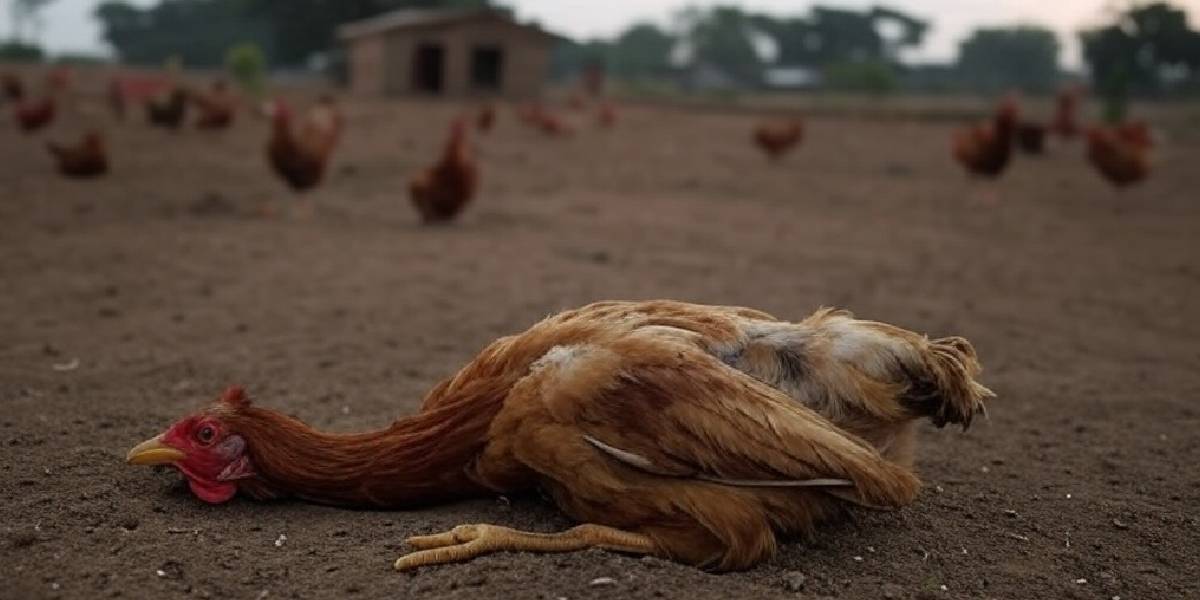
Bird Flu (H5N1) outbreak. (Representational)
Synopsis: Following the confirmation of bird flu in the Alappuzha district, the FSSAI imposed a strict ban on the sale, use, preparation, and consumption of poultry products in hotels and restaurants. The sudden move has triggered protests from hoteliers, who allege that the ban was enforced without prior notice and that officials even prevented customers from dining at their establishments.
The confirmation of bird flu in Alappuzha prompted the Food Safety and Standards Authority of India (FSSAI) to impose a strict ban on the sale, use, preparation, and consumption of poultry products in hotels and restaurants.
The sudden move has triggered protests from hoteliers, who allege that the ban was enforced without prior notice and that officials even prevented customers from dining at their establishments.
Hotel and restaurant owners’ associations have announced that eateries across Alappuzha will remain shut from 30 December in protest against what they describe as an abrupt and heavy-handed action.
According to them, while public health concerns are valid, the lack of advanced communication has pushed the hospitality sector, already under strain, into severe financial distress.
The ban comes amid large-scale containment operations following the outbreak of avian influenza in multiple grama panchayats.
Authorities have begun extensive culling in affected areas, with around 20,000 birds already destroyed. Culling operations are underway in Thakazhi, Karthikappally, Karuvatta, Punnapra South and Ambalapuzha South grama panchayats.
In addition, a one-week ban has been enforced on the use, sale and transport of domestic birds, along with their eggs, meat, manure and related products, within a 10-km surveillance zone around the affected grama panchayats.
Weeks before the latest restrictions were imposed, bird flu had been confirmed in eight wards of Alappuzha district and three wards in the neighbouring Kottayam, prompting the Health Department to initiate emergency containment measures.
More than 20,000 ducks have died due to the outbreak in the Kuttanad region, the Union Ministry of Animal Husbandry informed the state government. Deaths were reported from Nedumudi, Cheruthana, Karuvatta, Karthikappally, Ambalapuzha South, Punnapra South and Thakazhi. The ducks reportedly showed symptoms of avian influenza before dying.
Initial tests conducted at a laboratory in Thiruvalla returned positive results, which were later confirmed by the national animal disease laboratory in Bhopal. Following confirmation, surveillance and containment operations were intensified across the affected areas.
Amid growing concern, the Kerala Health Department has issued strict precautions while clarifying that no human cases of avian influenza have been reported in the state so far.
With H5N1 reported in parts of Alappuzha and Kottayam, the department said heightened vigilance is essential to prevent any possible transmission to humans.
A state-level RRT meeting, chaired by Health Minister Veena George, reviewed the situation and directed officials to strengthen field-level monitoring. Special Standard Operating Procedures (SOPs) and technical guidelines have been circulated, and awareness activities will be intensified with the support of trained One Health Community Volunteers.
District-level control rooms have been set up to coordinate surveillance and response, and instructions have been issued to ensure adequate availability of medicines and safety equipment, including PPE kits.
Special monitoring has begun for people in affected areas, focusing on symptoms such as fever, severe body pain, cough and breathing difficulty.
The department has warned against handling dead or infected birds and said any unnatural death of birds must be immediately reported to the Animal Husbandry Department. People working in poultry-related jobs and those handling raw meat or bird droppings have been identified as high-risk groups and advised to strictly use masks and gloves.
Consumption of raw or undercooked meat and eggs has been strongly discouraged, with officials reiterating that poultry products should be thoroughly cooked before consumption.
While containment measures continue, the poultry ban remains at the centre of public debate, with health authorities stressing caution and hoteliers demanding clarity and consultation.
(Edited by Muhammed Fazil.)


