

Published Jan 01, 2026 | 4:23 PM ⚊ Updated Jan 02, 2026 | 12:36 PM

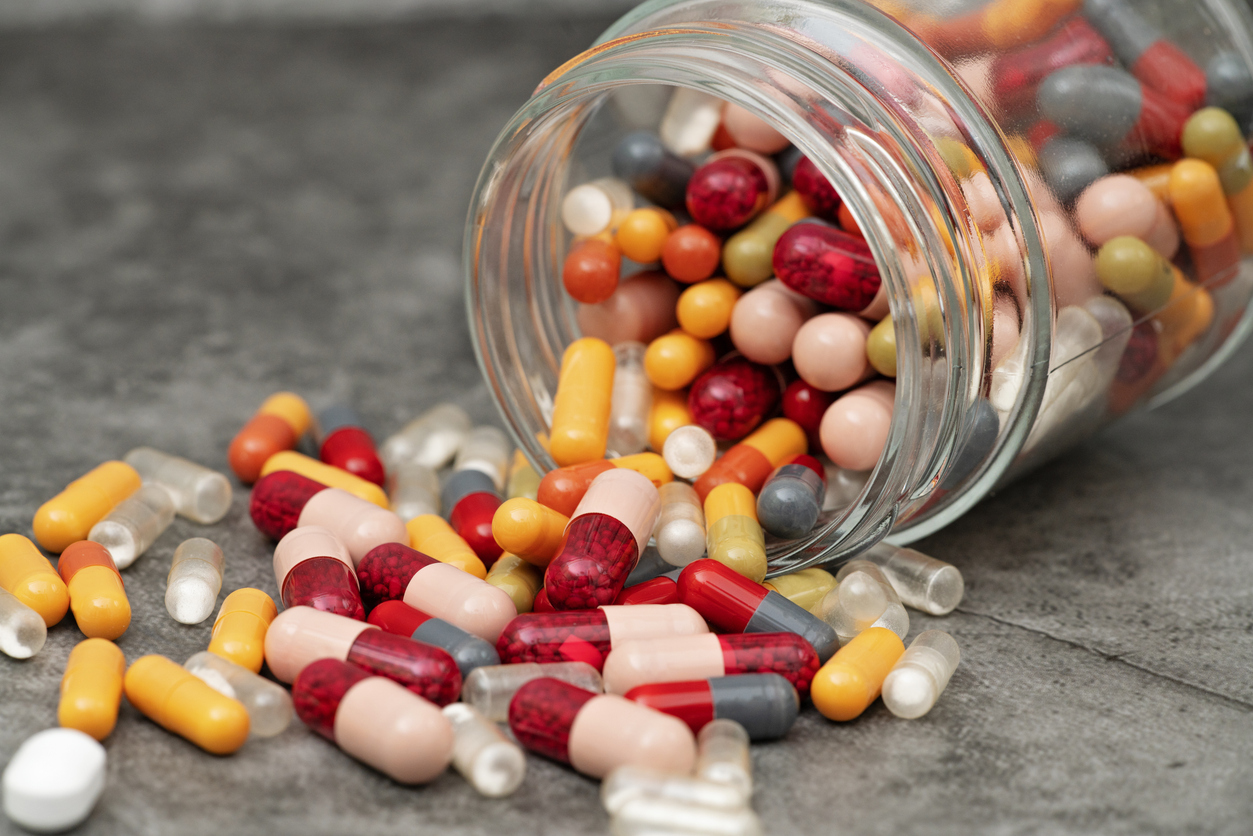
Representational image. Credit: iStock
Synopsis: Prime Minister Modi’s warning on antibiotic misuse stresses on India’s looming bacteria-resistance crisis. Dr D Nageshwar Reddy’s study shows 83% of Indian patients already carry resistant bacteria, traced to food, farms, and unchecked prescriptions. With medical tourism at risk and projections of near-total resistance by 2035, experts urge strict regulation to avert economic and health collapse.
On 28 December, 2025, Prime Minister Narendra Modi stood before his radio microphone and delivered a warning. Speaking during his monthly Mann Ki Baat address, he told citizens to stop treating antibiotics like candy.
“Antibiotics are not medicines that should be taken mindlessly,” he said, referencing a recent ICMR report that revealed drugs designed to cure pneumonia and urinary tract infections no longer work.
The PM pointed to a pattern that has become routine. People walk into medical shops with a fever. The pharmacist hands over an antibiotic without explanation. The patient swallows it without question. “This is the reason diseases and infections are proving to be too strong for these antibiotics,” Modi explained.
What Modi described connects to a crisis that Dr D Nageshwar Reddy encounters at AIG Hospitals in Hyderabad. A foreign patient arrives for heart bypass surgery, drawn by India’s skilled surgeons and affordable care. The surgery proceeds without complications. Three days later, an infection sets in that no antibiotic can touch.
The bacteria didn’t originate in operating rooms. They came from the milk children drink at breakfast, the chicken families cook for dinner, the vegetables grown in fields where farmers use antibiotics to produce bigger cabbages.
Dr Reddy led a study published in Lancet eClinicalMedicine that examined patients across four countries. Researchers collected swabs before any medical procedure began. The results shocked even those who anticipated high numbers: 83 percent of Indian patients already carried antibiotic-resistant organisms in their bodies. The Netherlands recorded 10.8 percent. The United States showed 20 percent. Italy registered 31 percent.
“The world is looking towards India as a medical tourism hub,” Dr Reddy says. “Imagine a patient coming here for a procedure. We have the best doctors, the best equipment, and they end up getting an infection which can be dangerous in the future. So economically too, not just medically or socially, this is extremely important for the country.”
Dairy farms administer antibiotics to cattle. The drugs flow into milk that gets processed, packaged, and delivered to homes. “Children are drinking milk that contains antibiotic residues, which contribute to resistance,” Dr Reddy explains. The antibiotics don’t vanish after pasteurisation. They enter bodies where they train bacteria to survive, to resist.
Poultry farms create another channel. Chickens receive antibiotics not to treat disease but to grow faster. Across coastal India, operators add antibiotics directly into fish ponds and shrimp farms. Farmers discovered that antibiotics produce larger vegetables and better coconuts. “Even to produce better coconuts, antibiotics are being used,” Dr Reddy reveals.
When researchers asked Indian patients about recent antibiotic use, not a single person reported taking any. In Italy, the Netherlands, and the USA, 40 percent, 30 percent, and 8 percent of patients respectively acknowledged recent use.
“So how is it that they claim they did not use antibiotics, yet resistance is extremely high?” Dr Reddy asks. “First, many people simply do not know whether they have taken antibiotics. You go to a medical shop with a fever, and the pharmacist gives you an antibiotic without explaining what it is.”
The second reason cuts deeper. “The source of resistant bacteria is not only medicines. These bacteria are entering the body through food, milk, agricultural products, and several other sources.”
Dr Hardik Rughwani, gastroenterologist and co-investigator, identified another pattern. “In India, the patient population we have found is in a younger age group. People aged 40-45 are also having resistant bacteria, compared to the West, where people between 65-70 years have resistant bacteria.”
More troubling: “In the Western population, around 40 percent of people had previous exposure to hospitals. Compared to that, in India, those who have not even visited a hospital once are also having resistant bacteria. Even simple walk-in patients who come to the hospital for the first time are carrying dangerous bacteria.”
A patient arrives for hip replacement surgery. They appear healthy, ready for treatment. But they carry resistant bacteria in their gut or nasal passages without knowing it.
“These people are carrying resistant bacteria in their gut or nose, but they don’t have any illness. They appear completely normal,” Dr Reddy explains. During surgery, these bacteria can enter the bloodstream and cause sepsis that standard antibiotics cannot treat.
The second risk involves transmission. “Suppose a patient has come for heart bypass surgery. He is recovering well, but unfortunately the patient next to him is having this bacteria, which can now enter into the patient who has had surgery and produce problems,” Dr Reddy describes. The bacteria spread through touch, through surfaces, through the air in enclosed spaces.
A foreign patient researches surgeons, checks credentials, confirms success rates, and chooses India. The surgery proceeds without errors. But they contract an infection from another patient or from their own body’s bacteria. They return home with a resistant infection their doctors cannot treat. They share their story on social media, in travel forums, through word of mouth.
Medical tourism generates foreign exchange, creates employment, and showcases Indian medical expertise globally. But that structure rests on trust. A reputation for antibiotic-resistant infections undermines that trust.
Dr Reddy frames the timeline without softening the blow. “Imagine, what will happen in 2035? By then, 98 percent of people in our country are going to have this type of dangerous bacteria. No antibiotic will be useful. Nobody will come to India for medical tourism if they know this type of bacteria exists here. It will impact the economy, health, tourism, everything…”
The projection relies on documented trends. The study shows that resistance levels increased by 40 percent between 2012 and 2020. At this pace, within another five years, 95 percent of organisms in India may resist antibiotics.
The Netherlands, with 10.8 percent of patients carrying resistant bacteria, represents what works. Pharmacies cannot sell antibiotics without prescriptions. Doctors follow strict guidelines. Dairy farms operate under surveillance systems that test for antibiotic residues. Poultry operations that use antibiotics as growth promoters face penalties. Agricultural use faces bans.
The United States ranks second with 20.1 percent resistance. Italy, at 31.5 percent, has fewer regulations and higher resistance.
“The worst is India, because we have the least regulations. This clearly shows that the development of a country is inversely proportional to resistant bacteria,” Dr Reddy concludes.
India occupies the worst position: high availability of antibiotics combined with minimal regulation.
PM Modi’s warning connected kitchen tables to hospital beds. Dr Reddy’s research revealed how that connection works through milk at breakfast, chicken at dinner, and vegetables at every meal.
The bacteria enter bodies through food, wait silently until surgery creates an opening, then strike. The patient suffers. The hospital’s reputation goes for a toss. India’s medical tourism dreams stares at a bleak future.
(Edited by Amit Vasudev)


