

Published Mar 03, 2024 | 11:00 AM ⚊ Updated Mar 03, 2024 | 11:00 AM

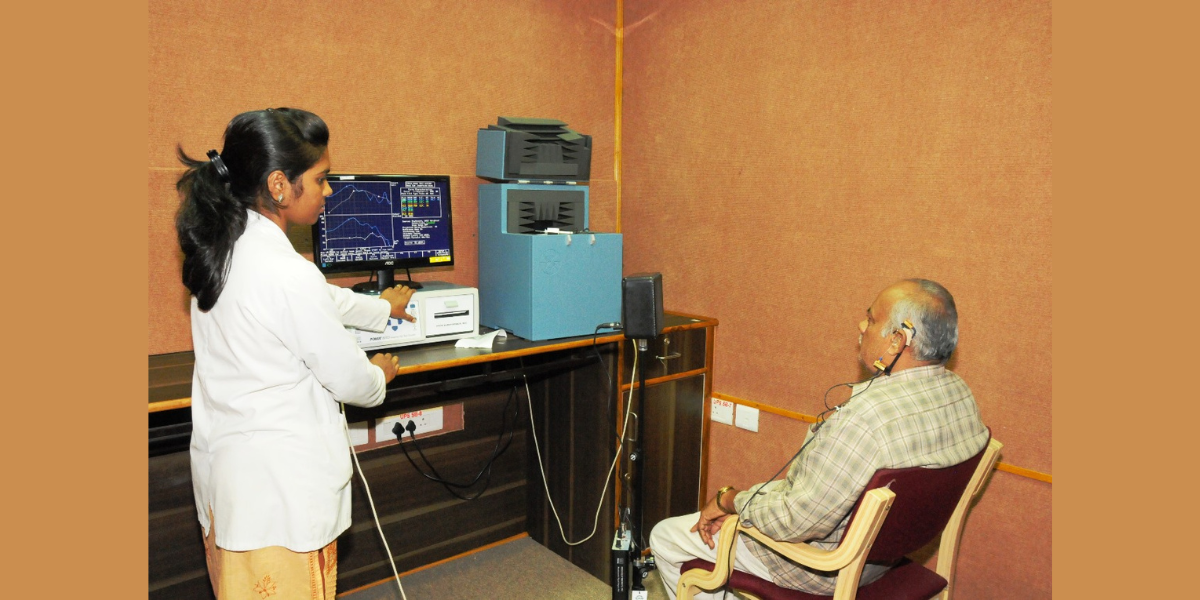
Audiometry test being performed for an elderly man. (AIISH/Supplied)

Radhika (59) from Kodiyala in Karnataka, is a talented weaver, known for her exquisite silk sarees — a true testament to her skill and dedication to her craft. However, in the quiet corners of her art-filled world, a subtle challenge looms — a gradual decline in her hearing.
The weaving machine’s rhythmic hum and her family members’ voices have slowly morphed into a muffled echo.
Despite this growing challenge, Radhika hesitates to seek assistance. In her tight-knit community, there exists an unspoken but pervasive stigma surrounding hearing loss, particularly among adults. Regrettably, it is often entwined with perceptions of ageing or vulnerability.
Radhika fears that embracing a hearing aid might invite pity and alter how others perceive her.
Radhika’s story echoes through the words of Prof M Pushpavathi, Director of the All-India Institute of Speech and Hearing (AIISH) in Mysuru, who also plays a part in the WHO’s World Hearing Forum (WHF).
She tells South First, “In November, a meeting was held where stakeholders and members of WHF met. During our discussions, we found that seeking help for hearing loss and wearing hearing aids mostly depended on societal perceptions. This can significantly impact individuals’ willingness to adopt these devices.”
It is for this reason that WHO has chosen “Changing Mindsets” as the theme for this year’s World Hearing Day — observed annually on 3 March — emphasising the importance of altering societal perspectives to address hearing loss effectively. Dr Pushpavathi underscores the need to combat the deeply rooted stigma associated with hearing loss and redefine societal norms.
“Changing mindsets related to ear and hearing care is crucial to the importance of unaddressed hearing loss,” WHO said.
One key reason behind this stigma, as explained by medical professionals, lies in societal perception. Hearing loss and the use of hearing aids are often wrongly linked to ageing, cognitive decline, and a diminished sense of vitality. Doctors say that this association can unfairly cast individuals with hearing loss as old, less capable, or uninteresting, discouraging them from seeking assistance in fear of being stigmatised.
Speaking to South First, Lalithamba AV from Bengaluru shares the story of her 63-year-old mother, whose physical health deteriorated as her hearing waned. Reluctant to wear a hearing aid, her mother’s self-perception suffered. The link between self-perception and the decision to use hearing aids is a complex interplay, where individuals may fear being perceived as “disabled” or cognitively impaired.
Surprisingly, it’s not just the elderly in rural areas who resist wearing hearing aids.

Senior citizens are not the only ones who need hearing aids. (Wikimedia Commons)
Dr Sunita Madhavan, a renowned ENT specialist in Bengaluru, notes that even adults between 20 and 40 years refuse to wear hearing aids due to societal stigma. In such cases, effective counselling by doctors can make a significant difference, as awareness about the realities of hearing loss and the benefits of discreet, high-tech hearing aids becomes more widespread.
“After counselling and explaining the implications of not wearing hearing aids, some of them will wear it,” Dr Sunita tells South First.
“However, we see at least four to five paitents in six months who won’t wear the canal hearing aid despite having one,” she adds.
Dr Sunita reiterates that counselling is absolutely important. Increasing public awareness about the realities of hearing loss and the benefits of hearing aids is crucial, she says.
She adds that it is important to educate people that hearing loss can affect anyone at any age, and that modern hearing aids are discreet and high-tech.
Amidst this, the role of audiologists and screening emerge as crucial. However, there’s a shortage of audiologists in India, and efforts are needed to bridge this gap. Putting it into perspective, Dr Pushpavathi says that there is one audiologist for 22,000 people.
Some states like Karnataka are training ASHA workers, teachers from government schools, and community health workers to do the first level of the screening process by asking simple questions mentioned in a checklist.
Explaining the training process Dr P Manjula, Professor of Audiology, AIISH Mysuru tells South First, “We discuss screening at various levels with different stakeholders. For instance, with young non-school-going children, we ask parents if their child had suffered a high fever any time. Many times, meningitis, mumps, etc, trigger a high fever, which can cause damage to the ear. Even Anganwadi workers are trained in this.”
Meanwhile, teachers are instructed to identify children who require repeat instructions or struggle to understand instructions. They are also asked to identify children who have difficulty in pronounciations. “Children with speech issues may also have hearing problems, and that can be identified through simple questions. The children are then further screened by an audiologist,” Dr Manjula explains.
To combat the shortage of audiologists in India, concerted efforts are needed from both the government and private sectors. Increasing the number of training programnes for audiologists and providing incentives for professionals to work in underserved areas can help alleviate the shortage.
Additionally, screening camps serve as valuable initiatives, yet a persistent challenge remains. While various state governments organise free screening camps in primary health centres (PHCs) and villages, convincing individuals to undergo further tests and embrace hearing aids poses a considerable hurdle, as noted by doctors and health experts.
“Screening in many places is happening diligently. When a child is diagnosed with ear problems, the parents ensure that they visit the audiologists and even ensure that the child wears hearing aids. However, it is the adults who are difficult to convince,” says Dr Manjula.
Ideally, adults should consult audiologists for a comprehensive evaluation of the inner, middle, and outer ear. Treatable issues in the mid-ear may involve medications or surgery, while those with inner ear problems may require hearing aids tailored to their personal needs, hearing capacity, and specific issues, explains Dr Manjula.
Accessible and affordable, over-the-counter (OTC) hearing aids carry significant risks due to self-diagnosis and lack of customisation. Dr Pushpavathi warns against choosing OTC options or other market-available hearing aids without professional guidance. Individuals may misinterpret their needs, leading to devices that inadequately address or worsen their condition.
“The one-size-fits-all approach of OTC hearing aids often fails to provide the precise amplification required, potentially leading to further auditory damage. Moreover, the absence of professional fitting can result in devices that cause physical discomfort or feedback issues, detracting from their effectiveness and user experience,” elaborates Dr Manjula.
Moreover, relying on OTC hearing aids without professional consultation risks overlooking underlying medical conditions contributing to hearing loss. Neglecting serious health issues may pose significant dangers to overall health. Consulting healthcare professionals or audiologists before choosing hearing aids is crucial to ensuring a safe and effective hearing solution.
Similar to deteriorating eyesight with age, hearing issues may worsen over time. Even those with proper diagnoses and wearing hearing aids should undergo annual follow-ups, doctors say.
“The lack of follow-up care and maintenance of hearing aids also means that users miss out on essential adjustments and support that ensure the longevity and effectiveness of their hearing solutions,” Dr Manjula explains.
The continuous advancement of hearing aid technology has transformed these devices into smaller, more discreet, and highly functional gadgets. Features such as Bluetooth connectivity and sophisticated AI make modern hearing aids resemble personal tech gadgets rather than medical devices.
Dr Manjula emphasises the reduction of stigma, as contemporary devices are sleek, eliminating the bulky, wired appearance of traditional hearing aids.
Doctors stress the importance of normalising hearing aids, drawing parallels with eyeglasses and other assistive devices that have become both accepted and fashionable. Highlighting the design and multifunctionality of hearing aids can enhance their acceptability and desirability among potential users.



