


Published Mar 07, 2026 | 2:24 PM ⚊ Updated Mar 07, 2026 | 2:24 PM

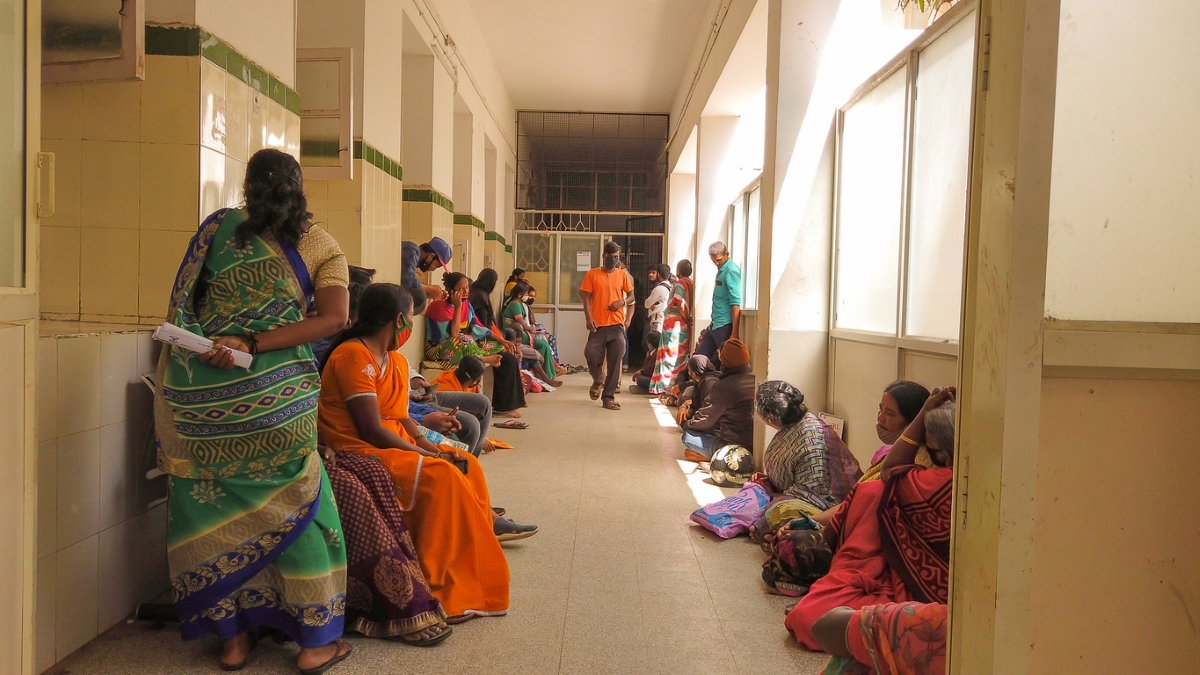
Karnataka public health cadre. (iStock/ representational)
Synopsis: A Public Health Cadre represents not just a new job category but a fundamental shift in how governments perceive the links between health, governance, and evidence. In many low- and middle-income countries, including India, the prevailing approach assigns medical officers, trained primarily in clinical diagnosis and treatment, to roles that demand expertise in epidemiology, health systems financing, programme evaluation, community mobilization, intersectoral coordination, and public health law.
There are certain moments in our professional lives that stay with us forever. For me, one such moment was in 2011, when I was sitting around a table with colleagues in Bengaluru, working together to make a case for establishing a dedicated Public Health Cadre for Karnataka.
We were a diverse group of practitioners, academics, and health system thinkers, people who had dedicated their careers to observing how talented clinicians are often assigned to health administration roles they weren’t trained for, we also saw how preventable deaths happen because the system lacks professionals who can think in populations, and how political considerations sometimes take precedence over public health logic in every appointment and decision.
We wrote our report, we made our case, we believed we had been heard. And then we waited.
Today, fourteen years later, the Government of Karnataka has announced the implementation of a Public Health Cadre in a phased manner, ensuring objectivity in the appointment of District Health Officers, District Surgeons, and key administrative positions across the health department.
What happened during those fourteen years is itself an important story. The Karnataka report of 2012 did not get lost in the filing cabinet. It travelled. It influenced debates at the national level and affected other states, including Odisha and Uttar Pradesh, which eventually developed their own cadre structures and public health reforms, drawing on the evidence and framework that Karnataka helped pioneer.
The irony, both painful and instructive, is that Karnataka, the state whose committee created the intellectual foundation for this reform, found itself watching others walk through a door it had helped design.
This is not a critique; health systems reform is not a sprint. It requires champions in government, alignment of political will, fiscal space, and the right moment in a budget cycle when bold ideas can take hold.
What matters is that the door has now opened in Karnataka, at last, at a time when the state is also making major investments in maternal health, digital infrastructure, dialysis services, and medical education. The timing is no accident; it is intentional.
Let us be clear about what this announcement represents, because it is easy to underestimate a single line in a budget speech.
A Public Health Cadre represents not just a new job category but a fundamental shift in how governments perceive the links between health, governance, and evidence. In many low- and middle-income countries, including India, the prevailing approach assigns medical officers, trained primarily in clinical diagnosis and treatment, to roles that demand expertise in epidemiology, health systems financing, programme evaluation, community mobilization, intersectoral coordination, and public health law.
These skills are not part of standard MBBS training; instead, they are acquired through specialized education, such as a postgraduate diploma in public health, an MPH, an MD in Community Medicine, or a DrPH, and developed through careers focused on achieving population-level health outcomes.
By establishing a cadre to integrate these professionals into health system leadership, Karnataka is undertaking a move that wealthy nations have long considered standard, yet many low- and middle-income countries have found it difficult to implement.
The United Kingdom’s Director of Public Health model, embedded in local authorities, protected by professional standards, accountable to population outcomes, is a prototype standard. Thailand’s district public health officer system is widely cited in global health literature as a key driver of that country’s extraordinary health outcomes relative to its income level. Brazil’s Sistema Único de Saúde (SUS) built a public health workforce that drove one of the most dramatic declines in mortality in the developing world.
Karnataka can and should sit at that table.
After several committees and numerous advocacy initiatives, Indian public health leaders aspired to a community health system, underpinned by trained public health leadership at every administrative level. Karnataka can become a case study taught in public health schools worldwide.
A state of 68 million people, comparable to France and the United Kingdom, is set to implement a value-based, competency-driven Public Health Cadre. This is not merely a regional administrative reform; this is a prototype for how LMICs can restructure their health governance.
It is a model that WHO, the World Bank, and global health institutions should study, document, and help replicate. It is the kind of structural innovation that does not make the front page today but rewrites health outcomes twenty years from now.
There are several people who have been woven in between the government’s congratulations and the road ahead. Each person is honoured in a way that reflects their specific contribution:
Dr. P.N. Halagi is, in many ways, the intellectual and moral founding father of Karnataka’s Public Health Cadre. As Chair of the original 2012 committee, he brought something to that table that is genuinely uncommon in health policy reform: the credibility of a man who had lived on both sides of the divide.
A trained clinician who had spent years at the bedside, and an accomplished public health practitioner who understood the population lens with equal fluency, Dr. Halagi embodied in his own career the very argument the committee was making, that medicine and public health are not in opposition, but that health systems need leaders who can bridge them.
His chairmanship lent the 2012 report its authority, its rigor, and its moral weight. Every subsequent advocacy effort, every state that borrowed from Karnataka’s framework, every meeting where the cadre idea was kept alive, traces back to the foundation he laid. That a recommendation made under his stewardship is now being implemented by the Government of Karnataka is a tribute not only to his professional legacy but to his vision of what a health system, at its best, can be.
The unnamed many programme officers, journalists, civil society voices, acknowledged collectively, so no one feels forgotten.
To the Chief Minister, the Finance Minister, the Additional Chief Secretary (Finance), and the Health Minister of Karnataka:
Thank you.
Those of us who have spent decades on this advocacy, who have written reports, given testimonies, published papers, engaged bureaucracies, and sometimes despaired that the system would never move, know what this announcement cost in political capital and institutional courage. Health system reforms that shift power, restructure appointments, and introduce meritocracy into traditionally seniority-driven hierarchies are not easy. They invite resistance. They require conviction.
You showed conviction today.
The 2012 committee began a conversation. You have answered it. And in doing so, you have not only done right by Karnataka but also given hope to every state in India and every health ministry in the developing world that this kind of reform is possible within democratic, resource-constrained systems.
This is what good government looks like.
The announcement is the beginning. The hard and glorious work starts now. Here is what must follow if Karnataka is to be the global exemplar it now has the opportunity to become.
The promise of “objectivity” in appointments must be operationalized through a public, criterion-based selection process — ideally modelled on the Public Health England appointment framework, in which candidates are assessed on epidemiological competence, health systems knowledge, and leadership capacity, not tenure alone. As earlier, Karnataka must allow researchers, public health institutions, and international observers to study this reform in real time.
The state can also invite peer learning by working with states such as Tamil Nadu, Odisha, Maharashtra, and Himachal Pradesh that have made progress on their own public health workforce reforms and should be brought into a South Asian Public Health Cadre Learning Collaborative. Karnataka can lead it.
The arc of public health reform is long. It bends slowly. It requires people who are willing to write reports that gather dust, advocate through administrations that change, and return, year after year, to the same rooms to make the same case, knowing that one day, the room will finally listen. Karnataka listened to it today.
To every young public health professional in this country who has wondered whether the system is capable of change, whether evidence matters, whether advocacy works, whether the structures of governance can be moved by the force of ideas and persistence, the answer, as of today, is yes.
Karnataka has given us proof. Now let us give the rest of the country, and the world, the cadre it deserves.
The author served on the Karnataka Public Health Cadre Committee in 2012 and has been an advocate for public health workforce reform in India for over two decades. Views are personal.


