

Published Oct 19, 2026 | 4:16 PM ⚊ Updated Oct 19, 2026 | 4:16 PM

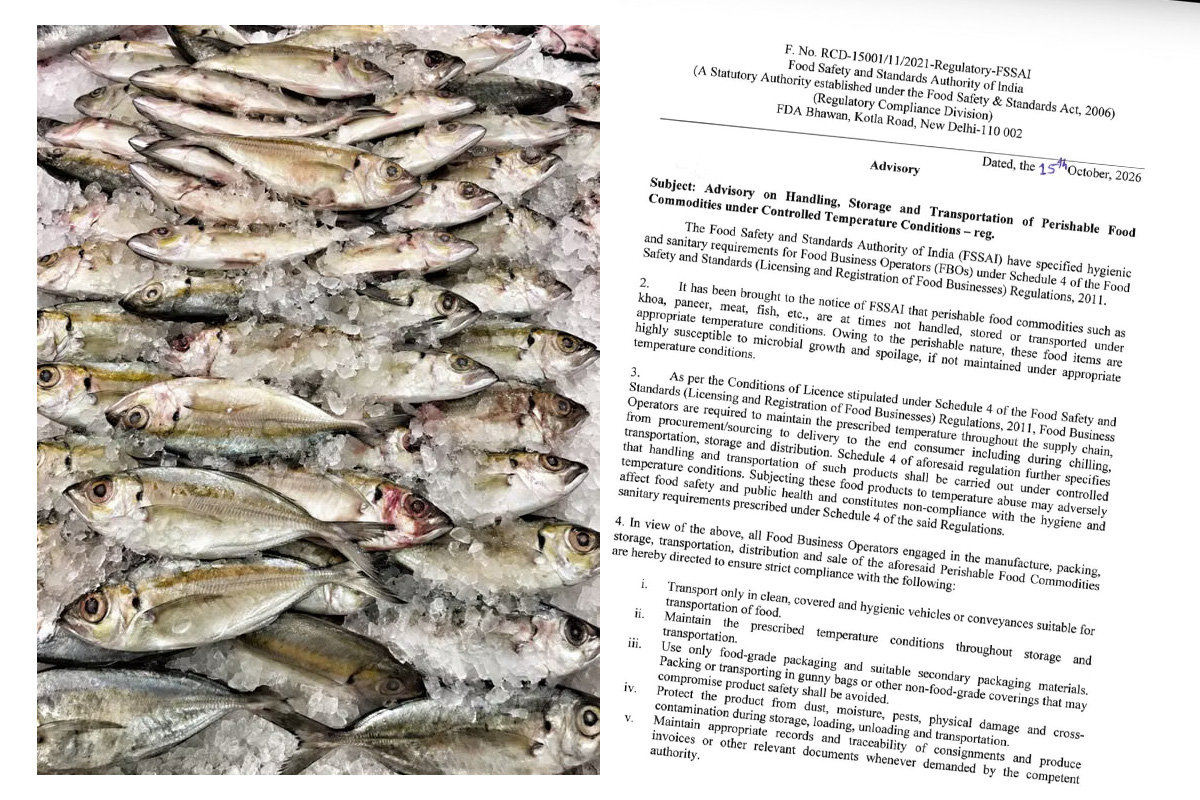
FSSAI warns that perishable foods like khoya, paneer, meat, and fish may be seized and destroyed if temperature controls are missed during storage.

The Food Safety and Standards Authority of India (FSSAI) has warned food businesses across the country that perishable products such as khoya, paneer, meat and fish could be seized and destroyed if prescribed temperature controls are not maintained during storage, transportation and distribution.
The food safety regulator said such products are sometimes handled, stored or transported without appropriate temperature controls, making them highly susceptible to microbial growth and spoilage.
The advisory dated October 15, 2026 directed all food business operators (FBOs) involved in the manufacture, packing, storage, transportation, distribution and sale of these products to ensure strict compliance with existing food safety requirements.
Under Schedule 4 of the Food Safety and Standards (Licensing and Registration of Food Businesses) Regulations, 2011, food businesses are required to maintain prescribed temperatures throughout the supply chain, from procurement and sourcing to delivery to the end consumer. This includes temperature control during chilling, transportation, storage and distribution.
FSSAI said exposing these products to inappropriate temperatures could compromise food safety and public health, besides constituting non-compliance with the hygiene and sanitary requirements under the regulations.
The regulator has outlined five requirements for food businesses handling perishable commodities.
They must transport food only in clean, covered and hygienic vehicles suitable for food transportation and maintain prescribed temperatures during storage and transit.
Businesses must also use food-grade packaging and suitable secondary packaging materials. The advisory specifically prohibits packing or transporting food in gunny bags or other non-food-grade coverings.
Food businesses have also been directed to protect products from dust, moisture, pests, physical damage and cross-contamination during storage, loading, unloading and transportation. They must maintain appropriate records and ensure traceability of consignments, producing invoices and other relevant documents whenever required by the competent authority.
FSSAI has asked food safety commissioners in all states and Union territories, Indian Railways and its regional directors to instruct licensing authorities and food safety officers to maintain strict vigilance during inspections and transportation checks.
The advisory states that appropriate action, including seizure and destruction, may be initiated in cases of non-compliance under the Food Safety and Standards Act, 2006, and the regulations framed under it.
The directions apply to food businesses involved in the handling and movement of perishable commodities and reinforce the existing regulatory requirements for maintaining food safety throughout the supply chain.
Also Read:
FSSAI proposes ban on added sucrose and fructose in foods for infants up to six months
In five years, Tamil Nadu records highest food safety convictions; Telangana reports none
(With inputs from Sumit Jha. Edited by R Rajesh Kumar.)



