

Published May 19, 2026 | 2:23 PM ⚊ Updated May 19, 2026 | 2:23 PM

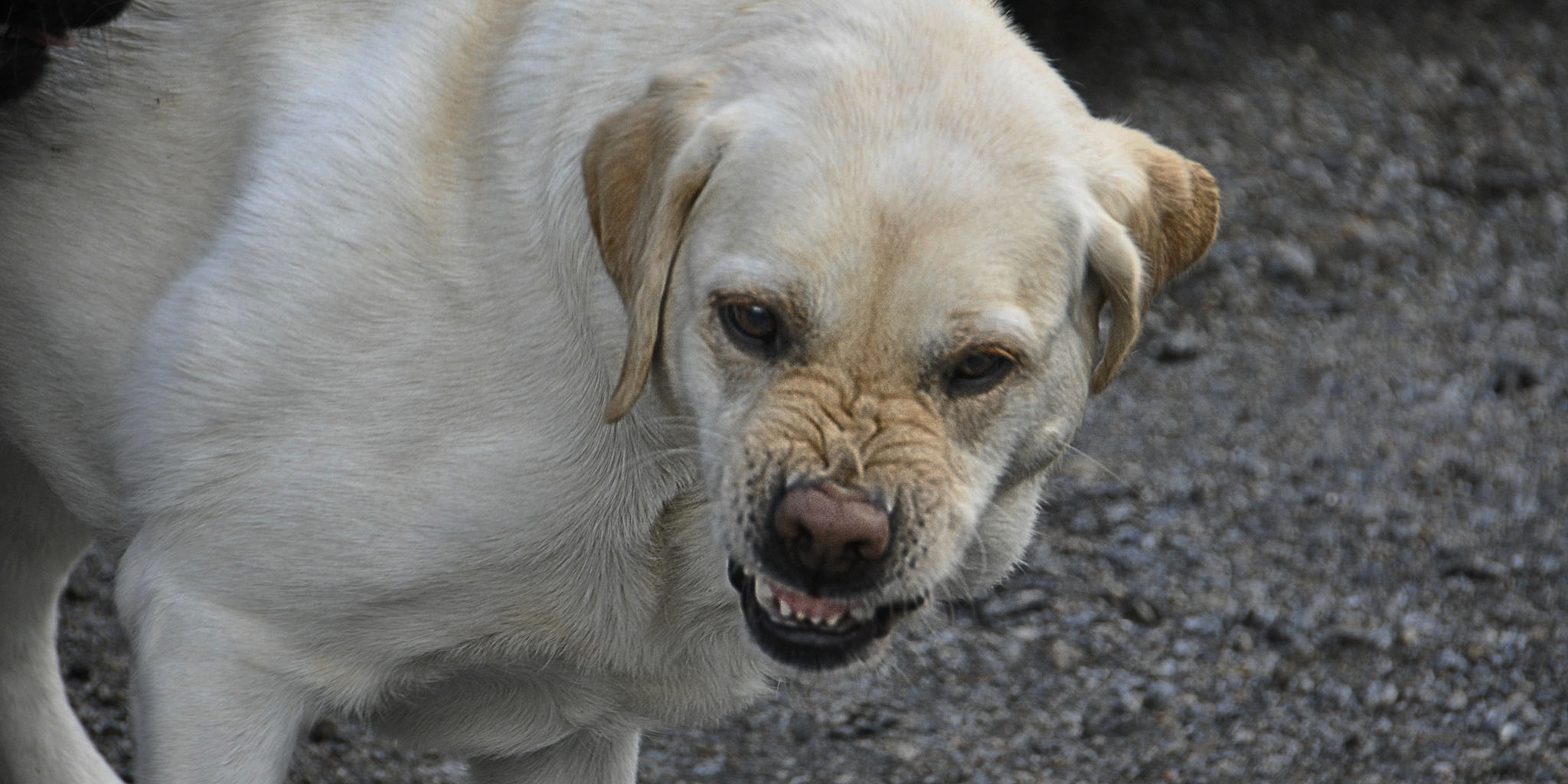
(Representational image/Creative Commons)

Synopsis: Rising dog-bite cases in Tamil Nadu and Karnataka have renewed concerns over gaps in rabies prevention, stray dog management and public health systems. Experts say sustained vaccination, sterilization and better urban waste management remain critical to long-term rabies control.
Tamil Nadu is reporting more than 2,000 dog-bite cases every single day. Karnataka is not far behind, at nearly 1,700 daily incidents.
Between January and April this year, the two southern states together logged over 4.68 lakh dog-bite cases and 42 rabies deaths, once again drawing attention to gaps in stray dog management, anti-rabies awareness, and public health preparedness.
According to data from the Directorate of Public Health and Preventive Medicine (DPH), Tamil Nadu recorded 2.63 lakh dog bite cases and 17 rabies deaths between January and April, while Karnataka’s Commissionerate–Health& Family Welfare Services reported over 2.05 lakh bite cases and 25 rabies deaths during the same period.
The numbers, month by month, in Tamil Nadu
In Tamil Nadu, monthly dog-bite cases remained consistently high, with nearly 62,000 cases reported in both January and February. The number rose sharply to around 71,000 in March, then dipped slightly to about 68,000 in April.
Chennai, Salem, Tiruchi and Dindigul were among the districts that reported a high number of cases during the period.
According to the DPH, dog bites continue to remain a significant health concern, particularly in urban and semi-urban regions where stray dog populations have increased over the years.
Meanwhile, Karnataka reported 11,879 cases in the week ending 26 April, the last date for which data was available.
Also Read: Kerala faces scrutiny over rabies vaccine quality and public safety
Tamil Nadu health officials said rabies remains one of the most fatal viral infections once symptoms begin to appear, making early intervention critical after any animal bite.
“There is no specific treatment or medication for rabies, and it is 100 percent fatal. The only tool to prevent rabies is vaccination,” Director of Public Health and Preventive Medicine A Somasundaram said while explaining the state’s anti-rabies response measures.
According to the Directorate, immediate wound washing, anti-rabies vaccination and administration of rabies immunoglobulin in severe bite cases continue to be the primary line of defence against infection.
Officials said deep wounds and bites on high-risk areas such as the hands and face require urgent medical attention because the virus can rapidly travel through nerve pathways to the brain.
The department also noted that many people still ignore minor scratches or bites from pet dogs, delaying treatment or failing to complete the vaccination schedule.
Tamil Nadu’s State Action Plan for Dog-Mediated Rabies Elimination acknowledges that stray dog control cannot succeed through sterilisation drives alone.
It stresses that local bodies must simultaneously improve garbage management, strengthen vaccination coverage, maintain dog population records, and ensure coordination between municipal, animal husbandry, and public health departments.
The plan also highlights the need to vaccinate at least 70 percent of the stray dog population to effectively reduce rabies transmission. “Rabies elimination depends on sustained, high-coverage vaccination and monitoring systems,” the framework notes, warning that fragmented execution weakens long-term control efforts.
Another major concern identified in the policy is the absence of reliable surveillance and public awareness systems. Many dog-bite victims either delay treatment or fail to complete the full anti-rabies vaccine schedule.
The action plan calls for stronger public education, better access to post-exposure treatment, and a “One Health” approach that links animal control with human healthcare systems.
Despite these goals, implementation remains uneven across districts, especially in rapidly expanding urban and semi-urban areas like Chennai. “Reporting is higher now, and waste management is also a factor. This issue is caused by multiple factors,” Dr J Kamal Hussain, Veterinary Officer, Greater Chennai Corporation, told South First.
Without these measures working together, officials warn that rising dog-bite cases may continue to expose structural gaps in Tamil Nadu’s rabies prevention network.
Speaking to South First, Dr Surendran R, Consultant, Infectious Disease, SIMS Hospital, Chennai, said dog-bite management cannot rely only on emergency treatment after exposure, but requires sustained preventive systems at the community level.
“The increase in dog bite cases indicates that existing control measures are struggling to keep pace in several urban and semi-urban regions,” he said, adding that rabies prevention depends not only on hospital care, but also on anti-rabies vaccination of dogs and Animal Birth Control (ABC) sterilisation programmes.
He noted that interrupted treatment among bite victims continues to remain a concern despite greater awareness about anti-rabies vaccination in recent years. According to him, follow-up mechanisms reflect increasing concern within the public health system over people failing to complete the prescribed vaccine schedule after exposure.
“Even minor scratches or bites should not be ignored. Rabies is preventable if people seek timely treatment and complete the vaccination course,” he said, stressing the need for coordination between local bodies, veterinary departments and health authorities.
Dr Ramesh M, Professor at KIMS, Bengaluru, said “Rabies control cannot depend on one-time vaccination drives alone,” warning that uneven booster coverage can quietly create immunity gaps, especially among free-roaming dogs that are harder to track consistently.
He also draws a clear line between stopping rabies transmission and actually reducing bite incidents. As he puts it, “vaccinating dogs reduces the risk of rabies transmission, but it does not automatically reduce dog bite incidents,” adding that bite patterns are shaped by behaviour, stray density and local conditions, not just disease control measures.
In that sense, vaccination and stray management need to move together rather than be treated as the same solution. He further stresses that lasting control depends on systems working in sync, saying rabies prevention becomes stronger when veterinary and public health teams coordinate through continuous vaccination, surveillance and local body action.
The Greater Chennai Corporation (GCC) has proposed a second round of anti-rabies vaccination and deworming for street dogs across all city zones at an estimated cost of ₹3.5 crore. The second phase of the drive is scheduled to begin in August this year as part of the city’s continuing rabies-control programme.
In the first phase of the drive, conducted between August and December 2025, GCC vaccinated and dewormed more than 1.47 lakh street dogs across Chennai, achieving around 81 percent coverage of the city’s estimated stray dog population of 1.8 lakh.
Alongside the anti-rabies campaign, GCC has also been expanding stray dog management measures, including increasing Animal Birth Control (ABC) centres, introducing microchipping for sterilised dogs, enforcing pet dog licensing, and planning dedicated quarantine shelters for rabies-suspected and aggressive stray dogs in parts of the city.
Animal welfare activist Vasanthi Mantravadi, Founder President, PFA Hyderabad, cautioned that dog-bite statistics in India may often reflect gaps in reporting systems as much as actual bite incidents.
Speaking to South First, she said many government hospitals record every anti-rabies vaccine follow-up visit as a fresh “dog bite” entry, potentially inflating case numbers in official records. “Sometimes one single dog bite gets recorded multiple times because every vaccine follow-up visit is entered again as a fresh case,” she said, explaining that hospitals may not always distinguish between pet dog bites, stray dog bites or repeat vaccine visits in public health records.
She also pointed out that many people travel across districts or cities for treatment, which can further distort local bite statistics. According to her, “the data in our country is very loose” and should be interpreted carefully before being used to shape public opinion or policy decisions.
While stressing that dog bites are a serious public health concern, she said the statistics should be viewed carefully and in proper context.
Also Read: Coimbatore’s rabies re-vaccination drive
Vasanthi also argued that long-term stray dog control depends on sustained sterilisation and vaccination programmes rather than sporadic drives. Referring to the Animal Birth Control-Anti Rabies (ABC-AR) model recommended by the World Health Organisation, she said sterilisation reduces aggressive behaviour, limits roaming patterns among dogs and helps stabilise street dog populations over time.
“The only thing that you can do, and must do, is sterilisation along with anti-rabies vaccination,” she said, adding that several Indian cities, including Hyderabad and Chennai, had already shown visible results in areas where ABC programmes were implemented consistently over many years.
According to her, unscientific culling has historically failed to reduce either dog populations or rabies transmission. She further linked rising stray populations to poor waste management and uneven implementation of municipal programmes. “If you kill one dog, another unvaccinated dog from nearby districts will simply enter the same area,” she said.
Vasanthi also stressed the need for stronger adoption efforts for Indian street dogs and called the issue “a social problem” involving public health, urban management and animal welfare together, rather than an issue that can be solved through fear-driven responses alone.
Speaking to South First, Bharati Ramachandran, Chief Executive Officer, FIAPO (Federation of Indian Animal Protection Organisations), said available data and epidemiological surveys indicate that dog-bite incidence in India has declined over the years, though inconsistent hospital-level reporting continues to affect the accuracy of classifications between street dogs, pet dogs and other animals.
She said Livestock Census data also points to a decline in the overall dog population, including street dogs, over the past two decades.
Ramachandran stressed that effective dog population management depends on sustained and scientifically implemented Animal Birth Control (ABC) and anti-rabies vaccination programmes.
“Relocation or culling goes against WHO guidance and scientific advisories on rabies control. When dogs are removed from an area, new and often unvaccinated dogs move in, while other animals such as rats and monkeys can fill the ecological gap, creating additional public health risks,” she said.
She also linked stray population concerns to poor waste management and inconsistent implementation of sterilisation and vaccination drives.
“Open garbage points continue to act as feeding grounds and undermine long-term population control efforts. Lasting results depend on sustained ABC, anti-rabies vaccination and proper waste management working together continuously,” she said.
As southern states continue to report rising bite cases and rabies deaths, experts say the challenge is no longer limited to emergency medical response alone, but increasingly reflects the need for coordinated urban governance, public health planning and sustained animal-control systems.
(Edited by Muhammed Fazil.)



