

Published May 15, 2026 | 10:10 AM ⚊ Updated May 15, 2026 | 10:10 AM

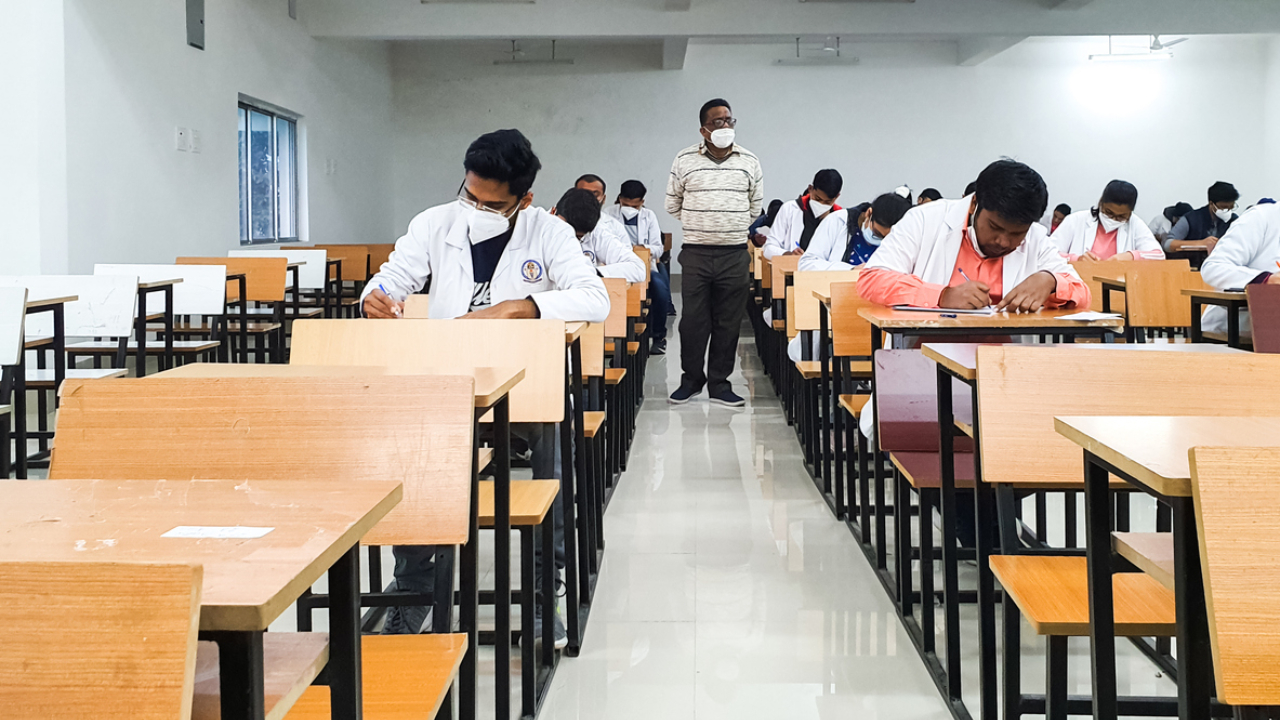
NEET alone determines entry into over one lakh MBBS seats, over 27,000 dental seats and thousands of allied medical seats.

Synopsis: The National Testing Agency said that it has scheduled the re-examination of NEET (UG) 2026 on Sunday, 21 June, with the approval of the Union government. The NTA had cancelled the NEET UG 2026 examination held on 3 May, confirming a question paper leak.
The National Testing Agency (NTA) said on Friday, 15 May, that it has scheduled the re-examination of NEET (UG) 2026 on Sunday, 21 June, with the approval of the Union government. The announcement brings relief to over 22 lakh medical aspirants who had been waiting for clarity after the cancellation of the exam.
On 12 May, the NTA had cancelled the NEET UG 2026 examination held on 3 May, confirming a question paper leak. The decision came after investigative inputs shared by law enforcement agencies left authorities with little choice. The CBI is tasked to conduct a comprehensive inquiry.
So far, the CBI has arrested five persons, including three from Jaipur, Rajasthan, in connection with the question paper leak.
Also Read: Students count cost, coaching institutes grab opportunity
The origins of a guess paper containing questions similar to those asked in NEET-UG 2026 were traced to a student from Rajasthan’s Sikar pursuing MBBS in Kerala, who went on to share it with his friends and a hostel owner, a senior official of the State’s Special Operations Group said, reported The Hindu.
The question paper leak was first spotted by the person, who is said to be a teacher with a prominent coaching centre in Sikar.
Rajasthan’s Special Operations Group (SOG) found a PDF file of approximately 150 pages circulating on students’ phones, containing over 400 questions. Of those, roughly 120 are said to have matched questions that appeared in the actual chemistry section of the 3 May paper.
According to SOG’s ADGP Vishal Bansal, the document was in circulation as far back as a month before the examination.
“There are various misconceptions regarding the NEET exam,” Bansal told journalists in Jaipur. “This guess paper was with the students weeks before the examination.” He added that no arrests have been made yet and the investigation is centred on establishing whether cheating or a criminal act was committed.
What makes this case unusual, Bansal noted, is its public nature. Traditional paper leak networks are secretive operations; masterminds typically make students memorise answers the night before the exam without ever sharing copies. The wide circulation of this document, he said, complicates the task of tracing its origin.



