

Published Jan 08, 2026 | 10:42 AM ⚊ Updated Jan 09, 2026 | 8:58 PM

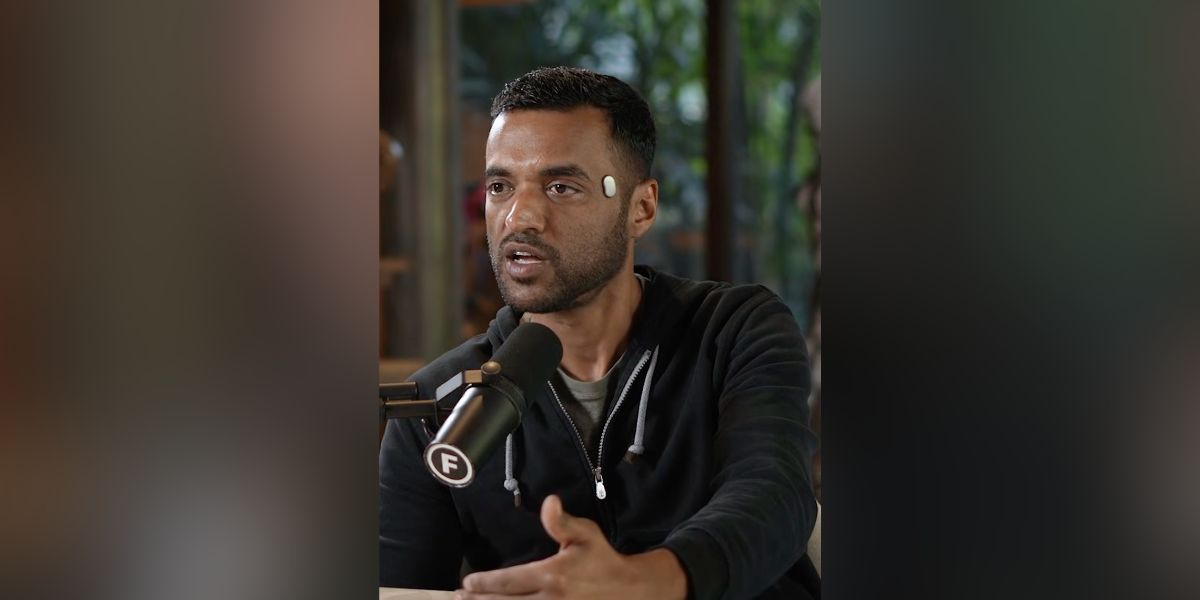
Deepinder Goyal wearing 'Temple'. (Screengrab)
Synopsis: Recently, Zomato co-founder Deepinder Goyal appeared on a public podcast wearing a small metallic device on his temple. The wearable is described by its creator as an experimental tool to measure cerebral blood flow in real-time. However, medical experts are urging caution, saying the device remains far from a validated clinical instrument and should not be viewed as a health-monitoring breakthrough.
Recently, Zomato co-founder Deepinder Goyal appeared on a public podcast wearing a small metallic device on his temple, and curiosity quickly turned to controversy.
Branded “Temple,” the wearable is described by its creator as an experimental tool to measure cerebral blood flow in real time — part of a broader research initiative into brain health and ageing.
However, medical experts are urging caution, saying the device remains far from a validated clinical instrument and should not be viewed as a health-monitoring breakthrough.
Experts emphasised that no peer-reviewed clinical trials, regulatory approvals or published evidence currently support Temple’s claims, and that established methods such as MRI or Doppler imaging remain the standard for assessing brain blood flow.
Meanwhile, Goyal said in an X post that people are commenting on the device even before the company made any announcement regarding the product.
The Temple device is being projected by certain individuals as a wearable tool capable of assessing brain blood flow, generating significant public attention after prominent figures described it as a major innovation.
However, Dr HV Satish Babu, Medical Director and Head of the Neuroscience Department at Columbia Hospital, Kasturi Nagar, Bengaluru, said the primary concern is the absence of proper scientific validation.
“There is no clear scientific proof showing what exactly the device measures or how accurate those measurements are,” he told South First.
Dr Satish Babu pointed out that there is currently no solid evidence demonstrating that the Temple device can reliably measure cerebral blood flow under different physiological conditions.
“At present, it appears to be more of a hype than a startling validated discovery,” he said, expressing scepticism over its claimed efficacy and reliability.
He contrasted the device with established diagnostic tools already in use, including cerebral digital subtraction angiography, CT angiography, MRI angiography, Doppler ultrasound and transcranial Doppler studies.
These methods, he noted, have been extensively researched, reported and debated in peer-reviewed international medical journals, unlike the Temple device, which lacks such scientific backing.
Speaking to South First, Dr Sudhir Kumar, Senior Consultant Neurologist at Apollo Hospitals, Hyderabad, said that despite the attention the Temple device has received, it cannot yet be considered a medical tool.
“At present, there is no published scientific data, no regulatory approval, and no medical recommendation to monitor cerebral blood flow in healthy individuals, making this more of an experimental idea than a clinical tool,” he cautioned.
Dr Satish Babu said cerebral blood-flow assessment is clinically relevant in specific medical conditions such as stroke or stroke-like symptoms, dementia, old age, head trauma, giddiness, and weakness or paralysis of limbs.
These assessments, he stressed, are meaningful only when carried out using validated tools within a proper clinical context.
Highlighting technical challenges, he explained that cerebral blood flow varies significantly from one blood vessel to another depending on factors such as age, side of the brain, location and calibre of the vessel.
“Reduced blood flow in one cerebral artery is not always dangerous,” he said, noting that some individuals can have complete blockage in a vessel and still function without noticeable issues.
“All in all, cerebral blood flow is a complex mechanism,” Dr Satish Babu said, adding that an unvalidated device like Temple cannot provide accurate, reliable or clinically accepted data at this stage.
Until further research and validation are presented, he said, such devices may stimulate scientific inquiry but are unlikely to deliver the utility being claimed by some individuals.
Describing the Temple device as an encouraging concept, Dr Subhash Kaul, Senior Consultant Neurologist at KIMS Hospital, Secunderabad, said the technology shows promise but must be approached with caution.
“This is a very encouraging tool with great potential,” he told South First, adding that the device remains experimental and should not be used on people at this stage. Without validation, he warned, data generated by such devices could lead to unnecessary optimism or anxiety among users.
Dr Kaul stressed the need for long-term clinical trials to establish the device’s usefulness. He said the data generated by the Temple device would have to be rigorously compared with results from established methods of assessing cerebral blood flow, such as transcranial Doppler and MRI of the brain.
“Only through systematic comparisons can its accuracy and reliability be evaluated,” he said.
He further emphasised that approvals from scientific and regulatory bodies are essential to ensure patient safety.
According to Dr Kaul, permissions from institutions such as the Drug Controller General of India (DCGI) and the Indian Council of Medical Research (ICMR) would be required before any consideration of public use.
“Only if the device is found useful through clinical trials can it be marketed, and that too after approval from government regulatory authorities,” he mentioned.
Meanwhile, Goyal said in an X post that the company will share all the science behind Temple when it decides to sell the tech.
“Gentle reminder to all the concerned doctors and/or influencers. We haven’t made any public commercial announcements about Temple yet. We haven’t released any official device benchmarking data. A lot of the work is still underway; we’re months away from introducing preview devices to the public, if at all,” he said.
“You are advising people not to buy an “unvalidated” device that isn’t even available to order or pre-order yet. That’s funny, tbh. We will share all the science if and when we decide to sell Temple. You can judge and give all your advice at that moment. Until then, be curious, and cheer Indian startups? Your skepticism is valuable, but at the right time,” he added.
(Edited by Muhammed Fazil.)


