

Published Jun 12, 2026 | 7:00 AM ⚊ Updated Jun 12, 2026 | 7:00 AM

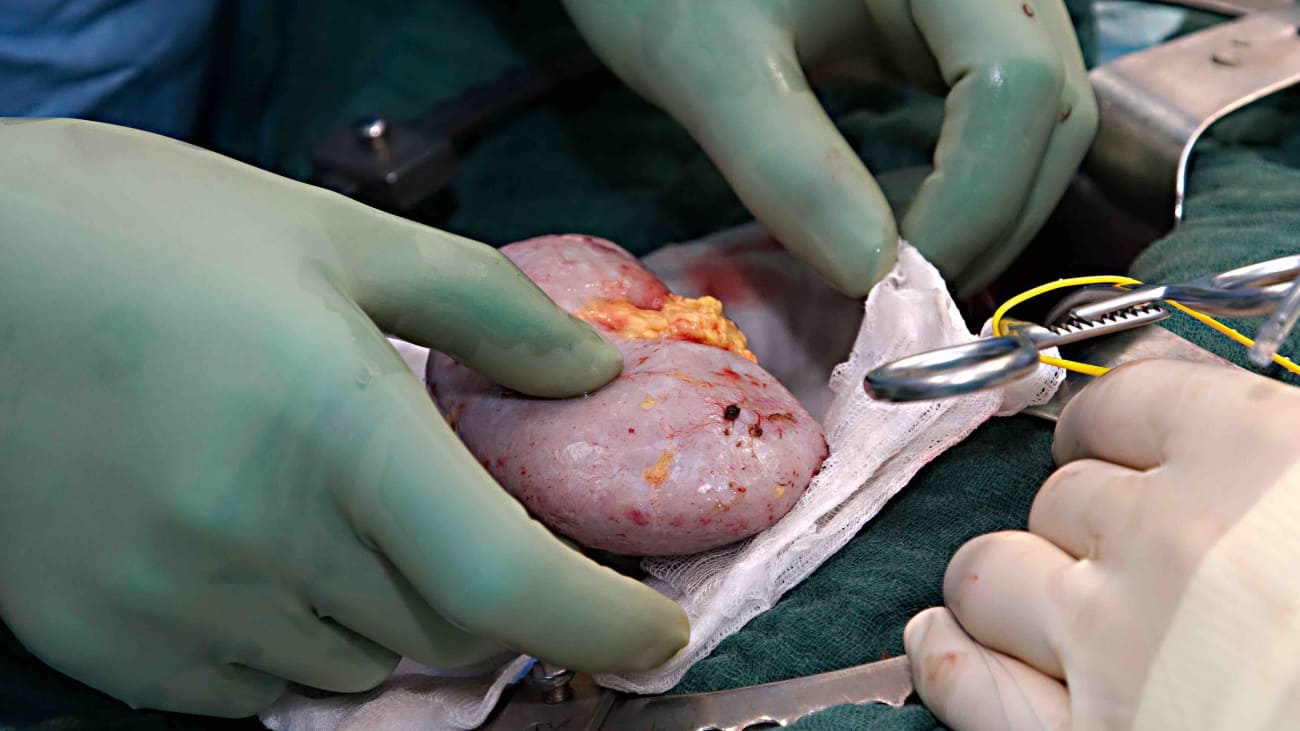
The study found that 79% of kidney donors were women, while men comprised 81.5% of the recipients. (Wikimedia Commons)

Synopsis: Women account for 79% of living kidney donors at AIIMS New Delhi, while 81.5% of recipients are men. A new study finds societal pressure, economic dependence, and caregiving roles — not altruism — drive most donations. Three in four women knew the risks.
A study conducted at AIIMS, New Delhi, revealed that women kidney donors at the hospital outnumbered men by nearly four times.
The findings of the study go beyond medicine to economics and social expectations governing women’s lives.
Published in the Indian Journal of Nephrology, the study analysed 1,171 living kidney transplants at the All India Institute of Medical Sciences (AIIMS), conducted between 2013 and 2022.
It found that 79% of donors were women, while men comprised 81.5% of the recipients — a disparity the researchers described as statistically significant.
Also Read: Tamil Nadu’s kidney success story meets its shadow side
The numbers revealed a stark structural imbalance. Of the 1,171 renal transplants studied, donors comprised 925 women and 247 men*. Of the total recipients, 955 were men and 217 women*.
Female donors were also younger, 44 years on average, against 49.4 years for male donors. Younger women, the researchers noted, might have faced heavy family pressure to donate, given their position within household hierarchies.
The geographic spread reinforced the pattern. Most female donors came from Delhi at 26.7%, Uttar Pradesh at 22.7%, and Bihar at 18.6%, states that ranked among India’s lowest on female literacy and workforce participation, two indicators the authors directly linked to donation vulnerability.
Mothers constituted the single largest group of female donors at 50.1%, followed by wives at 35.6% and sisters at 7.5%. Among male donors, fathers dominated at 54.5%, followed by brothers at 17.9% and husbands at 14.7%.
Women donated overwhelmingly generationally downward or laterally, to sons or husbands. Men donated largely as fathers or brothers, in roles where social expectations around sacrifice ran lower.
“This distribution suggests that familial roles influence donation patterns differently for men and women,” the authors wrote.
A comparison of kidney donations in India with those of developed nations was interesting. In the United States, women constituted 60% of living kidney donors and 43% of recipients. In Germany and the United Kingdom, female donors ranged between 55% and 64%.
The study’s finding of 79% women donors at AIIMS exceeded all these by a significant margin.
Also Read: Kidney racket probe in Namakkal: Licences of two hospitals suspended
To move beyond the numbers, researchers conducted in-depth interviews with 92 randomly selected female donors, a 10% sample of the total. The average age of those interviewed was 38. Only 15.2% were employed. Around 78% of the interviewed women came from joint families.
More than half, 51.8%, said societal norms shaped their decision to donate. Their donation was not strictly a voluntary medical act but a result of moral obligation tied to their roles as wives and mothers.
One participant told researchers: “In our family, women are expected to put others first; it’s always been this way.”
Several women said refusal was never an option. Donating the organ was a family expectation, instilled in their psyche through years of socialisation, long before the medical need even arose.
“The high number of female donors in India can be linked to women’s social status. This finding correlates with India’s lower sex ratio and female literacy rate, as reported in the 2011 Census. Addressing these disparities is crucial for promoting gender equity in organ donation,” the authors noted.
Economic dependence influenced the decision of 33.2% of women interviewed.
Male family members, as primary earners, carried a financial value that placed them beyond surgical risk in the family’s calculation. Non-earning women filled the “expendable” gap.
One donor described the logic: “My husband works, and I stay at home. If he got operated on, who would earn? I can manage.”
The researchers noted that such reasoning positioned women as the more expendable option in transplant decisions, despite facing equivalent surgical risk and a longer recovery without institutional support.
With only 15.2% of female donors engaged in paid work, economic dependence was not an exception; it was the norm. Financial vulnerability and donation vulnerability moved together.
“Economic disincentives for male donors underscore the need for supportive policy interventions. Women donors often bear this burden due to social and familial pressure to protect the primary male earners’ health and earning potential,” the authors wrote.
A smaller group, 15% of those interviewed, cited emotional bonding as the primary motivation.
Such responses came largely from mothers and wives who described donation as an expression of love rather than obligation.
“I didn’t think twice. He is my son. It was natural for me to do it,” a mother told researchers.
The authors treated this group as a meaningful contrast, donors for whom personal motivation, rather than social architecture, drove the decision. But even here, the line between chosen altruism and internalised expectation was blurred.
Mothers and wives occupied the roles most subject to caregiving norms, making purely voluntary motivation harder to isolate.
“While some progress has been made in recent years, there is still a need for multifaceted strategies, including public awareness, healthcare provider engagement, financial safeguards, and policy reforms, to address these disparities and promote equitable participation in organ donation across genders,” the authors wrote.
The study found that 75% of female donors were aware of organ donation and the associated risks. Yet, only 15% described their decision was driven by altruism alone.
Knowledge, the data indicated, did not translate into free choice. Awareness arrived without economic independence or social permission, and hence, the donors could seldom act differently.
“Although 75% of women were aware of organ donation, this awareness did not ensure autonomous decision-making, highlighting the need for donor education that prioritises informed, voluntary consent,” the authors wrote.
Dr Mythri Shankar of the Institute of Nephro-Urology, Bengaluru, and Dr Ranjanee Muthu of Apollo Hospitals, Chennai, wrote an editorial in the same issue of the journal.
They noted that India’s reliance on living donors amplified the role of family structure and gender norms, which deceased donor programmes in higher-income countries largely avoid.
The National Organ and Tissue Transplant Organisation’s data, they wrote, reflected the same gender discrepancies nationally, indicating that the AIIMS pattern was not an institutional outlier but a system-wide feature.
“[Study] strongly demonstrates how entrenched social and economic problems frequently dominate awareness and altruism toward donating. Making a more just transplant system a reality requires not only awareness but also actual societal and structural transformation,” they argued.
The two researchers flagged a further gap in the evidence base. The long-term psychological consequences for women who donate under perceived coercion remain poorly understood. Research on male donors, particularly the economic barriers they face, was also scarce.
The authors of the study called for gender-sensitive policies, stronger safeguards around informed and voluntary consent, family counselling, and measures to address the economic and social pressures shaping donation decisions before a patient ever reaches the transplant ward.
The authors acknowledged the study’s limits: a single centre, self-reported motivations, and hospital records that captured biological sex but not gender identity.
A multicentric national study, they opined, would test whether the AIIMS pattern would hold across India’s wider transplant system.
The awareness paradox, the study pointed to, may be its most actionable finding. Campaigns that inform women about donation risk have already reached three in four donors. What they do not yet reach is the economic and social architecture that converts awareness into compliance.
* (There is a discrepancy between the figures. Donors and recipients add up to 1,172. South First has sought clarification, and this report will be updated accordingly. Edited by Majnu Babu).



