

Published May 11, 2026 | 8:40 AM ⚊ Updated May 11, 2026 | 8:40 AM

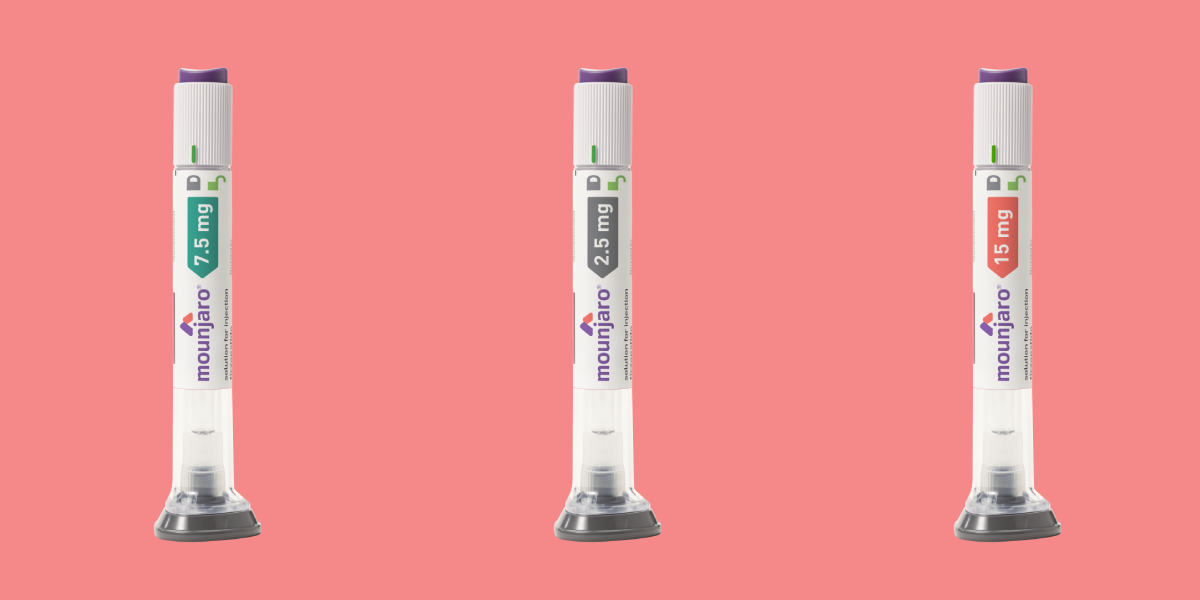
Tirzepatide/Mounjaro injections. (Eli Lilly and Company)

Synopsis: Even after India opened its doors to generic weight-loss drugs, Mounjaro, the injectable diabetes and obesity drug made by American pharma giant Eli Lilly, held the number one position in the entire Indian pharma market in April 2026. The GLP-1 market grew more than fourteen times in three years. No other therapy class in Indian pharma moved at that speed.
Six weeks after India opened its doors to generic weight-loss drugs, the market’s dominant brand has not moved an inch from the top.
Mounjaro, the injectable diabetes and obesity drug made by American pharma giant Eli Lilly, held the number one position in the entire Indian pharma market in April 2026. It did this while 25 generic competitors flooded the same space and reshaped a category that barely existed three years ago.
The data comes from PHARMATRAC MAT April 2026, compiled by Pharmarack, a business-to-business (B2B) healthcare platform.
Also Read: Generic Semaglutide launches in India after patent expiry, prices drop sharply
In April 2022, the GLP-1 agonist class generated ₹121 crore in annual sales across India. The class includes drugs that target hormones controlling blood sugar and appetite. Doctors prescribe them for type 2 diabetes and obesity.
By April 2026, that number reached ₹1,736 crore.
The market grew more than fourteen times in three years. No other therapy class in Indian pharma moved at that speed.
Tirzepatide, the molecule inside Mounjaro, now accounts for 63 percent of that market at ₹1,094 crore on a moving annual total basis. A year ago, it contributed ₹23 crore. Three years ago, it contributed nothing.
Semaglutide, the rival molecule at the centre of the generics story, holds 30 percent at ₹528 crore. Older drugs in the same class, dulaglutide and liraglutide, once led the segment. They now account for four percent and two percent, respectively.
On 20 March 2026, Indian pharmaceutical companies launched generic versions of semaglutide. What followed over the next six weeks produced a case study that the industry will study for years.
In February 2026, generic semaglutide injectable units stood at zero. By April, those units reached 1,37,000.
The combined value of generic semaglutide across injections and oral tablets reached ₹44 crore in April, up from ₹13 crore in March. That counts as more than a trebling in thirty days.
Twenty-five generic brands entered the field. Prices fell. Patients who could not afford the original drug began accessing treatment for the first time.
Only two new generic launches occurred in April, suggesting the market may stop expanding its player list and instead settle into competition among those already present.
Among all the companies that entered the generic semaglutide space, Torrent Pharmaceuticals pulled the furthest ahead.
The company holds 38 percent of the total generic semaglutide market across injections and oral tablets. In the injectable category specifically, Torrent commands 28 percent share, more than any other single company.
In April, Torrent’s semaglutide generics generated ₹17 crore against ₹5 crore in March. No other company in the generic field came close to that scale in a single month.
Zydus holds 10 percent share, Lupin nine percent, Dr Reddy’s eight percent, Eris eight percent, and Alkem eight percent. MSN, Corona Remedies, and Glenmark each gained share in April. The competitive field continues to fill around the leaders.
Torrent overall ranks fifth among India’s top pharma companies, at ₹12,436 crore in moving annual sales, growing 13.3 percent. Its semaglutide generics business only began scaling in March. That growth engine did not exist before.
Here is what surprised most observers watching the April numbers.
When generics entered, the expected outcome was displacement. Cheaper versions of semaglutide would take sales away from the original branded drugs. That did not happen.
Combined innovator semaglutide injectable volumes grew 40 percent in April over March. Tirzepatide brands grew 10 percent in volume over the same period. Both the innovators and the generics expanded simultaneously.
The oral semaglutide segment showed the clearest signal among these. Value growth stayed modest between February and April. But volume consumption rose 40 percent in that same period. Generic oral tablets, priced below the innovator brand Rybelsus, pulled patients into treatment who had not previously been able to afford it.
New patients entered the market. Existing prescriptions held. The affordable option created demand that did not previously exist, rather than simply redirecting it.
Also Read: Hyderabad’s Dr Reddy’s wins Canada approval for generic semaglutide
Eli Lilly ranks 37th among India’s top 40 pharma companies by total market size. It sits near the bottom of that corporate league table.
Yet in April 2026, it recorded the highest value growth rate in the entire group.
Eli Lilly grew 238.5 percent on a moving annual basis and 219.3 percent in April alone. That growth originates almost entirely from one brand.
Mounjaro’s moving annual total sales reached ₹1,009 crore in April. Monthly sales hit ₹102 crore. The brand’s moving annual growth rate stands at 4,286 percent.
The data points to a specific prescriber behaviour. A substantial section of doctors and patients in India stayed with tirzepatide even as semaglutide generics became available at lower prices. They did not switch — some increased prescriptions. Mounjaro’s base did not fragment under generic pressure in the adjacent molecule.
For a brand that did not exist in this market three years ago, that level of loyalty represents something the industry rarely sees this early in a product’s lifecycle.
Outside the GLP-1 story, the Indian pharma market posted its cleanest set of numbers in some time.
The market grew 10.3 percent in April 2026. The moving annual total reached ₹2,48,276 crore, up 8.9 percent. Every therapy segment recorded positive value growth for the month.
Three growth levers, volume, price, and new products, all stayed positive for seven consecutive months through April 2026. Volume growth has remained above zero since October 2024, after turning negative for several months in 2024 and early 2025.
Volume growth at one percent does not signal a consumption boom. But its sustained recovery points to more patients actually taking more medicine across the market, not just paying higher prices for the same amounts.
Cardiac, which accounts for 14 percent of the Indian pharma market, grew 14.3 percent for April. Heart failure drugs within the cardiac expanded 24 percent on a moving annual basis. Respiratory grew 17.7 percent in April. Vaccines grew 22.2 percent for the month. Viral vaccines grew 35 percent in April alone.
Anti-diabetic posted 16.2 percent value growth in April. GLP-1 agonists, at seven percent of the anti-diabetic segment, recorded 260 percent value growth on a moving annual basis.
The one persistent weak point lies in the gastrointestinal drugs. Value grew 4.1 percent, but unit volumes fell 3.9 percent in April, and annual volume fell 4.7 percent on a moving basis. Patients paid more for GI drugs while taking fewer units overall. That segment’s value growth arrives entirely from price increases and new products, not from more people taking more medicine.
Sun Pharma leads all companies with ₹20,994 crore in moving annual sales, growing 15.1 percent in April. Abbott and Cipla rank second and third. Mounjaro leads all individual brands at ₹1,009 crore, ahead of Augmentin at ₹923 crore and Glycomet GP at ₹912 crore.
Three things stand out from the data.
Mounjaro survived the generics test. Six weeks into an era of 25 competing generic brands in its adjacent molecule, it held the top position in Indian pharma. A loyal prescriber base and a differentiated molecule proved more durable than the price pressure that arrived around it.
Generic drugs expanded access rather than splitting the market. New patients entered treatment as prices fell. Innovators and generics both grew. The April data from the GLP-1 segment support with hard numbers what public health advocates have argued for years: affordable generics in high-demand chronic disease categories pull previously untreated patients into care rather than simply redistributing existing revenue.
The Indian pharma market now carries genuine volume recovery beneath its growth numbers. Seven consecutive months of positive volume growth mark a departure from 2024, when price increases carried nearly all the expansion. That shift changes the foundation on which the industry builds its next phase.
(Edited by Muhammed Fazil.)



