

Published Feb 04, 2024 | 7:41 PM ⚊ Updated Feb 04, 2024 | 7:42 PM

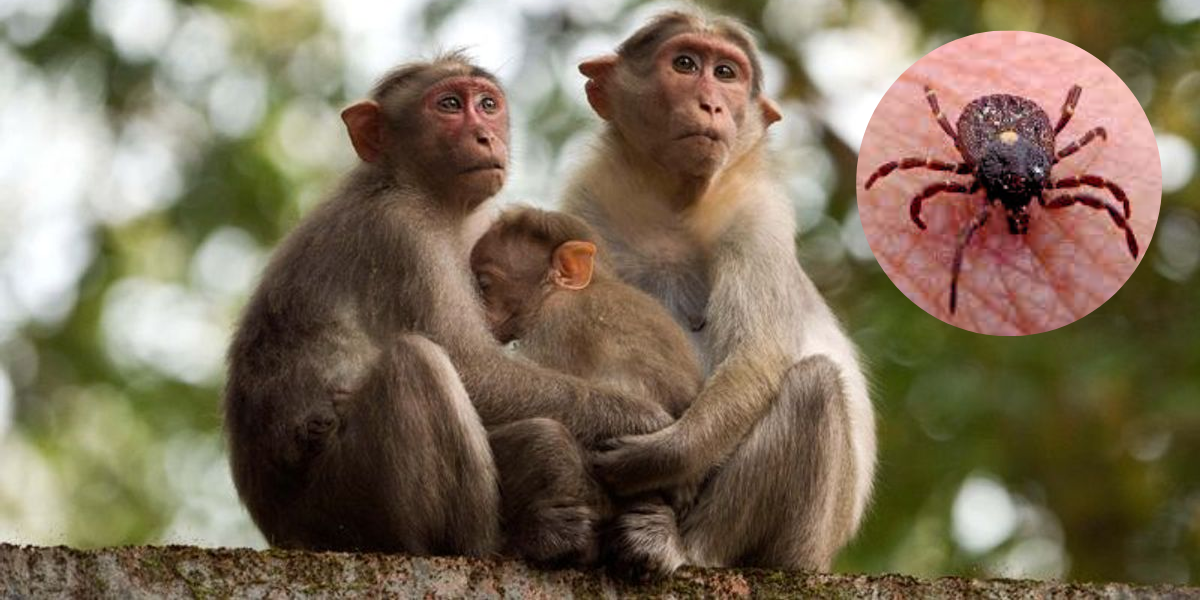
KFD, also known as monkey fever, is a tick-borne viral disease.

Health department officials in Karnataka will hold meetings and review the preparedness to tackle the spread of Kyasanur Forest Disease (KFD) — commonly known as monkey fever — amidst the death of two people in the state so far this year.
According to the Health Department, the first death due to KFD was reported in Hosanagar taluk of Shivamogga district on 8 January wherein an 18-year-old girl succumbed to the virus.
The second fatality was reported at Manipal in Udupi district when a 79-year-old man from Sringeri taluk in Chikkamagaluru died in a private hospital.
So far, the state has reported 49 positive cases of monkey fever with a maximum of 34 cases being reported in Uttara Kannada district followed by 12 in Shivamogga and the remaining three in Chikkamagaluru district.
Amid an increase in the number of KFD cases and two deaths, Karnataka’s Health and Family Welfare Commissioner D Randeep on Saturday, 3 February, visited Shivamogga and held meetings with health officials from Uttara Kannada, Shivamogga, and Chikkamagaluru districts where cases of KFD have been reported, a senior Health official said.
Randeep along with a team of senior officials from the state Health Department reviewed the preparedness to tackle the spread of the viral infection.
According to the state Health Commissioner, from 1 January, the Health Department has collected 2,288 samples from the affected districts where cases of KFD were reported and of them, 49 have tested positive for the disease.
“We have taken all precautionary measures and are working in close coordination with the officials of the districts where cases of KFD have been reported to prevent its spread. As of now, there is no vaccination available for the disease, so we need to be extra cautious. Awareness is being created about the precautionary measures to be taken to prevent the infection from spreading further. The vaccination provided earlier was found ineffective. So, we have approached ICMR for the vaccination,” another senior health official said.
According to Health officials, monkey fever spreads due to the bites of ticks that generally survive on monkeys. This tick bites humans which causes the infection. Humans also contract the disease by coming in contact with cattle bitten by ticks.
The authorities are carrying out door-to-door awareness programmes about the precautions to be taken. Those living in and around the forest area need to be more careful as they are at high risk of contracting the disease, they said.
It can be noted that the Health Department recently released guidelines to manage KFD. The guidelines focus on how the officials concerned should deal with suspected cases of KFD.
Human surveillance is important to manage KFD and to prevent morbidity and mortality. For this, the department has emphasised active surveillance.
The officials also need to consider areas where unusual monkey deaths are reported as hotspots.
Human surveillance should begin once an unusual monkey death is reported — usually one month before the start of the transmission season — wherein the field staff concerned will start conducting house-to-house surveys and listing all suspected cases based on case definition.
These listed cases will be referred to the medical officer concerned to arrange for sample collection within 24 hours of reporting. Also, suspected cases should be followed up for sample collection at concerned Primary Health Centres (PHCs).
Once a confirmed case of KFD in a human, monkey or tick is reported, weekly surveillance has to be done and this should be extended for an aerial radius of 5 km.
Meanwhile, passive surveillance must be done at the health facility in two ways. Fever cases that come directly to health institutions for treatment and cases that are suspected during active surveillance shall also visit the health institution for treatment.
The samples will be tested on a priority basis to ensure the sending of immediate results to the treating physician.
(With PTI inputs)



