

Published Dec 23, 2025 | 7:00 AM ⚊ Updated Dec 23, 2025 | 7:00 AM

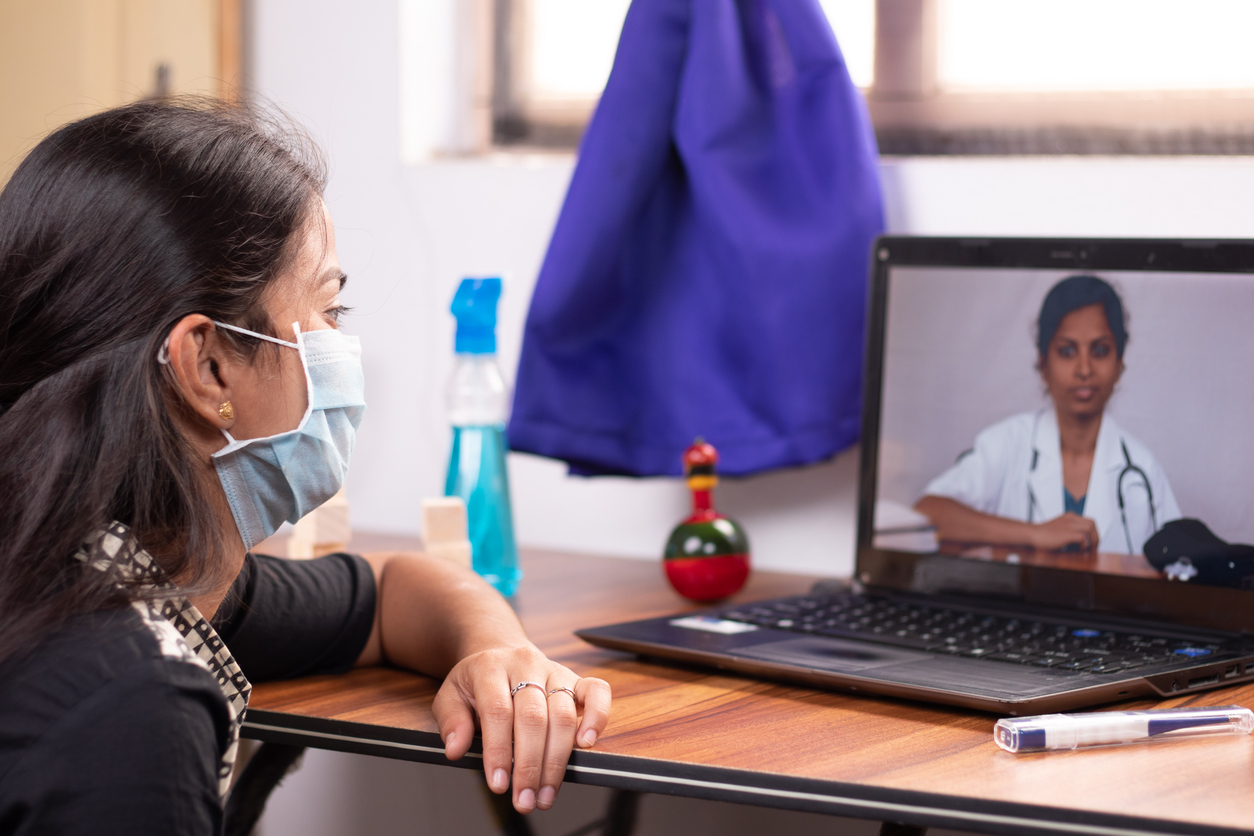
Digital consultation. (iStock)
Synopsis: A new study by IIM Bangalore showed that India’s healthcare system is being reorganised around digital public infrastructure faster than previously understood. However, the report flagged several gaps also. Digital literacy remains low, especially among the elderly and rural populations, limiting the use of health apps and consent tools.
A new study by the Centre for Digital Public Goods (CDPG) at the Indian Institute of Management (IIM) Bangalore showed that India’s healthcare system is being reorganised around digital public infrastructure faster than previously understood.
The State of Digital Public Infrastructure in India 2025 report noted that systems initially built for identity and payments — like Aadhaar-linked authentication and interoperable APIs — now underpin a national digital health ecosystem.
India issued nearly 80 crore ABHA health IDs, linking over 65 crore health records. This enables patients to carry their medical history digitally, reducing repeated tests and paperwork. Digital OPD registration and “Scan and Share” QR codes are already speeding up hospital visits.
Verified provider data is also growing: the Healthcare Professionals Registry lists 6.76 lakh authenticated practitioners, and the Health Facility Registry includes 4.17 lakh hospitals, clinics, and labs. All of this is based on the Ayushman Bharat Digital Mission (ABDM) digital “stack” — a system of registries, consent tools, and interoperable APIs that securely move health data with patient approval.
Telemedicine illustrates how Digital Public Infrastructure (DPI) is changing everyday care. India’s national platform, eSanjeevani, has enabled more than 150 million consultations, connecting primary health officers with district hospital specialists.
Every digital consultation generates notes and prescriptions linked to a patient’s ABHA ID, improving follow-up care and reducing repeated tests. Private platforms can also adopt ABDM standards.
TeleMANAS is doing the same for mental health, providing a 24×7 tele-mental health service. Tier-1 trained counsellors handle initial calls, escalating complex cases to Tier-2 specialists, often psychiatrists at district mental health programmes or medical colleges.
Across specialities, digital prescriptions, interoperable lab records, and electronic referrals are forming an integrated care pathway rather than the fragmented system of the past, the report notes.
Digital public health systems are strengthening programme monitoring and disease surveillance. Many states use DHIS2-based platforms for immunisation tracking and real-time reporting, aided by anonymised data flows under clear consent rules.
Covid-19 accelerated this trend through CoWIN, which administered over two billion vaccine doses and is now being repurposed via U-WIN for routine immunisation.
Tamil Nadu’s Makkalai Thedi Maruthuvam (MTM) illustrates how state-level initiatives can complement national DPI, the report mentions.
Launched in 2021, MTM deploys nurses, physiotherapists, and health volunteers to provide home-based screenings, medicines, physiotherapy, and digitally record patient data linked to ABHA IDs. MTM integrates with telemedicine and state health systems, showing how digital platforms can enhance, rather than replace, human touch.
Despite progress, the report flags several gaps. Digital literacy remains low, especially among the elderly and rural populations, limiting the use of health apps and consent tools.
Interoperability is uneven: Large private hospitals often rely on legacy systems, while smaller clinics adopt ABDM faster. Data security and trust remain concerns, with patients sceptical about misuse, highlighting the need for stronger awareness of consent, privacy, and grievance mechanisms.
Digital records and verified registries reduce duplication, speed diagnoses, and improve care coordination. DPI helps governments monitor diseases, workforce gaps, and facility coverage, supporting better planning for Universal Health Coverage.
For citizens, ABHA-linked records offer control over their health, easier provider switching, and lower costs from repeated tests.
Finally, the report argued that India’s health DPI architecture, built on open standards and patient consent, could serve as a model for other low- and middle-income countries. As adoption deepens, India has the potential to lead global digital health systems that are interoperable, citizen-focused, and sovereign.
Speaking to South First, Professor S Srinivasan, Chairperson of the Centre for Digital Public Goods, IIM Bangalore, highlighted both progress and remaining challenges in India’s digital health ecosystem.
“The numbers around ABHA, HPR, HFR, and telemedicine adoption are healthy, but there is still much to be done,” he said.
He identified three key directions for action: Increasing ABHA penetration and usage, improving interoperability in the Healthcare Professionals Registry, and leveraging the growth of health insurance for wider impact.
On implementation bottlenecks, he pointed out that while digital foundations are strong, the layer connecting government systems to citizens, such as common service centres, needs strengthening. “Data privacy, consent management, and security must now take centre stage,” he added.
Srinivasan also noted that India’s federated architecture, built on open standards, could be a model for other countries, but replicating it will require aligning incentives across governments and society while balancing large-scale interventions with privacy.
While the study highlighted India’s rapid digital health growth, speaking to South First, Prasanna S, a public health researcher at Sarvatrika Arogya Andolana Karnataka (SAAK), cautioned against over-romanticising technology as a cure-all for long-standing health system challenges.
“Digital penetration is still limited, and technology alone cannot substitute the faith and human touch patients rely on,” he said, noting that cultural expectations in India often make in-person care essential.
He pointed out that programmes like TeleMANAS and ABHA-linked records may complement existing services, but they cannot replace decades of investment in public health infrastructure. “What MTM achieved, for instance, was possible because of sustained state-level health efforts, not because of technology alone,” he added.
He also raises concerns about access and equity. Women and other marginalised groups often lack direct access to digital devices, meaning household-level technology can exclude them entirely.
Prasanna stressed the consequences of overreliance on digital IDs: “Even with ABHA, people have been denied care for lack of documentation, including tragic cases like a pregnant woman in Tumkur.”
Questioning the study’s emphasis on scale, he argued that being “the largest” in absolute numbers is not meaningful without context.
“TeleMANAS may be the world’s largest tele-mental health service in volume, but how much of the mental health burden does it actually address? Similarly, claiming 80 crore ABHA IDs sounds impressive, but it does not guarantee equitable access or better care outcomes.”
He called out what he sees as a broader pattern of tech romanticism. “Despite limited evidence of real impact, digital health interventions are promoted as magic solutions—akin to the ‘fair & lovely’ phenomenon,” he said, recalling past high-profile initiatives like e-Choupal. “Scale alone does not ensure meaningful change; real-world evidence, equity, and systemic strengthening matter most.”
(Edited by Muhammed Fazil.)


