

Published Oct 02, 2026 | 2:19 PM ⚊ Updated Oct 02, 2026 | 2:21 PM

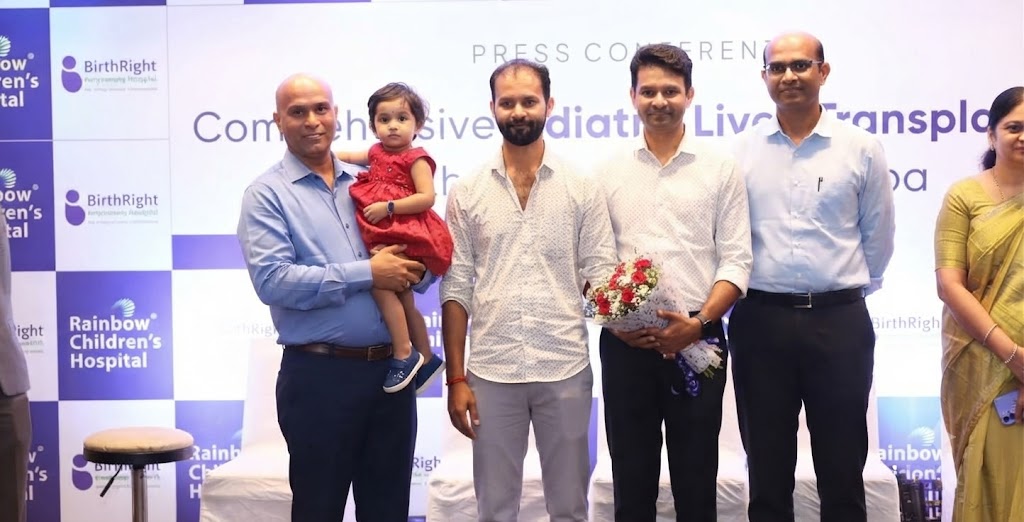
Doctors with the three-year-old. The first liver transplant for LCH in India was done on January 31, 2009 in New Delhi. (Special Arrangement)

Synopsis: A three-year-old Chennai child with rare Langerhans Cell Histiocytosis developed severe liver dysfunction, requiring a liver transplant after chemotherapy and targeted therapy. Recurrent urinary infections further complicated treatment, leading doctors to identify and surgically correct congenital vesicoureteric reflux before transplantation. The child subsequently underwent a successful living-donor liver transplant and continued chemotherapy.
A three-year-old child in Chennai has undergone a living-donor liver transplant after Langerhans Cell Histiocytosis (LCH), a rare systemic disorder, caused severe liver dysfunction and complicated his treatment with recurrent urinary tract infections.
LCH is a disorder in which abnormal Langerhans-like cells, which are part of the body’s immune system, accumulate in tissues and organs. It primarily affects children in the 1-15 age group and can target several parts of the body, including the bones, skin, lymph nodes, lungs, pituitary gland, liver, spleen and bone marrow. In children with multisystem disease, involvement of the liver can be particularly serious.
Liver involvement can range from abnormalities in liver function to damage to the bile ducts, including secondary sclerosing cholangitis, biliary cirrhosis and, in severe cases, end-stage liver disease requiring transplantation.
Doctors at Rainbow Children’s Hospital said the child’s treatment involved multiple stages, including chemotherapy, targeted therapy, treatment of a congenital urinary abnormality and, eventually, liver transplantation.
The child was initially brought to the hospital with jaundice, following which investigations revealed LCH with significant liver involvement.
A 2024 study of 899 children with LCH found hepatic involvement in 14.5% of patients. The researchers reported poorer overall and progression-free survival among children with liver involvement, particularly those who developed cholangitis. The study also found that targeted therapy produced a higher response rate than first-line treatment in the group studied, although relapse could occur.
For children with severe liver damage from high-risk LCH, the National Cancer Institute lists liver transplantation as one of the treatment options.
In the Chennai child, doctors initially focused on controlling the underlying LCH and improving his liver condition before considering transplantation.
Chemotherapy was started, but because the liver was already severely compromised, the treatment had to be modified. According to the hospital, low-dose chemotherapy produced only a partial response.
The medical team subsequently used newer targeted therapy, which produced a good response in the LCH.
Dr Somashekara HR, Senior Consultant, Pediatric Hepatology and Liver Transplantation at Rainbow Children’s Hospital, said the difficulty was not limited to the liver disease itself.
“This was an exceptionally complex case because we were not dealing with a single problem. We had to manage a rare systemic disease with severe liver involvement, while also dealing with the limitations that the liver dysfunction placed on chemotherapy,” said Dr Somashekara HR.
He said the treatment had to be planned in stages. “When recurrent infections emerged, we had to identify and correct the underlying urinary abnormality before the child could proceed to transplant. Each decision had to be carefully coordinated with the next,” he said.
The problem became more complicated when the child developed recurrent urinary tract infections during chemotherapy.
Doctors investigated why the infections were recurring and found congenital vesicoureteric reflux, or VUR, a condition in which urine flows backwards from the bladder towards the ureters and potentially the kidneys.
For a child receiving treatment that could suppress immunity, recurrent infections posed an additional concern before a major transplant operation.
Dr Prahlad N, Senior Consultant, Pediatric Nephrology and Kidney Transplant, said the repeated infections prompted the team to look for an underlying anatomical cause.
“Recurrent urinary infections added another significant challenge to the child’s treatment. Given the need for a liver transplant, it was important to identify the reason behind these repeated infections and address it beforehand,” said Dr Prahlad.
He said the evaluation by the nephrology and urology teams identified severe vesicoureteric reflux.
“Gross reflux in an immunocompromised child like him necessitated correcting the reflux. This was done by continuous bladder drainage with a silicone Foley catheter before and after anti-reflux surgery,” he said.
According to Dr Prahlad, correcting the urinary abnormality was an important part of preparing the child for transplantation. “Permanent correction of this condition was important to reduce the risk of further infections and ensure that the child was medically optimised before transplantation,” he said.
The child subsequently underwent ureteric reimplantation surgery, a procedure used to correct VUR by repositioning the ureter where it enters the bladder. A temporary stent was also placed.
Dr Nandhini G, Senior Consultant, Pediatric Surgeon and Urologist at Rainbow Children’s Hospital, Guindy, said the recurrent infections could not be ignored while the child was being prepared for transplantation.
“Recurrent urinary infections became an important concern as the child was being prepared for liver transplantation. Further evaluation identified congenital vesicoureteric reflux, where urine flows backwards towards the kidneys, increasing the risk of repeated infections,” she said.
She added that the urinary condition was corrected before the child proceeded to the transplant. “We performed ureteric reimplantation surgery with stent placement to correct the abnormality and close monitoring.”
“Addressing the urinary condition before transplantation was important to reduce the risk of further infections and ensure that the child was medically stable for the next stage of treatment,” she added.
Once the urinary abnormality had been corrected and the child was medically stabilised, the liver transplant was performed approximately three weeks later.
The child underwent a living-donor liver transplant, receiving the left lateral segment of his father’s liver after the father was found to be a suitable donor following detailed evaluation.
The approximately 10-hour procedure was performed by Dr Mettu Srinivas Reddy, Department of Liver Transplantation and HPB Surgery, Rainbow Children’s Hospital, along with Dr Somashekara and the multidisciplinary team.
Dr Reddy said the child’s age, liver disease and other medical complications made preparation particularly important. “Performing a liver transplant in a 3.5-year-old child with significant liver involvement and multiple associated medical complications requires meticulous planning at every stage,” he said.
“Before transplantation, the child had to be stabilised, and the recurrent infections and congenital urinary abnormality had to be appropriately addressed,” he added.
He said the timing of the transplant depended on getting the child medically ready for the procedure. “From the surgical perspective, ensuring that the child was medically optimised and ready for transplantation was critical.”
He added that the outcome depended on coordination between several departments.
“The successful transplant was made possible through close coordination between the transplant, pediatric, oncology, nephrology and urology teams, followed by careful post-transplant monitoring and continued treatment for the underlying condition,” he said.
The transplant did not mark the end of treatment for LCH.
The child was monitored closely for eight weeks after transplantation and subsequently continued disease-directed chemotherapy. According to the hospital, he completed four additional rounds of chemotherapy.
Follow-up evaluations showed no evidence of LCH, while the recurrent urinary infections had also resolved, the hospital said.
The continued treatment is significant because liver transplantation addresses the consequences of severe liver disease but does not necessarily eliminate LCH elsewhere in the body. Published evidence has documented that LCH can involve multiple organs and, in some patients, recur after transplantation, making continued disease surveillance important.
A US population-based analysis of liver transplantation for LCH identified 60 transplant recipients, 55 of whom were children. The study found that liver transplantation can be a feasible option for selected patients with liver failure caused by LCH, although recurrence and post-transplant complications remain considerations.
A separate study from a Chennai transplant centre similarly reported that liver transplantation could provide stable outcomes in selected children with LCH-associated liver disease, including children who required urgent transplantation after liver disease progressed despite modified chemotherapy.
For the Chennai child, doctors said the treatment required a carefully sequenced approach: first controlling the LCH, managing severe liver involvement, addressing recurrent infections, correcting the congenital urinary abnormality, stabilising the child, and then proceeding with transplantation.
Dr Somashekara said, “The involvement of our hemato-oncology, hepatology and liver transplant, nephrology and urology teams allowed us to address these challenges together and take the child through treatment in a planned and coordinated manner.”
Also Read:
South India powers India’s organ transplants, but demand still far outstrips supply: Lancet study
India’s first liver swap transplant: How two Tamil Nadu women saved each other’s husbands
India’s youngest living organ donor who donated a portion of her liver to save her father
(Edited by R Rajesh Kumar.)



