

Published Feb 20, 2026 | 7:00 AM ⚊ Updated Feb 20, 2026 | 7:00 AM

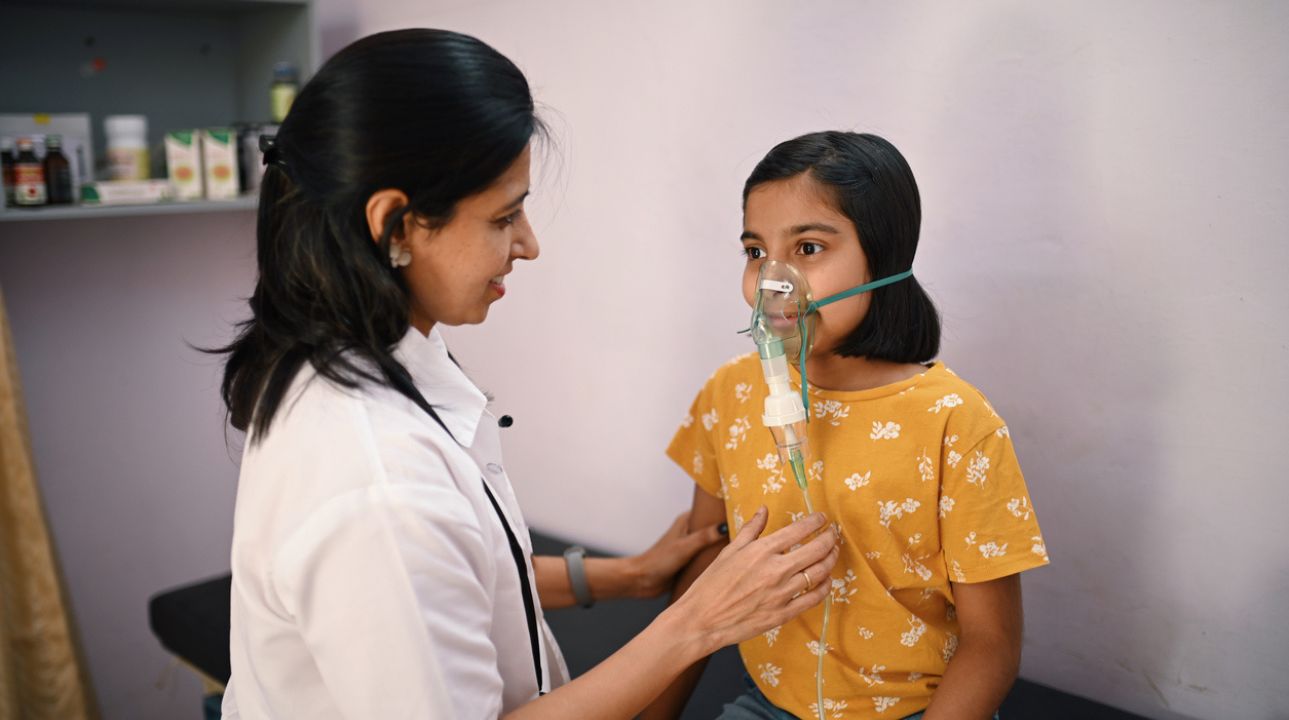
The majority of Kerala’s neighbourhood clinics and small nursing homes were set up to care for children and pregnant women.
Synopsis: Small hospitals and neighbourhood clinics, once central to Kerala’s healthcare system, have closed in large numbers over the past five years. Corporate hospital groups, backed by large investments from American private equity, are now expanding into the vacuum. But doctors and public health experts told South First that the decline began well before the arrival of private equity and has more to do with drastic changes in Kerala’s demographic fabric.
Small hospitals and outpatient clinics have for decades made up the backbone of Kerala’s grassroots healthcare infrastructure, often praised as the best in the country. But the last five years have seen rapid closures.
Data from the Indian Medical Association (IMA), first reported by TNIE, shows that 1,306 outpatient clinics and 444 small hospitals have shut over that period. That is a sharp rise from the previous five years, between 2016 and 2021, when 148 clinics and 262 small hospitals closed.
More concerningly, corporate hospitals, backed largely by American private equity firms, are taking their place. Since October 2023, Kerala’s healthcare sector has seen more than 10 private equity investments worth over $700 million.
Across two years, KKR & Co Inc has acquired Baby Memorial Hospital in Kozhikode, Meitra Hospital, and Chazhikattu Multi Speciality Hospital.
Blackstone Inc, through Quality Care India Limited, acquired around 80 percent of KIMS Health Management in Thiruvananthapuram. CX Partners invested $50 million in Sabine Hospital’s fertility services.
These acquisitions are likely to accelerate further closures of clinics and small hospitals. Once large investors control enough of the market, neighbourhood clinics, even those that survive, face tough competition.
“Neighbourhood clinics and hospitals will turn into feeder units or budgetary machines for corporate tertiary hospitals. They will refer patients to their own tertiary centres. It becomes a patient-catching mechanism. That is the trap,” Dr Asokan, former president of the IMA, told South First.
But private capital did not create the decline of small hospitals and neighbourhood clinics. It is aggressively occupying a vacuum created by that decline. Experts and doctors South First spoke to said the decline has more to do with demographic change than anything else.
The majority of Kerala’s neighbourhood clinics and small nursing homes were set up to care for children and pregnant women, according to Prof D Narayana, a public health expert.
“Thirty or forty years ago, who were the people frequently visiting hospitals, especially clinics and nursing homes? Mainly pregnant women and children,” he told South First. “Many nursing homes functioned essentially as delivery centres. That was the core of secondary care.”
Over the past few decades, Kerala’s population has changed drastically. The fertility rate has fallen sharply. Its rural population has contracted through decades of Gulf migration and movement to cities. The state now has one of the oldest population profiles in India, 16.5 percent of residents are aged 60 and above, a figure projected to rise to 22.8 percent by 2036.
As a result, the patients small hospitals and neighbourhood clinics were set up to care for now account for only a fraction of the state’s population.
The dominant patient today is not a young mother or a feverish child. It is an elderly person managing diabetes, hypertension, coronary artery disease, or some combination of the three.
Older patients need advanced diagnostics, specialist consultations and long-term disease management, none of which the traditional small nursing home was designed or equipped to provide.
Demographic change has also changed what doctors train for and the economics of running a small clinic or nursing home.
Dr Asokan, for instance, owns a 19-bed hospital. His daughter is a gynaecologist now settled in Chennai, where she runs her own scan centre. She has no interest in returning to take over the family hospital.
“After me, it may not remain a hospital at all,” he said.
The tradition of clinic owners passing their practices to their children has broken down. Many of those children move to cities, take specialised salaried roles in corporate hospitals, or emigrate.
“Many children of such families prefer to work in corporate hospitals or move abroad. In such cases, the father continues to run the clinic or nursing home as long as he can manage, and after that, it often winds up,” said Prof Narayana. “That is one of the primary reasons for the closures.”
The generational exit from independent practice is not only about ambition. Young doctors are reluctant to enter general practice at all.
The social status of the MBBS degree has eroded, specialist credentials are now the minimum for professional respect.
“There is currently very little value or respect for MBBS doctors. In spite of being a very fine degree, MBBS doctors are often seen as ‘just MBBS’,” said Dr Asokan.
“Young doctors are also not very keen on general practice because it is not very rewarding. They want to become specialists. They would rather sit in coaching centres for three years to secure a postgraduate seat than begin practising as MBBS doctors.”
Even doctors willing to run small hospitals face costs that have risen for reasons unrelated to corporate competition.
Chronic disease now dominates patient care. Treating diabetes, hypertension and early-stage kidney disease requires regular blood tests, imaging and specialist review. Small clinics and nursing homes cannot afford that infrastructure.
Large diagnostic chains have expanded across Kerala. Public sector players such as Hindustan Latex Limited have opened centres offering tests at prices private labs cannot match.
Prof Narayana said he underwent a PSA test at a hospital group in Bengaluru, at a discounted rate because of his association with them, and paid ₹1,300.
The same test at an HLL lab in Thiruvananthapuram cost ₹295. “How many nursing homes or small clinics can maintain a full-fledged diagnostic laboratory at that level? It is simply not possible,” he added.
Some nursing homes have tried to adapt by bringing in specialist consultants two days a week, a cardiologist here, an oncologist there.
But the model is struggling to remain viable.
“Unless you have an established name, patients may not come. If you advertise that a cardiologist is available in your nursing home two days a week, that does not necessarily mean patients will choose your facility,” said Prof Narayana.
The disappearance of the small clinic may not in itself be a major crisis. But its replacement by corporate hospitals funded by private equity could prove to be one.
Private equity invests to secure returns. KKR’s acquisition of Baby Memorial Hospital, for instance, cost around ₹2,500 crore for a 70 percent stake.
“The increase in costs is going to be in geometric proportion. Earlier it was arithmetic proportion, now it will escalate geometrically,” warned Dr Sreejith N Kumar, Chairman of the IMA Patient Care Scheme, Kerala.
“Initially, it may look very lucrative for the local management when they offer huge profits and buy the institution. But in the long run, they do not see it as healthcare. They see it as another business opportunity. And who are their consumers? Their consumers are patients.”
For the small hospitals and clinics that still exist, competing with well-funded corporate hospitals is harder because of regulation, doctors contend.
The Clinical Establishments Act, intended to protect patients, applies the same compliance requirements to a five-bed nursing home in a small town as to a 500-bed corporate hospital.
“There are more than 50 regulations governing hospitals. Many of them work at cross purposes with each other. There is very little incentive to get into private practice,” said Dr Asokan.
“The government should incentivise small and medium hospitals, not harass them with excessive legislation. There has to be political will to change policy. Only if they understand the problem will they change it. Right now, they are not fully understanding the problem.”
He proposed that private practices run by doctors be regulated through state medical councils.
Public health expert Dr V Ramankutty, speaking to TNIE, called for revisions to the Clinical Establishments Act so that it ensures patient safety while allowing small hospitals to operate.
Dr Kumar said the added luxuries in large corporate hospitals are drawing patients away from small facilities. He called for smaller centres to be judged solely on the quality of care.
“You are not going there for café coffee or airport-style lounges, which many hospitals now have. You are going there for treatment. Your treatment depends solely on the competence of your doctor and the treating team,” he said. Kerala’s health indicators, he added, were built long before quality certification bodies or corporate hospital lobbies existed, by competent doctors working in modest buildings.
Rising violence against healthcare workers has been yet another factor. The recent KGMOA protest calling for a boycott of services at Nedumangad District Hospital followed the alleged assault of the district medical officer after a newborn’s death.
Doctors say such incidents are part of a wider pattern. As a result, independent practice is not only economically marginal but also personally risky.
“It is not as simple as saying secondary care will disappear or that everyone will directly go to tertiary care,” said Prof Narayana. “The system is undergoing transition, and the effects will depend on how policy, investment patterns and patient behaviour evolve.”
(Edited by Dese Gowda)


