

Published Sep 15, 2026 | 7:00 AM ⚊ Updated Sep 15, 2026 | 7:00 AM

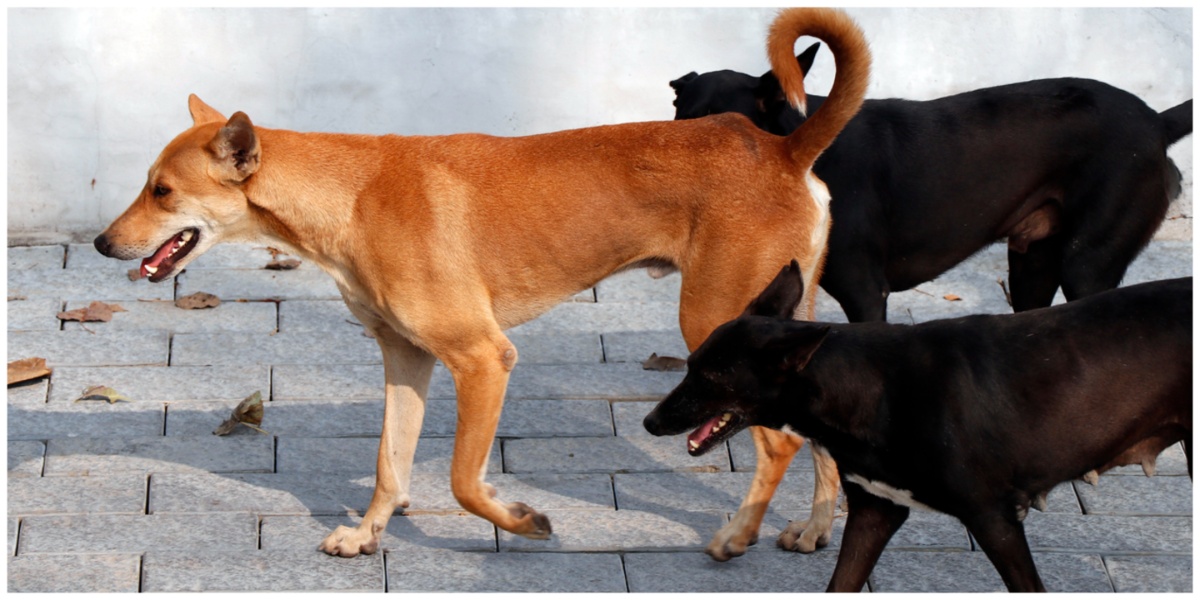
Keralam's 2019 livestock census counted 2,89,000 unowned dogs and 8,36,000 owned dogs.

Synopsis: Keralam offers free rabies treatment with over 90% completion, yet deaths persist. A modelling study finds childhood pre-exposure vaccination barely moves mortality. Dog vaccination cuts deaths far more. Healthcare-seeking matters most. Kerala’s unowned dog population may run five times higher than census figures suggest, undermining current vaccination targets.
Treatment for rabies is free in Keralam. Over 900,000 people receive it each year. More than 90% finish the full course, a completion rate that far exceeds the national average of 57% to 66%.
Still, people die. Between 2012 and 2025, Kerala recorded five to 33 rabies deaths a year.
A team from the University of Glasgow, Kerala University of Health Sciences, Government Medical College, Kollam, and Keralam’s health and animal husbandry departments built a model to test which interventions could effectively reduce casualties. Their study appeared in The Lancet Regional Health – Southeast Asia.
“Despite their efficacy, both strategies face implementation challenges,” the authors wrote, referring to vaccinating dogs and post-exposure treatment. “These statistics suggest a subset of exposed individuals do not recognise their risk, face residual barriers to care, or present late, raising the question of what is needed to prevent these rabies deaths.”
Also Read: Why are people dying of rabies in India despite vaccination?
The researchers wanted to know whether Keralam should add pre-exposure prophylaxis, or PrEP, to its existing approach of post-exposure treatment and dog vaccination. PrEP is given before exposure to rabies, priming the immune system in advance. People who receive it need fewer doses after a bite and, under the modelled regimen, can skip immunoglobulin altogether.
If post-exposure treatment arrives too late, or people delay seeking it, or doses get missed, prevention beforehand could close the gap.
To test this, the team built a decision-tree model spanning 10 years, from 2026 to 2035. They ran 12 scenarios through it, mixing different levels of pre-exposure vaccination, post-exposure regimens and dog vaccination coverage. Each scenario produced projections for deaths, costs and quality-adjusted life years.
“We adapted a probability-based decision-tree model to evaluate the public health and economic impact of rabies prevention strategies in Kerala,” the authors explained.
Under current practice, the model projected 431 rabies deaths over the decade, with a 95% prediction interval of 353 to 523. That scenario carried a price tag of $50.3 million. Post-exposure treatment consumed 91% of that budget, around $45.8 million.
Dog vaccination, even at current low coverage, still accounted for almost 70% of the deaths the current strategy prevented.
“PEP accounted for 91% of programme costs, while dog vaccination averted 69% of deaths,” the study stated.
Also Read: Seven-year-old succumbs to rabies infection in Kerala
Adding routine childhood pre-exposure vaccination changed little. The model found it would prevent roughly 10 additional deaths across the decade. The cost of achieving that ranged from $10.5 million to $36.5 million, depending on the exact regimen chosen.
“Routine childhood PrEP increased costs by US$10.5-36.5 million and cumulatively prevented only 10 additional deaths beyond those averted by current practice,” the authors write.
Across India’s willingness-to-pay range, the pre-exposure strategy consistently ranked below the leading alternatives. Its probability of being the optimal strategy never exceeded 12%.
One scenario made things worse. If pre-exposure funding pulled money away from dog vaccination, deaths rose to 488, and costs climbed 18% above the current baseline. The authors called this their worst-performing scenario in the entire set.
Also Read: Critical rabies treatment missing in four out of five public health centres
Switching from India’s four-dose post-exposure regimen to the WHO-recommended one-week schedule dropped programme costs from $50.3 million to $44 million, saving $6.3 million, without shifting the death toll.
“The sole cost-saving strategy was adoption of WHO’s abridged PEP regimen at status quo dog vaccination coverage,” the authors wrote. Implementing it would need changes to national clinical guidelines, along with training for healthcare providers.
At low willingness-to-pay thresholds, this regimen switch emerged as the clear frontrunner, carrying a 65% probability of being the optimal choice at $200 per quality-adjusted life year.
Also Read: What killed Niya?
Vaccinating dogs moved the numbers in ways vaccinating children did not.
Pushing coverage among owned dogs to 80% cut projected deaths from 431 to 195, for $51.5 million, roughly comparable to current spending.
Raising coverage among unowned dogs to 70% pulled deaths down to 82.
Combining 70% coverage across both owned and unowned dogs with a shorter post-exposure regimen brought deaths to 75, an 83% reduction against the status quo.
“Scaled-up dog vaccination produced substantially greater mortality reductions across all configurations, with deaths approaching near-zero within three years under higher coverage scenarios,” the authors reported.
Even when the researchers used unusually favourable assumptions for PrEP, its gains remained smaller than those from comparable dog-vaccination strategies. In the model’s most optimistic PrEP scenarios, it averted up to 79 additional deaths, while dog-vaccination strategies averted 238 to 357 deaths at comparable or lower cost.
Also Read: Kerala panel on vaccine policy suggests anti-rabies vaccines for kids, mandatory vax card in schools
Buried in the calibration work is a finding with implications well beyond the immediate cost-effectiveness question.
Keralam’s 2019 livestock census counted 2,89,000 unowned dogs and 8,36,000 owned dogs. But to match real surveillance data on rabies deaths and bite exposures, the researchers had to assume five times as many unowned dogs as the census recorded. It showed an estimated 2.3 million dogs across the state, with 63% classified as unowned, nearly three times the official count.
“Our model required fivefold the census estimate of unowned dogs to reproduce surveillance data, yielding over two million total dogs,” the authors wrote. “Field validation of Kerala’s dog population should therefore be an operational priority.”
The researchers warned that vaccination campaigns based on the census figure may therefore fall short of the coverage needed to interrupt transmission.
Also Read: What is hurting rabies prevention?
A sensitivity analysis revealed factors driving mortality the most. The biggest variable wasn’t another vaccine. It was whether people sought care.
Raising the probability that a bitten person seeks healthcare from 70% to 95% reduced projected deaths by 1,117, even with zero pre-exposure coverage. The study said this effect was more than 20 times larger than the maximum benefit achievable by scaling pre-exposure vaccination to its ceiling under the same healthcare-seeking conditions.
“Increasing PrEP coverage neither offset poor healthcare access nor meaningfully improved outcomes when PEP access was already high,” the authors noted.
Dog vaccination coverage told a similar story. Once coverage among unowned dogs reached 70%, projected deaths stayed at 81 or below, regardless of the scale of pre-exposure vaccination.
“The marginal benefit of PrEP diminished progressively as dog vaccination coverage increased,” the study stated.
The researchers stopped short of ruling out pre-exposure vaccination altogether. They pointed to tribal communities, roughly 1.5% of Kerala’s population, who face documented barriers to reaching post-exposure treatment.
“PrEP may offer individual-level protection in tribal communities where structural barriers limit timely PEP access,” they noted.
But there is a catch. The same obstacles blocking post-exposure treatment could just as easily block delivery of a preventive vaccine. Even modelling 60% coverage among tribal populations, paired with full standalone vaccine effectiveness, pre-exposure vaccination still averted fewer deaths than a moderate scale-up of dog vaccination.
“To maximise lives saved, PrEP should only be considered once gains from strengthening dog vaccination and PEP delivery have been exhausted,” the authors added.
Also Read: Myths about dog bites and rabies
The team built their dog-bite and incidence parameters from Tanzanian field data, the most detailed dataset available, but acknowledged that it may not map perfectly onto Keralam’s setting. They counted only direct health system costs, leaving out what patients themselves spend on travel, lost wages or caregiving after a bite.
Their 10-year window may also undersell pre-exposure vaccination’s long-run value, since coverage through childhood immunisation builds gradually across birth cohorts and would keep climbing beyond the study period.
The model’s message is therefore less about adding another vaccine than fixing the gaps around the vaccines Keralam already uses. Get people into care quickly. Complete PEP. And, above all, vaccinate enough dogs to interrupt transmission.
PrEP could still have a role for specific high-risk, underserved communities, the researchers said, but it should complement, not displace, those interventions.
(Edited by Majnu Babu).



