

Published Dec 06, 2025 | 9:06 AM ⚊ Updated Dec 06, 2025 | 9:06 AM

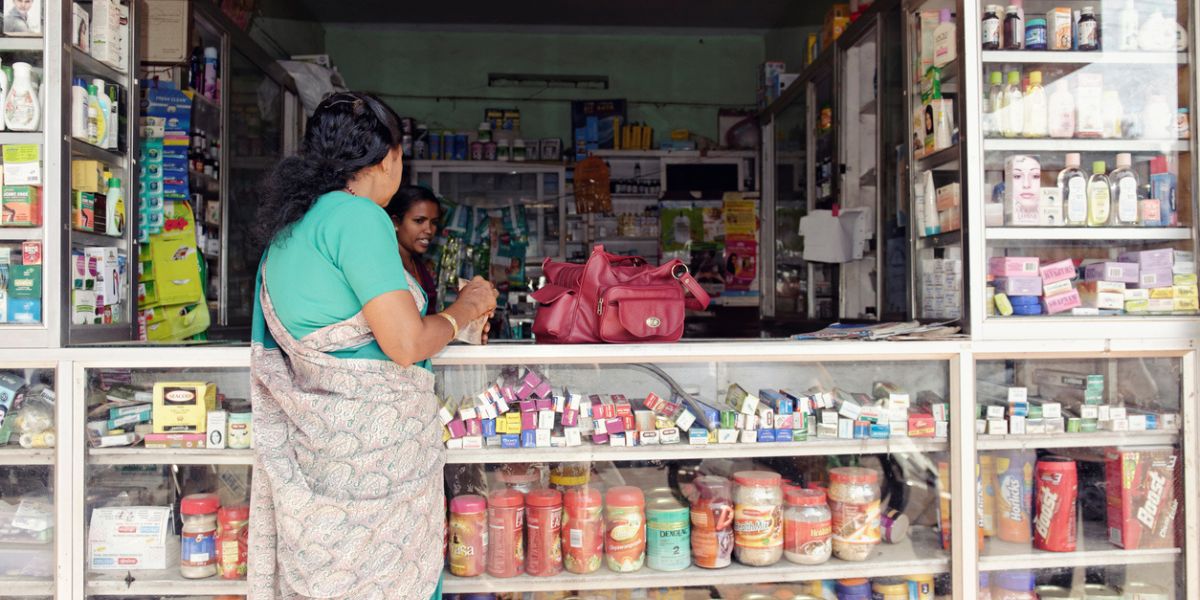
A pharmacy. (iStock)
Synopsis: The Bangalore District Chemists and Druggists Association warned that the prolonged credit period system in internal Karnataka and unregulated supply channels are enabling diversion, unethical trade practices, and even creating spaces where counterfeit medicines can infiltrate the market.
The Bangalore District Chemists and Druggists Association (BDCDA) warned that Karnataka’s pharmaceutical distribution chain is being increasingly undermined by a “silent intra-state dark economy”. They alleged that prolonged credit periods and unregulated supply channels are enabling diversion, unethical trade practices, and even creating spaces where counterfeit medicines can infiltrate the market.
Speaking to South First, B Thirunavukkarasu, President of BDCDA, said the long-standing credit system is being exploited to reroute medicines into unauthorised hands.
With a recent seizure of 34 counterfeit drug brands in Puducherry, the association argues that the risks are no longer theoretical and demands an overhaul of credit terms and stricter territorial discipline from pharmaceutical companies.
According to the association, the root of the problem lies in the dual credit structure that pharmaceutical companies continue to follow.
Bengaluru stockists receive a seven-day credit period, while distributors in districts get 21 days. This, Thirunavukkarasu said, enables a chain of diversions that unfold within hours of receiving stock.
District stockists, he explained, procure medicines on 21-day credit and then funnel them into Bengaluru through “unauthorised stockists, semi-wholesalers, and procuring agents,” who offer higher discounts to retailers. Those retailers — unaware or unconcerned about the supply source — often choose the cheaper option.
This diverted stock again travels to other districts, bypassing the authorised distributors already appointed by companies. “This creates an unethical parallel system,” he said, adding that genuine stockists lose orders because cheaper diverted goods enter the market with much longer credit leverage behind them.
The longer credit window enables “money rotation,” giving unauthorised players room to operate aggressively, often with cash deals and unofficial offers that undercut legitimate channels.
The association urged manufacturers to cut credit periods to five days for Bengaluru and ten days for all other districts.
According to Thirunavukkarasu, the seven- and-21-day structure was created nearly two decades ago, when logistics were slow, and distribution was geographically constrained.
“Today, with improved logistics, any district can be supplied within 24 hours,” he said, arguing that old credit cycles no longer hold relevance and instead are being weaponised by unauthorised distributors.
BDCDA believes that shorter credit periods would eliminate the financial advantage driving diversion and reduce opportunities for semi-wholesalers and intermediaries to exploit gaps.
The association argued that this change is essential not only for fair trade but also for security, as the combination of long credit cycles and unregulated supply routes creates avenues for counterfeit products to slip in unnoticed.
In the letter to drug manufacturers, the association highlighted the recent discovery of a counterfeit drug manufacturing unit in Puducherry, where authorities reportedly seized 34 fake versions of top-selling medicines.
Seized drugs include anti-diabetic drugs (Janumet, Jalra-M), antihypertensives (Losar, Cardace), allergy medicines (Allegra), inhalers for asthma and COPD (Esiflo, Budamate, Budate), antibiotics (Levofloxacin), anti-epileptics (Levipil), and chronic care medicines from reputed brands such as MSD, Sanofi, Sun Pharma, Dr Reddy’s, Lupin and Torrent.
Officials declared the entire batch spurious under a court order dated 27 November. According to a Puducherry Drugs Control Department alert dated 1 December, the 34 counterfeit formulations were recovered during a Crime Branch-Criminal Investigation Department (CBCID)-led raid at an unlicensed godown in Mettupalayam.
The alert was issued following a court direction, with CDSCO asked to keep inspectorate nationwide on high vigilance.
Thirunavukkarasu said such cases affirm the association’s fears: “When unauthorised channels and semi-wholesalers operate without accountability, counterfeit stocks can enter the supply chain. Retailers cannot trace where the medicine is coming from.”
He also noted that recent nationwide operations — including seizures in Uttar Pradesh, Agra, Lucknow, and Puducherry — have collectively exposed counterfeit drug networks worth nearly ₹2,000 crore. Karnataka, he warned, cannot assume immunity.
The association claimed that the parallel distribution network is expanding — not just through district diversions but via purchases made from other states.
These goods, once mixed into Karnataka’s supply chain, are almost impossible for a retailer to distinguish from legitimate stock, especially when prices are lower.
Semi-wholesalers and procuring agents often operate without territorial limits, according to BDCDA. Companies usually specify strict jurisdictions for authorised distributors, but unauthorised players face no such boundaries.
This makes it easy for diverted stock to flow between states and districts, especially when driven by the lure of added margins and unregulated online sales.
Thirunavukkarasu said that the rise of quick-commerce platforms and unregulated online medicine sellers has only worsened the issue. “Right now, online is not regulated. They offer heavy discounts. This gives more room for counterfeit medicines to spread,” he said.
Beyond credit rationalisation, BDCDA urged pharmaceutical manufacturers to enforce strict territorial discipline. If a distributor is appointed for Bengaluru, they should supply only within Bengaluru. The same rule should apply to every district, the association said, and companies should ensure that distributors do not spill into other jurisdictions.
“We have identified several weak points and are connecting the dots,” the president said. BDCDA also raised related concerns such as misleading advertisements and digital pickpocketing, which they believe compound the risks around medicine quality and supply-chain integrity.
The association has not approached the Karnataka Drugs Control Department or CDSCO regarding the credit structure, as Thirunavukkarasu said that credit periods are a trade issue between companies and associations.
However, BDCDA highlighted the broader challenges of counterfeit medicines and unauthorised sales to authorities. He noted that the Union Health Ministry has acknowledged a shortage of drug inspectors and has been considering steps to strengthen enforcement.
In its concluding appeal, BDCDA urged both state and Union governments to regulate online and quick-commerce medicine sales, arguing that they are currently providing new entry points for unsafe or counterfeit drugs.
(Edited by Muhammed Fazil.)


