


Published Mar 02, 2026 | 8:15 AM ⚊ Updated Mar 02, 2026 | 8:15 AM

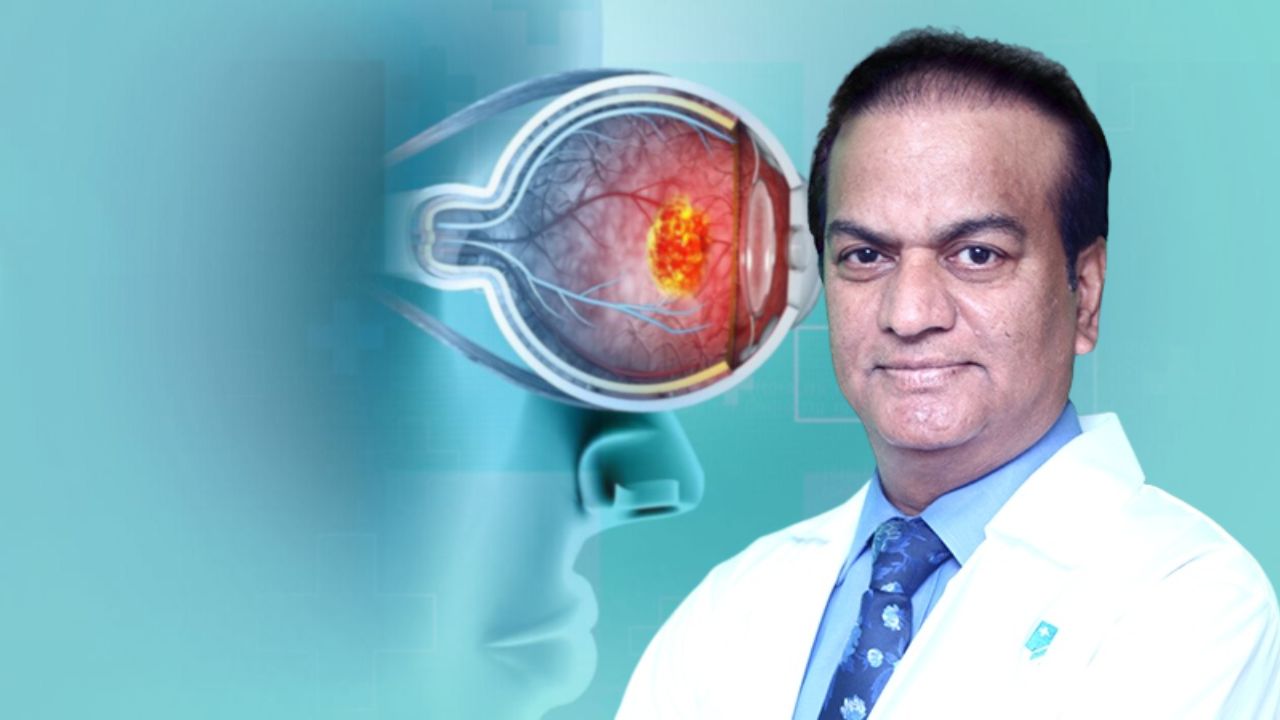
Dr P Vijay Anand Reddy.
Synopsis: Dr P Vijay Anand Reddy, who was awarded the Padma Shri in 2026, has spent over four decades making sure that eye cancer is screened in time. He speaks about a disease that most parents have never heard of, a healthcare system that is still playing catch-up, and the one thing every parent in a small town needs to know right now.
When we think of cancer, we think of the lungs, the breast, and the liver; rarely do we think of the eye. And yet eye cancer is real, it is often silent, and in many cases, it is completely treatable if caught in time. Dr P Vijay Anand Reddy has spent over four decades making sure it gets screened in time.
A Padma Shri awardee — conferred this year, in 2026 — and Director of Apollo Cancer Centre, Hyderabad, Dr Reddy is one of India’s most respected names in radiation and ocular oncology.
South First sat down with him to talk about a disease that most parents have never heard of, a healthcare system that is still playing catch-up, and the one thing every parent in a small town needs to know right now.
Q. We did a story about fake eye doctors operating in Nalgonda district — unqualified technicians examining patients and recommending surgeries, while patients had absolutely no idea. If people don’t even know how to recognise a real doctor, how far are we from getting them to think about something like eye cancer?
A: Most people, whenever we talk about eye cancer, ask — Do we get cancer in the eye too? So yes, awareness is the fundamental problem. The eye has several components — the eyelids, the tear-secreting lacrimal gland, the small sweat glands called meibomian glands, the conjunctiva covering the eye, the orbit with its muscles, soft tissues, and optic nerve. Cancer can arise from any of these structures.
And then, within the eye globe itself, the retina can develop a tumour called retinoblastoma — one of the most common eye cancers we see across the globe, and in India too.
Q. For a young parent listening to us right now, how would you explain what retinoblastoma is and why it almost exclusively hits children under three?
A: We have several genes in our body. There is one gene called the RB1 gene — the retinoblastoma gene — present in every cell. Cancer develops if that gene mutates or transforms. It happens in children because retinal development starts very early, from birth to the first three to five years of life. When retinal cells are proliferating rapidly, the RB1 gene can suddenly mutate and trigger cancer.
In some children, they carry this abnormal gene from their parents — they are already born with the mutation, and tumours arise very early, from birth to four years.
This accounts for around 60 percent of cases. The remaining 40 percent happen spontaneously, on their own, during development. So roughly 60 percent is inherited, and 40 percent arises de novo (afresh).
Q. India carries nearly 25 percent of the global retinoblastoma burden — around 1,500 new cases every year. Where is that number coming from?
A: India is a highly populated country with one of the highest birth rates in the world — that is one reason. The second is consanguinity. Marrying within the family, marrying cousins, is quite common in parts of our country compared to elsewhere. That increases the chances of carrying and passing on the retinoblastoma gene.
The third reason is late detection. People from rural populations often do not know there is a problem. They do not understand that something can go wrong inside the eye. And then there is awareness — we need to build awareness among parents, society, and crucially among paediatricians who see every child in the first years of life.
Q. When someone goes for a routine eye checkup, cancer is genuinely the last thing on their mind. What are the signs that even a good ophthalmologist might not immediately connect to cancer?
A: The easiest and simplest thing is the white reflex. When you look at a child’s eye, the centre of the eye — the pupil — should be black. In a child with retinoblastoma, that black centre turns white. You see a white spark, like a white flower, in the centre of the eye. Experts like us can identify it, paediatricians can identify it.
But for parents, the simplest way is a photograph. When you take a photograph of your child — even with a phone — and you see a white spot in the centre of one eye or both eyes instead of the usual dark appearance, that is when you suspect something is wrong and come to a doctor.
Beyond that, watch for a squint, redness of the eye, or the child seeming unable to see properly — not reaching out for objects, not tracking movement. Any projection of the eyeball forward is also a warning sign. These are all symptoms of retinoblastoma that warrant an immediate specialist visit.
Q. Red eye, floaters and slightly blurred vision are things many of us shrug off. At what point should someone stop shrugging?
A: These tumours arise in children 95 percent of the time. So it is fundamentally a parent’s job to notice. The other line of detection should be the paediatrician.
Every child visits a paediatrician — for vaccination, for a fever, for a cold. Paediatricians should be trained to look at the eyes and identify abnormalities and direct those children to the right oncology centre. That is where the system must improve.
Q. Is there a profile of someone who should be more worried — occupation, genetics, anything specific?
A: Anyone can develop retinoblastoma. There are no strong predisposing occupational factors. Rich, poor, any caste, any creed, any religion — anyone can be affected.
The exception is family history and consanguinity, which we discussed. But outside of that, no child is excluded from risk. The answer is simply consciousness and awareness. Whenever you see these symptoms, see a doctor.
Q. If eye cancer is caught early, what does treatment look like today — and how different is it from when you started four decades ago?
A: Four decades ago, the standard treatment for any eye tumour was the removal of the eye. That was it. Then we moved to radiation, but radiation on a small child caused enormous harm — stunted growth, second cancers, a host of serious side effects. Eventually, we found that certain drugs are highly effective against retinoblastoma.
Today, chemotherapy is the mainstay. Radiation is used only in advanced cases. And beyond that, we now have local treatments — laser, thermotherapy, cryotherapy — that can burn out the tumour within the retina itself.
What is most exciting today is intra-arterial chemotherapy. We pass a catheter from the femoral artery in the thigh, navigate through the heart, into the neck, into the eye, and deliver chemotherapy directly through the ophthalmic artery. The concentration of the drug reaching the tumour is five to eight times more effective than standard intravenous chemotherapy. That is the kind of innovation that has changed outcomes completely.
As long as the tumour is within the globe, we can today save the eye, save the vision, and save the life.
Q. You have worked in rural and semi-urban parts of the country where access to even basic eye care is a challenge. What does eye cancer look like out there?
A: In villages, we typically see children arriving with tumours that have already grown out of the globe — huge masses, inflammation, the eyeball protruding. In the past, we would write those cases off. But now, even in those advanced cases, with chemotherapy and local treatments, we can cure close to 90 percent of patients.
We may not be able to save the eye because the tumour has already destroyed the globe. But we can save a life. And that itself is a paradigm shift in how we manage advanced retinoblastoma.
Q. Genetic testing is becoming more accessible. Should parents with a family history actively seek genetic counselling — and is that infrastructure available in India?
A: It is available, but only in very few centres. The equipment alone — the ophthalmic cameras, the thermotherapy and cryotherapy systems — costs ₹40–50 lakh. The intra-arterial chemotherapy requires a highly specialised team with experience across ophthalmology, oncology, and interventional radiology.
These are tertiary care techniques. We cannot expect them in rural districts. They are available in a handful of specialised centres across the country. Apollo Cancer Centre, Hyderabad, is one of them.
What we can do, and do do, is genetic counselling. When we know a parent has a high risk of having a child with retinoblastoma, we test the child from birth. We can even diagnose the condition while the child is in the womb. We cannot correct the gene mutation, but we can detect the tumour on day one and begin treatment immediately. That early start changes everything.
Q. Is childhood eye cancer on anybody’s radar at the policy level in India?
A: Awareness is the key and the way forward. We hold retinoblastoma awareness weeks every year, we run marathons, and we do public programmes. The media — print, digital, television — has an enormous role to play in this. Government policy and public campaigns must follow.
When awareness reaches parents in smaller towns and villages, they come forward. And when they come forward early, we can cure the disease, save the vision, save the eye, and save the life.
In over 40 years, you must have cases that have stayed with you. Without naming anyone, can you share one such moment?
A: There are several — I have treated more than 10,000 patients over this career. What gives me the greatest satisfaction is detecting a tumour early, while it is still within the globe, and being able to save the vision completely. The child walks away with a functioning eye and a full life ahead. But what has genuinely moved us as a team is the shift in advanced cases.
Earlier, stage three retinoblastoma was a death sentence. Today, we cure them. Those children who would have been written off now live completely normal lives. That is the paradigm shift. That is what makes this work worthwhile.
Q. What is the one thing you wish every parent, especially in smaller towns and villages, knew about their child’s eye health, starting today?
A: Nobody is spared from cancer. Anybody can develop it, irrespective of caste, creed, or socioeconomic status. So be conscious. Look at your child’s eyes. Look at your photographs. In the centre of the eye, there should be a black dot. If that black dot turns white — if you see a white flower, like a cauliflower, glowing in the centre of the eye in a photograph — go to a doctor immediately. Nine out of 10 times, that white reflex will be retinoblastoma.
Also watch for a squint that appears suddenly, persistent redness that does not clear in a week or ten days, or a child who does not seem to be seeing properly. These are the early signs. Catch it then, and your child can be cured completely — vision saved, eye saved, life saved. That is the message every parent in every village needs to hear.
(Edited by Muhammed Fazil.)


